
This Week's Top Five Stories in Procurement

The Supply Lines Worst Hit by the Strait of Hormuz Closure
The conflict between the US and Iran continues, with President Donald Trump announcing the extension of the deadline for Iran to open the Strait of Hormuz by 10 days to 6 April after saying talks are "going very well".
Taking to social media platform Truth Social, he wrote: "As per Iranian Government request, please let this statement serve to represent that I am pausing the period of Energy Plant destruction by 10 Days to Monday, April 6, 2026, at 8 P.M., Eastern Time."
Trump warned Iran to negotiate an end to the month-long conflict or risk more high-level assassinations as US-Israeli operations escalate. This ultimatum followed Israel’s announcement that a strike on the port of Bandar Abbas had "eliminated" Revolutionary Guard Naval Commander Alireza Tangsiri along with several senior officers.
As both sides look to resolve the conflict, the Strait of Hormuz remains blocked. While goodwill gestures in negotiations have been made to let some vessels pass, the majority are not getting through.
Oil and gas prices continue to be impacted, with the cost of fuel and energy on the rise.
General Motors: Using Nearshoring to Shield Supply Chains
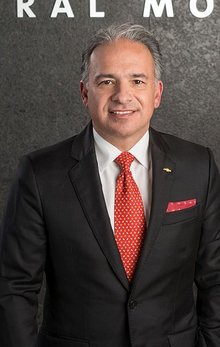
General Motors (GM) Mexico has announced an investment of US$1bn into its manufacturing operations. The strategic announcement was made by Paco Garza, the President of GM Mexico, who anticipated significant challenges over the course of 2026.
This substantial capital injection aims to strengthen the position of GM in the domestic market in Mexico, where the organisation remains a top vehicle seller. With 198,153 units sold in 2025, the company maintains its second-place position in the industry and achieved a market share of 12.2% for that period.
This investment comes amid a turbulent time for trade relations between Mexico and the US, with continued uncertainty regarding tariffs for cars and automotive parts destined for export.
GM currently operates several manufacturing facilities in Mexico to produce a range of cars and car parts. With its regional headquarters located in Mexico City, the company has operated in the country for almost 90 years and employs more than 25,000 people.
It currently manages four manufacturing complexes in the country and an engineering centre. These facilities include manufacturing sites in Toluca, Silao, San Luis Potosí and Ramos Arizpe.
Additionally, GM Mexico manages a regional engineering centre in the State of Mexico.

Mastering the Agentic Revolution at Coupa Inspire 2026
With shifting geopolitical landscapes and strict ESG mandates, procurement is no longer just a corporate function, it is a strategic shield.
As the industry prepares to gather at the ARIA Las Vegas from 11–14 May, Coupa Inspire 2026 invites CPOs and sourcing leaders to move beyond transactional purchasing and embrace the era of agentic procurement.
This year’s theme, ‘The Network Effect’, explores the synergy between AI-native technology and a two-sided community fueled by US$9tn in shared transactional data. In a volatile economy, the event provides the definitive blueprint to turn every contract and supplier discovery into a calculated strategic advantage.
Will EU-Australia Trade Deal Reshape Procurement & Sourcing?
The EU and Australia have finalised a comprehensive Free Trade Agreement (FTA) alongside a Security and Defence Partnership, creating substantial opportunities for procurement professionals and supply chain managers across both regions.
The agreements, concluded after eight years of negotiations, could reshape material sourcing strategies and unlock significant business opportunities amid ongoing geopolitical uncertainty.
The FTA was finalised at a leaders' meeting between the President of the European Commission and the Australian Prime Minister in Canberra, whilst the Security and Defence Partnership was signed virtually by senior defence and foreign affairs officials from both regions.
"After eight years of negotiations, Australia and the European Union have signed a landmark trade deal," says Australian Prime Minister, Anthony Albanese.
How SemiCab is Helping Coca-Cola Cut Transportation Costs
Algorhythm Holdings announced that SemiCab was awarded a pilot programme with Coca-Cola India to launch a pilot transportation program on SemiCab’s collaborative freight platform.
SemiCab will onboard Coca-Cola India onto SemiCab’s Collaborative Transportation Platform, marking a major milestone in SemiCab’s expansion within India’s fast-moving consumer goods (FMCG) sector.
The pilot programme is designed to evaluate SemiCab’s performance in reducing empty miles, improving delivery efficiency and cutting transportation costs. If successful, like the other pilot programmes the company has participated in, this proof-of-concept programme could pave the way for a broader rollout of SemiCab’s solution.
SemiCab is building a system of intelligence for freight, moving from isolated shipment planning to orchestrating freight as a coordinated network and enabling collaboration across shippers, logistics service providers, and carriers.
It focuses on reducing structural inefficiencies like empty miles, while addressing network-level gaps across planning, routing and asset utilisation.
As it scales across India, the US and other markets, its goal is to build a system that continuously learns from network behaviour to drive more efficient, resilient supply chains, while reducing cost, emissions and overall waste for everyone in the ecosystem.
The programme will showcase how an efficient delivery operation can save a company money and limit food waste through optimising routes.
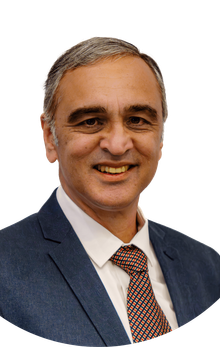
SemiCab’s CEO, Ajesh Kapoor, says that if one out of every three flights were flown empty, we would notice it and make a bigger issue about the resulting waste of time and resources. However, because it involves trucks and isn't something that is seen visibly, there is a realisation around the significance of the problem.
Procurement Magazine sat down with Ajesh, to talk more about this partnership, the ‘North Star’ of the project and the unique challenges facing Coca-Cola.
Company portals





Executives
Ajesh Kapoor
Founder & CEO
Paco Garza
CEO