
What Role can Procurement Play in Ending Modern Slavery?
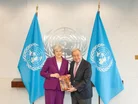
With 50 million people trapped in modern slavery, the Global Commission on Modern Slavery and Human Trafficking has highlighted the crucial role of supply chains in this exploitation. It warns that, without substantial procurement reforms, businesses will continue to perpetuate this issue.
The commission's new report, launched at the United Nations, calls for a comprehensive re-evaluation of procurement systems by businesses. Companies are urged to enforce ethical labour practices to tackle human trafficking directly.
Fulfilling the United Nations Sustainable Development Goal of ending modern slavery by 2030 significantly relies on the active participation of business leaders. Global supply chains, often extending into low-wage economies and subcontracted manufacturing sectors, are particularly susceptible to forced labour, especially in industries like garments, electronics and agriculture.
"Modern slavery poses uncomfortable truths for businesses and individuals," says Alan Jope, former CEO of Unilever.
"However, we must make the choice to act – to better protect those who are being exploited for monetary gain and fight these devastating human rights abuses. Companies must begin to examine their supply chains for modern slavery as well as environmental impact – a sub-contractor abusing the environment may also be abusing their workers.”
The Global Commission is pressing businesses of all sizes to accept responsibility for their entire production processes. This includes conducting risk assessments, enhancing transparency and sharing data to trace forced labour across international borders.
While some progress has been observed, many companies remain either unaware or unwilling to address the problem.
Procurement reforms and legal accountability
At a governmental level, there is a strong emphasis on reforming public procurement. According to the commission, states need to ensure their procurement processes are not inadvertently funding exploitation through their supply chains.
Its report adds: “Member states should ensure that their public procurement rules include both the need to ensure good value and the need to recognise international obligations to end slavery and trafficking. Those making procurement decisions should be trained in ensuring that there is no forced labour in relevant supply chains.”
This recommendation is more than mere rhetoric, demanding enforceable regulations and a unified legal definition of modern slavery to strengthen accountability.
John Schultz, COO at Hewlett Packard Enterprise, adds a vital point: “We’ve spent the last several years strengthening our approach to human rights, shining a brighter light on modern slavery and urging global organisations to act. And, while I’m proud of our progress, we know there’s still a long, difficult road ahead.
"The Global Commission’s report calls us to act now. It doesn’t just highlight the issue, but also gives us a roadmap: clear, achievable steps every business can take, starting with a commitment to collect and share data and insights.”
By collecting and publicly disclosing supply chain information, businesses can identify forced labour risks, acting proactively to prevent harm. The commission insists that financial profit cannot continue to outweigh human freedom.
From awareness to action
The report introduces a 'Prevention Framework' designed to tackle root causes and facilitate early interventions, inspired by methodologies used to prevent genocide. The framework helps businesses and governments detect warning signs of exploitation within workplaces and supplier networks, encouraging businesses to heed survivor experiences.
Nasreen Sheikh, a survivor of modern slavery turned social entrepreneur, emphasises the dire consequences of inaction: “Faceless casualties are generated every day through the purchasing decisions of unconscious consumption and the blind eyes of a global economic system.”
Overall, the commission's message is clear: addressing modern slavery in supply chains is not just about managing reputation or fulfilling corporate social responsibility; it's a fundamental operational and ethical challenge that demands leadership, transparency and significant changes in how goods are produced and sourced.

Baroness Theresa May, Chair of the Commission and former UK Prime Minister, emphasises the urgency: “Every one of those 50 million victims has talents, interests, hopes and desires that have been stripped from them. They deserve to live their lives, just like anyone else. If we are to give them back their freedom and end this heinous crime, we need to act now.”
The commission calls on businesses to scrutinise their entire production chains, including indirect suppliers and recruitment agencies, implementing systems to prevent exploitation.
Partnerships with civil society groups, survivor-led organisations and frontline labour monitors are crucial for ensuring proper oversight and effective action.
Without full transparency and stringent regulations, modern slavery will remain entrenched in the goods we consume. Thus, the Global Commission’s report provides a roadmap for businesses to initiate a coordinated and ethical response, aiming to achieve the 2030 target.
Explore the latest edition of Procurement Magazine and be part of the conversation at our global conference series, Procurement & Supply Chain LIVE.
Discover all our upcoming events and secure your tickets today.
Procurement Magazine is a BizClik brand