
The Supply Lines Worst Hit by the Strait of Hormuz Closure
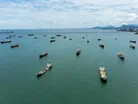
The conflict between the US and Iran continues, with President Donald Trump announcing the extension of the deadline for Iran to open the Strait of Hormuz by 10 days to 6 April after saying talks are "going very well".
Taking to social media platform Truth Social, he wrote: "As per Iranian Government request, please let this statement serve to represent that I am pausing the period of Energy Plant destruction by 10 Days to Monday, April 6, 2026, at 8 P.M., Eastern Time."
Trump warned Iran to negotiate an end to the month-long conflict or risk more high-level assassinations as US-Israeli operations escalate. This ultimatum followed Israel’s announcement that a strike on the port of Bandar Abbas had "eliminated" Revolutionary Guard Naval Commander Alireza Tangsiri along with several senior officers.
As both sides look to resolve the conflict, the Strait of Hormuz remains blocked. While goodwill gestures in negotiations have been made to let some vessels pass, the majority are not getting through.
Oil and gas prices continue to be impacted, with the cost of fuel and energy on the rise.

LNG supply suffers
The blockade of the Strait of Hormuz has effectively cut off a corridor responsible for 20% of global LNG supply. Reports from Drewry, a leading international provider of research and consulting services, indicate that this move immediately chokes off approximately two million tonnes of weekly supply from Qatar and the UAE, a figure that could climb to 5-6 million tonnes per month if tensions do not subside.
Liquefied natural gas (LNG) is primarily used to transport natural gas across oceans to meet energy demands, where it is regasified for power generation, residential heating, cooking and industrial manufacturing. It serves as a lower-carbon fuel for heavy-duty vehicles and shipping and as a flexible energy source to back up renewable energy grids.
Asia currently relies on the Middle East for 80-85% of its LNG, with nations like China and India maintaining a heavy dependence on Qatari exports. A prolonged blockade would necessitate a massive shift in trade flows as these importers seek alternative suppliers.
While India, Japan, South Korea and Taiwan would likely pivot toward increased US LNG imports, China and other South Asian nations might bolster their share of Russian supply. Furthermore, Australian exports are expected to rise to fill the vacuum, though China is likely to avoid American LNG unless the Strait remains closed for several months.
As the summer heat approaches, Asian buyers will be forced to find alternative energy sources. This shift in trade routes is expected to trigger a significant surge in vessel repositioning to meet the impending seasonal demand, fundamentally altering the shipping landscape.
Agricultural disruption and fertiliser volatility
Research from The Atlantic Council, an American think tank in the field of international affairs, states that the closure of the Strait of Hormuz has suspended the movement of roughly 30% of the world’s ammonia-based nitrogen fertilizer right as the vital planting season approaches. Although the US is a leading producer, it remains historically dependent on imports for nearly half of its domestic urea to maintain cost-efficiency.
While American ammonia imports do not typically traverse the Strait, the resulting global supply squeeze has sent domestic prices skyrocketing. In a single week, urea costs at the New Orleans import hub surged 32%, leaping from US$516 to US$683 per metric ton.
These rising input costs will inevitably trigger a domino effect throughout the US economy. As the price of cultivation climbs, farmers and processors will pass these expenses down the supply chain, ultimately increasing the grocery bills of people. The high cost of nitrogen may disincentivise the planting of essential crops like corn, which in turn raises the price of livestock feed, meat and dairy products.
Geopolitically, the disruption is shifting the global balance of power. China, the world’s second-largest fertiliser exporter, is currently prioritising its own food security by restricting sales abroad to shield its own people from price shocks. This retreat forces traditional buyers of Chinese and Middle Eastern products to scramble for limited alternatives, further tightening the market.
In the immediate future, Russia and Belarus are the primary beneficiaries of this vacuum. As the world’s largest fertiliser exporter and a titan in the potash market, respectively, Moscow and Minsk are positioned to exert significant influence over global agricultural trade, provided their exports remain unconstrained.
Because China utilises domestic coal rather than imported gas as a feedstock for ammonia, its production remains insulated from the Strait’s closure. Over the medium term, Beijing may strategically re-enter the export market if the geopolitical leverage outweighs domestic risks.
Impact on petrochemicals
The Atlantic Council has also reported that the closure could have an effect on the petrochemical industry, triggering severe economic and geopolitical consequences.
In the upstream sector, the Middle East typically accounts for approximately 30% of global seaborne liquefied petroleum gas (LPG) exports – a primary feedstock for petrochemical production.
According to Drewry analyst Anshika Prajapati, a prolonged blockade would also eliminate 24% of global seaborne naphtha, another critical input.
Should these upstream shortages lead to widespread petrochemical plant closures, consumer prices are expected to climb.
US consumers are particularly vulnerable to this inflationary pressure. With the average American utilising 255 kilograms of new plastics annually, compared to a global average of just 60.1 kilograms, the impact on the US cost of living will be unbalanced severe.
Helium shortage
The disruption has triggered a critical shortage of helium, a resource where Qatar typically accounts for one-third of global shipments. As a byproduct of natural gas production, helium is indispensable for manufacturing the semiconductor wafers used in everything from smartphones and vehicles to data centres.
Beyond electronics, it is vital for the medical sector, where it serves as a cooling agent for the powerful magnets in MRI scanners.
The crisis intensified after Iranian missile and drone strikes forced the closure of Qatar’s massive Ras Laffan production plant. With the Qatari government estimating that repairs could take three to five years, the long-term outlook for global supply is increasingly grim.
This infrastructure damage validates previous warnings regarding extreme price volatility, with analysts anticipating significant price hikes across cutting-edge technologies and essential healthcare services.