Will The Global Energy Crisis Change Procurement Strategies?
The global energy market is experiencing what the International Energy Agency (IEA) has described as the most severe crisis in recorded history, presenting unprecedented challenges for procurement professionals across all industries.
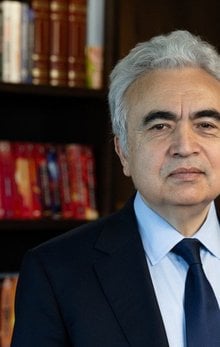
The assessment from Fatih Birol, Executive Director of the IEA, delivered at the National Press Club of Australia in Canberra, underscores the magnitude of supply chain disruptions facing organisations worldwide as the US-Israeli conflict with Iran continues to escalate.
Speaking at the National Press Club of Australia in Canberra on Monday, Fatih warned that the crisis now dwarfs even the most turbulent periods of the twentieth century's energy history.
"This crisis, as things stand, is now two oil crises and one gas crash put all together," he said.
Supply chain disruptions reach critical levels
The crisis represents a convergence of three separate energy shocks occurring simultaneously, equivalent to two oil crises and one gas shortage combined, forcing a fundamental reassessment of sourcing strategies and risk mitigation frameworks.
The effective closure of the Strait of Hormuz has removed approximately 11 million barrels per day from global oil supply chains, a figure that exceeds the combined shortfalls of the 1973 and 1979 oil shocks by more than double.
For procurement professionals managing energy-intensive operations or transport logistics, this represents an immediate sourcing challenge with few viable alternatives.
The liquefied natural gas market faces equally severe constraints.
According to the IEA, LNG supplies have contracted by around 140 billion cubic metres, nearly double the 75 billion cubic metre shortfall that followed Russia's invasion of Ukraine in 2022.
This comparison is particularly relevant for procurement teams that have only recently adapted their sourcing strategies to cope with the previous energy crisis.
Infrastructure damage compounds the challenge, with at least 40 energy facilities across nine countries severely impacted by the conflict.
"The global economy is facing a major, major threat today and I very much hope that this issue will be resolved as soon as possible," Fatih added.

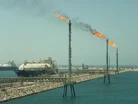
The Ras Laffan complex in Qatar, which serves as the world's largest LNG production facility, has sustained critical damage. For organisations dependent on long-term LNG contracts, this could mean prolonged disruption to established supply arrangements.
Pricing volatility demands strategic response
The procurement cost implications have been immediate and severe.
Oil prices have surged more than 50% since late February, with Brent crude reaching approximately US$113 per barrel and US benchmarks trading near US$100.
This price volatility necessitates urgent reviews of hedging strategies, contract terms and budget forecasts across multiple categories.
The crisis has also highlighted the limitations of traditional risk mitigation approaches.
While the US President Donald Trump's recent announcement of a five-day postponement of potential military strikes provided temporary market relief, procurement teams cannot rely on diplomatic developments alone to stabilise supply chains.
The absence of a clear framework for negotiations means that sourcing uncertainty could persist for months.
The IEA's decision to coordinate the release of 400 million barrels of oil from member countries' emergency reserves represents the largest such action in the agency's history.
However, procurement professionals should recognise that strategic reserves offer only temporary relief rather than a sustainable solution to ongoing sourcing challenges.
Demand management and procurement adaptation
In response to the crisis, the IEA has published recommendations for 10 demand-side measures that could influence procurement strategies across transport, aviation, industry and energy categories.
These measures could help organisations reduce exposure to volatile energy markets while diplomatic efforts continue.
Meanwhile, Fatih was unambiguous about what the only lasting solution looks like.
"Stock release will help to comfort the markets, but this is not the solution," he said, describing the reopening of the Strait of Hormuz as "the single most important solution to this problem".
Sustainability, procurement and supply chain leaders won’t want to miss Procurement & Supply Chain LIVE, taking place at Navy Pier, Chicago, on April 21–22.
Co-located with Sustainability LIVE: The US Summit, the event unites senior decision-makers at a time when supply chains, sustainability and business performance are more interdependent than ever.
Secure your place now for The US Summit – group booking discounts available.
For transport and logistics procurement, the recommendations include reducing highway speed limits by at least 10 kilometres per hour, which could lower fuel consumption for commercial fleets.
Organisations may need to factor these operational changes into service level agreements with logistics providers and reassess delivery timeframes.
The agency also recommends improving driving efficiency for commercial freight through better practices, vehicle maintenance and load optimisation.
Procurement teams managing transport contracts should consider incorporating these efficiency standards into supplier performance requirements.
In aviation procurement, the IEA suggests reducing non-essential air travel to ease pressure on jet fuel markets.
This could prompt organisations to revisit travel policies and explore alternative meeting solutions, with potential implications for corporate travel contracts and supplier relationships.
For industrial procurement, the recommendation to switch from liquefied petroleum gas to alternative feedstocks such as naphtha where possible could require rapid sourcing pivots.
Procurement professionals in manufacturing sectors should assess their organisations' flexibility to substitute inputs and identify alternative suppliers capable of providing substitute materials.
Energy procurement strategies require immediate attention.
The suggestion to divert LPG use from transport and encourage switching to other modern cooking solutions could affect availability and pricing across multiple LPG-dependent sectors.
Organisations should evaluate their LPG exposure and explore contractual mechanisms to secure supply continuity.
The IEA acknowledges that demand-side measures cannot replace lost supply volumes.

However, widespread adoption could provide meaningful relief for procurement budgets while reducing exposure to further price spikes.
Procurement professionals should view these recommendations as potential tools for managing both cost and supply risk in an uncertain environment.
The crisis has exposed the fragility of global energy supply chains and the limitations of geographical concentration in sourcing strategies.
For procurement functions, the immediate priority involves securing continuity of supply while managing unprecedented cost pressures.
However, the longer-term imperative involves fundamental reassessment of energy sourcing strategies, supplier diversification and resilience planning to withstand future geopolitical shocks.
Whether the combination of strategic reserve releases, demand restraint measures and fragile diplomatic progress will prevent further deterioration remains uncertain.
Procurement professionals must therefore prepare for an extended period of supply volatility, price instability and limited sourcing options across energy-related categories.
Company portals


Executives
Fatih Birol
Executive Director