Why BAE Systems Won Royal Australian Navy Contract
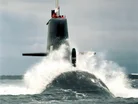
BAE Systems has confirmed a five-year contract extension worth AUD$89m with the Commonwealth of Australia to provide in-service support for the Royal Australian Navy’s (RAN) Collins Class submarine periscopes.
The agreement extends the company’s existing role in maintaining the Attack and Search periscope systems on the fleet of six submarines, with support continuing into the 2030s.
The work covers maintenance, logistics, engineering, supply support and programme management for 16 periscope systems. Operations take place at BAE Systems’ purpose-built Mawson Lakes facility in South Australia and at HMAS Stirling in Western Australia.
Each Collins Class submarine is equipped with both an Attack periscope, used for targeting and observation, and a Search periscope, designed for wider area scanning. These periscopes undergo detailed overhauls and are recertified to ensure they remain structurally sound and ready for operational deployment.

Local and global supply chain in place
Under its existing In-Service Support Contract, BAE Systems has developed a supply chain that integrates local Australian manufacturers with global partners.
The network delivers what the company calls “sovereign capability” – in other words, the ability for Australia to build, maintain and operate critical defence technology without reliance on foreign-owned operations.
BAE Systems has served as the manufacturer, sustainer and upgrader of Collins Class submarine periscope systems throughout the fleet’s service life. The undertaking has involved both domestic production and ongoing technical updates to meet operational needs.
During the original build phase of the Collins Class fleet, BAE Systems and its local supply chain partners produced the optical components, electronics, cables and mechanical parts for the periscopes. The approach ensured a high level of Australian industry content and built long-term capability within the domestic defence manufacturing sector.
The sustainment model now in place means that key components, whether manufactured locally or sourced internationally, can be repaired, replaced or upgraded within Australia’s own defence industry infrastructure.
Andrew Gresham, Managing Director for Defence Delivery at BAE Systems Australia, comments: “BAE Systems Australia is a long-term sovereign capability partner to the Royal Australian Navy with more than three decades of expertise in the manufacture and build, sustainment and upgrade of Collins Class submarine periscope systems.
“We are delighted to confirm a five-year contract extension, building on our large body of work with the Submarine Enterprise that ensures the continued operation of the periscope systems, which are critical for the Collins Class fleet."
Strategic role for Australia’s defence
The Collins Class submarines are central to Australia’s naval defence, tasked with intelligence gathering, surveillance, reconnaissance and deterrence. The periscope systems, while physically small compared to the size of the vessel, are vital for the submarines’ operational effectiveness.
Sustainment of these systems ensures the RAN can maintain operational readiness without delay from overseas supply or repair. It also supports the government’s wider objective to maintain sovereign control over defence assets, allowing Australia to act independently when needed.
BAE Systems’ Mawson Lakes facility operates as the central hub for in-depth maintenance and engineering, while HMAS Stirling provides operational-level support close to the fleet’s home port.
This arrangement enables both scheduled servicing and rapid-response repairs if required.
Andrew adds: “This announcement underscores the importance of our company’s long-standing experience in delivering periscope systems in Australia and our local network of trusted industry partners delivering into the sustainment programme.”
BAE's contract with the Commonwealth of Australia secures the continued maintenance of the Collins Class submarine periscopes well into the next decade, reinforcing Australia’s ability to manage its own defence technology and maintain the operational capability of one of its most important naval assets.