Deforestation: Tackling the US$279bn Supply Chain Risk
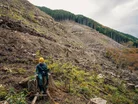
The loss of primary rainforest is accelerating creating significant risks for global supply chains. According to CDP, in 2024 alone, 6.7 million hectares were lost, an 80% increase from the previous year.
This level of deforestation resulted in the release of 3.1 gigatons of greenhouse gases. The effects range from direct supply chain disruption to the degradation of vital carbon sinks, which could have long-term consequences for climate stability and business operations.
CDP analysis puts the financial effects from forest-related risks at US$279bn, or an average of US$338m per company.
Its report suggests the solution is action based on comprehensive assessments of dependencies impacts risks and opportunities. This highlights a need for more robust evaluation of how corporate activities depend on and affect forest ecosystems.
The financial value of global forests
The economic importance of forests is substantial. Research from Boston Consulting Group, (BCG) in 2020, valued global forests at US$150tn, almost double the value of global stock markets at the time.
Beyond their financial value, forests are critical for environmental stability. The World Resources Institute (WRI) states they absorb an average of 14.4 gigatons of CO₂e annually. Covering 4 billion hectares worldwide their climate-regulating role is indispensable.
However, these vital assets are under threat. The WRI identified agricultural expansion as the cause for a third of global deforestation, and degradation between 2001 and 2024, with wildfires and logging also major contributors.
BCG estimates that if these threats are not mitigated, the value of global forests could decline by 30% by 2050 posing a severe economic risk.
Corporate blind spots on deforestation risk
A gap exists in corporate risk assessment, despite a clear financial dependence on commodities that cause deforestation.
CDP reports that while 827 companies identified over 1,200 substantive forest-related risks to their operations, fewer than half of these risks had quantified financial effects. This indicates a potential blind spot in corporate risk management.
The issue extends to the financial sector. Institutions managing US$30tn in assets reported not knowing if they finance, or insure companies, with operations in high-risk commodity value chains.
The CDP report notes that improved dependency, impact, risk and opportunity (DIRO) assessments could provide crucial signals to investors and policymakers about how well companies are managing these risks.
Business action and supply chain collaboration
In response businesses are taking steps to reduce their impact on forests. PepsiCo is a founding member of the Consumer Goods Forum’s Forest Positive Coalition, an initiative designed to eliminate deforestation from key commodity supply chains.
PepsiCo is aiming for deforestation-free sourcing by 2025, and deforestation- and conversion-free sourcing by 2030 for high-risk commodities within its own activities.
Jim Andrew, Chief Sustainability Officer at PepsiCo, says: “PepsiCo has long recognised that to end deforestation in key commodity supply chains we have to work beyond our individual supply chain and engage deeply in collaborative efforts.
"That collective action can bring an amplified impact across our entire industry and in the landscapes where commodities are produced.”
Tesco has implemented LEAF Marque certification across its UK fruit and vegetable growers, and is expanding this to its global suppliers. This certification requires farms to adopt a holistic approach to sustainable farming, which includes addressing deforestation.
Ashwin Prasad, UK CEO at Tesco, adds that the partnership with suppliers and growers was key to the rollout adding that it is “really encouraging to see environmental improvements already having an impact on farms across the UK.”
In another example of industry action Bunge has collaborated with CP Foods to pilot a traceability platform, using blockchain technology for deforestation-free soybeans. This technology enhances transparency in complex supply chains.
“Adding a layer of blockchain technology improves the transparency in end-to-end traceability that Bunge has been doing for some years” adds Rossano de Angelis Jr., Bunge’s Vice President of Agribusiness and Country Manager Brazil.
“This ability to increase end-consumer confidence in soy projects is only possible thanks to the robust supplier’s socio-environmental verification and monitoring system that we have structured over the last decade, which uniquely positions us to provide the connection of proven sustainable products with markets where the demand for them is increasing.”



Executives

Ashwin Prasad
UK Chief Executive Officer
Jim Andrew
Chief Sustainability Officer, EVP and Executive Committee member
Rossano de Angelis Junior
Vice President of Agribusiness and Country Manager Brazil