Procurement's Role in Tesco's Sustainability Performance
The UK wastes around 9.52 million tonnes of food annually, with supermarkets contributing approximately 270,000 tonnes, as per the Waste and Resources Action Programme.
This contributes more than £19bn (US$25.4bn) in value each year, alongside additional greenhouse gases.
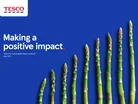
Tesco’s 2024/2025 sustainability report, Making a positive impact, illustrates how the supermarket chain is addressing waste, emissions and energy efficiency.

Embedding sustainability in procurement
Tesco has made sustainability a core aspect of its business strategy, integrating it into both operational efficiency and broader transformation within the retail sector.
This approach underscores the increasing importance of sustainable procurement in supporting environmental and social objectives across the supply chain.
The company's "planet plan" identifies six priority areas: improving products, decarbonising transport, reducing store emissions, supporting sustainable consumption, eliminating waste and protecting nature.
These pillars form the foundation of Tesco's procurement strategy, promoting both internal carbon reductions and supplier engagement for broader climate goals.
In line with these efforts, Tesco has forged sustainable farming partnerships, advocated for enhanced policy frameworks and engaged with NGOs to ensure that procurement practices align with extensive societal and environmental requirements.
Reducing food waste through strategic procurement
Tesco has committed to halving its own food waste by the end of 2025, pegging it against a 2016/17 baseline.
According to latest report, 82% of unsold food fit for human consumption in the UK was either diverted to those in need or used as animal feed. Strategic procurement partnerships and infrastructure investments have played a vital role in this redistribution, with over 25,000 tonnes of surplus food being repurposed through collaborations with more than 1,000 community partners, FareShare and OLIO in 2023/24 alone.
"Collaboration is key to addressing food insecurity and we are happy to partner on this with the other retailers," states Matthew Barnes, UK CEO of Tesco.
Tesco's strategy also benefits from innovations in product management, such as eliminating ‘best before’ dates on selected items to reduce confusion and prevent unnecessary disposal by consumers.
Decarbonisation initiatives
Tesco has surpassed its 2025 target of reducing Scope 1 and 2 emissions, achieving a 65% reduction.
This progress is bolstered by the Science Based Targets initiative, which backs Tesco's drive for an 85% cut in these emissions by 2030. Procurement is instrumental in this success, evidenced by the company's initiative to source 100% renewable electricity for all its operations.

The signing of the UK’s largest corporate solar Power Purchase Agreement with Cleve Hill Solar Park marked a pivotal procurement decision, providing a significant portion of Tesco's green electricity needs.
The initiative not only supports Tesco's ambition for carbon neutrality by 2035 but also enhances the sustainability of its procurement activities.
Supply chain transformation through circular economy
Tesco is paving the way for a closed-loop model within its supply chain, tackling food and packaging waste.
The company aims for all its Own Brand packaging to be recyclable, which requires strategic procurement choices, such as opting for paper-based alternatives and laser-etched labels to avoid single-use plastics.
Significant efforts in agriculture, like Tesco's Future Dairy Partnership, illustrate how procurement is central to scaling sustainability innovations.
By collaborating with Arla and Müller, Tesco supports low carbon farming practices.
"It’s critical we continue to ensure farmers play a pivotal role in this work," says Ashwin Prasad, Chief Commercial Officer at Tesco, emphasising procurement's role in achieving sustainable agriculture goals.
Elsewhere, procurement decisions at Tesco prioritise sustainable sourcing for high-risk commodities like soy and palm oil, aspiring for 100% of its soy to be deforestation-free by 2025 through collaborations like the Responsible Commodities Facility and the UK Soy Manifesto.
Explore the latest edition of Procurement Magazine and be part of the conversation at our global conference series, Procurement & Supply Chain LIVE.
Discover all our upcoming events and secure your tickets today.
Procurement Magazine is a BizClik brand.