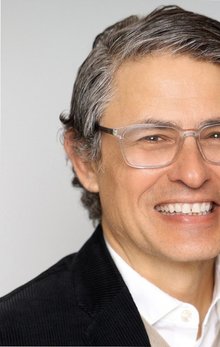
The Procurement Interview: Marcelo Stefani at PepsiCo

The Procurement Interview: Marcelo Stefani at PepsiCo
The days of procurement as a back-office engine room focused almost exclusively on cost reduction and transactional efficiency are firmly in the past, according to Marcelo Stefani, Global Chief Procurement Officer at PepsiCo.
Speaking on the main stage at Procurement and Supply Chain LIVE: The US Summit, he explored the rapid transformation of the function, including how procurement has stepped up to become a primary driver of PepsiCo’s corporate strategy, particularly through its PepsiCo Positive (pep+) agenda.
“I love how procurement, at least in PepsiCo, developed from a second division function to play in the first division, being the vehicle that is helping the company to deliver the PepsiCo Positive targets,” Marcelo says.

“I love how procurement, at least in PepsiCo, developed from a second division function to play in the first division ”
The catalyst for change
The shift in mindset wasn't a choice; it was a necessity born of global volatility. Marcelo notes that since the COVID-19 pandemic, the market has undergone a fundamental shift. Supply chain disruptions, geopolitical conflicts and shifting trade tariffs have created a landscape where the old way of operating is no longer viable.
“I think the mindset has to be changed. And I would say since COVID, things changed rapidly in the market,’ Marcelo explains. “We have a lot of supply change disruptions. We have tariffs that are also impacting. I think all that requires a change of behaviour and a step up from the function in procurement."
For PepsiCo, this ‘step up’ involves balancing three core elements: end-to-end category expertise, operational excellence and, perhaps most crucially, a fundamental reimagining of supplier relationships.
“I think all that requires a change of behaviour and a step up from the function in procurement ”
- US$100 million+: The amount invested together with suppliers in rPET collection over 10 years.
- 10 million acres: The 2030 target for regenerative agriculture in the US through the Cargill partnership.
- 8 years: The length of the strategic agreement with ADM, moving away from 2-year cycles.
Redefining the category expert
The first pillar of this new strategy is a deep dive into ‘end-to-end categories’. Marcelo’s team is no longer composed of generalist buyers, but of specialists who understand the mechanics of their portfolios from the ground up.
He explains: “Four team that know the portfolios they are managing upside down. The goal is for procurement leads to become ‘soft leaders’ in their specific domains, providing the company with a strategic advantage rather than just a price point.”
“The goal is for procurement leads to become ‘soft leaders’ in their specific domains ”
The ‘customer of choice’ strategy
While market expertise and execution are vital, Marcelo identifies another pillar, supplier relationships, as the most challenging and transformative task. In the past, PepsiCo’s relationship with its suppliers was often strictly transactional. This occasionally led to friction, with some suppliers reportedly refusing to work with the brand on new initiatives.
“Some suppliers, and this is a real story, said, ‘over my dead body will I send something to PepsiCo. It's very transactional’. We had to change that,” Marcelo says.
To bridge this gap, PepsiCo began sharing its long-term strategies, growth targets and sustainability goals with its partners to become a ‘customer of choice’. Marcelo explains: “We started sharing with them the strategies where we want to grow, why we need to grow, why we need sustainability, why it's important for having a better world and how they can help us and that changed.”
A seat at the table
This change in perspective isn't just external. Internally, procurement has won a seat at the design table. Traditionally, procurement was involved only after a product design was already ‘locked’.
“We changed that. We said, no, we are going to be a partner from the very beginning with marketing and with R&D, and we are helping you to do this. So I think this was a big difference that again, this wouldn't have happened if you don't change the way you operate with your key partners,” Marcelo says.
This shift has transitioned the function’s focus: “Don't get me wrong, cost is very important and we need to deliver efficiencies in the upstream supply chain in the day-to-day things. So this is not going to disappear. But we changed the world of productivity to the world of value creation.”
“Cost is very important and we need to deliver efficiencies in the upstream supply chain in the day-to-day things ”
Sustainability as a shared goal
Under the pep+ framework, sustainability is a core requirement of every contract. Marcelo is clear: “I think now, from a sustainability point of view, in every agreement, in every building we do, we put the sustainability targets that we together with our suppliers need to deliver.”
This approach is best illustrated by PepsiCo’s long-term partnerships with agricultural giants like Cargill and ADM. With Cargill, PepsiCo has established a common target for 2030 to have 10 million acres of regenerative agriculture in the US. “We were working with the Iowa farmers together and the beauty is now we have healthier soils, more resilient farmers and a more secure supply chain, and you cannot do that in a selection.”
Similarly, with ADM, PepsiCo has moved away from traditional two-year cycles to eight years of agreement.
“We put the sustainability targets that we together with our suppliers need to deliver ”

Investing in the future
The commitment to sustainability and innovation is backed by significant financial investment. In the packaging sector, PepsiCo has partnered with suppliers on lightweighting and recycled content.
Marcelo explains: “We work together with suppliers to have new specifications for lightweighting. We invested with our suppliers to have more in recollection for 10 years, and we invested together more than US$100m. So this is fundamental for us to be part of the ecosystem of PepsiCo to really drive the innovation and the sustainability we need.”
“This is fundamental for us to be part of the ecosystem of PepsiCo to really drive the innovation and the sustainability we need ”
One team, one voice
Ultimately, Marcelo’s vision for procurement is one of total integration. He notes with pride that when meeting with suppliers, it is often difficult to distinguish whether a PepsiCo representative is from the sustainability office or the procurement office. “I love when we are seeing suppliers, some of them, they don't know if we come from the CSO office, from the procurement office. We have the same language and the same passion for doing business.”
As the function continues to evolve alongside technologies like AI, Marcelo stresses that procurement must remain dynamic: “For me, what is saying is it's never static and never still. You need to reinvent yourself every day.
“You need to change the way you work, especially with AI coming as well. Therefore, the only way you can do that is if you have an ecosystem for the suppliers that you are working with. If not, this does not happen at all.”
Company portals

Executives
Marcelo Stefani
Global Head Sourcing & Procurement PepsiCo