Mars, PepsiCo and Nestlé: CPG Cycle Time Optimisation

Optimising cycle time in modern procurement is more than just ‘moving faster’; it is about removing the administrative friction. True optimisation doesn’t mean forcing teams to work at an unsustainable pace. Rather, it is about removing the deep-rooted administrative friction that halts productivity and stalls growth.
As the demand for agility has grown, procurement functions, to stay competitive, are shifting away from legacy bottlenecks and embracing automated, data-driven workflows. By adopting real-time analytics and smart automation, businesses aren't just shortening the time from requisition to order, but unlocking hidden capacity, improving supplier relationships and transforming procurement into strategic value.
Why business as usual no longer works
The traditional procurement playbook was built for a different world. Historically, procurement departments prioritised rigid control, establishing multi-layered approval chains and manual checks to manage risk.
A combination of shifting workforce demographics, macroeconomic instability and administrative costs has made cycle time optimisation an operational necessity rather than a luxury.
The pressures reshaping the industry aren't just internal software preferences; they are fundamental shifts in how people work, how markets move and how capital is spent.

Specifically, there are three primary catalysts driving the urgent need for cycle time optimisation:
- The rise of consumerised B2B expectations
The shift in workforce demographics has brought a new generation of digital native employees into corporate roles. These employees manage their own lives with frictionless, one-click interfaces and, as a result, this is expected at work too.
- Volatility and risk
In a volatile global market, agility and visibility are the ultimate form of risk mitigation. Modern supply chains are susceptible to rapid geopolitical shifts, material shortages and sudden inflationary spikes. In this environment, an unapplicable and unclear procurement cycle introduces severe operational risk.
- Administrative frictions
Manual procurement is an invisible drain on corporate capital. Every touchpoint in a manual cycle carries a cost. According to industry benchmarks, the administrative overhead of a fully manual procurement cycle can easily exceed US$100 per Purchase Order (PO).
How CPG companies are using tech to optimise cycle time
Mars
Partnering with Google Cloud, Mars is a prime example of harnessing sophisticated AI assistants as a collaborative partner.
Managing a vast ecosystem of data and legacy systems, Mars has adopted Gemini Enterprise to provide a unified hub for its associates to access and build AI tools.
“Our digital investments at Mars enable unlocking the potential of our Associates and delivering real, sustainable business value that supports our growth,” says Marina F. Bellini, Global Head of Digital Technologies at Mars Incorporated and President at Mars Global Services.
“Our strategic partnership with Google Cloud on Gemini Enterprise builds on years of great learnings and innovation and strengthens the modular architecture powering our proprietary AI platform, Mars IQ.”
- Growth orchestration: using Gemini Enterprise as an orchestration platform to accelerate the growth of its iconic brands and its categories with its customers.
- Unified enterprise search: establishing a single, secure entry point for information across Mars’ entire infrastructure.
- Secure agent consolidation: using Gemini Enterprise’s low-code and no-code environment, Mars empowers its associates to create their own AI assistants tailored to specific needs.
“The magic of Mars is our brilliant Associates, our iconic brands and our ever-learning culture we operate in,” says Gülen Bengi, Lead Global Chief Marketing Officer at Mars Incorporated and Global Chief Growth Officer at Mars Snacking.
This unified platform puts us in a great position to put business solutions at the core with technology as the enabler. We see incredible potential in our partnership as we bring solutions like One Demand AI to Mars–accelerating our growth pillars of innovation, brand building and end-to-end sales execution.”
PepsiCo
Marking an industry-first for a global CPG company, PepsiCo, in collaboration with Siemens and NVIDIA, is transforming its plant and supply chain operations with advanced digital twins technology and AI.
Traditional expansion methods are slow and costly, limiting flexibility and the scalability needed to meet growing consumer needs while driving innovation. As such, PepsiCo is using AI and digital twins to process simulation and facility design to retool and optimise its existing physical footprint.
- Pre-testing with accuracy: PepsiCo uses physics-level 3D digital twins to simulate and validate facility changes virtually, catching up to 90% of issues before making any physical modifications.
- Boosting throughput: By optimising existing facility layouts in a virtual environment within weeks, early pilots have already unlocked hidden capacity and delivered a 20% increase in production throughput.
- Transitioning to an adaptive ecosystem: PepsiCo is shifting from slow, traditional expansions to a unified, AI-powered digital blueprint, allowing plants to actively anticipate and adapt to demand rather than just respond to it.
"The scale and complexity of PepsiCo’s business, from farm to shelf, is massive – and we are embedding AI throughout our operations to better meet the increasing demands of our consumers and customers,” says Ramon Laguarta, Chairman and CEO of PepsiCo.
Shifting to a digital-first strategy, PepsiCo is leveraging physics-based digital twins and AI agents as co-designers to simulate, validate and optimise facility layouts before any physical build.
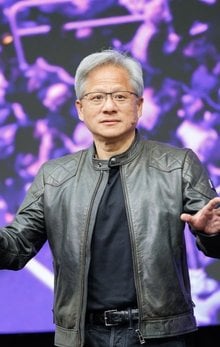
“Physical industries are entering the age of AI. For companies with real-world assets, digital twins are the foundation of their AI journey,” says Jensen Huang, Founder and CEO of NVIDIA.
“Working with NVIDIA and Siemens, PepsiCo is re-architecting its operations – using physically accurate digital twins and AI to reinvent how it designs, optimises and runs its global operations.”
Nestlé
A landmark digital core upgrade, Nestlé is in the process of completing a two-year deployment of AI and automation at scale, to increase speed, innovate smarter and deliver results quicker.
Having already completed its first phase, Nestlé is improving its operational efficiency and responsiveness to evolving consumer trends, as well as freeing up resources to invest in its global brands.
This deployment of AI at scale will help Nestlé to achieve better insights as well as the automation and improvement of processes across its operations. It includes embedding an AI copilot directly into its core business systems to help employees access insights, automate routine tasks and make faster, more informed decisions.
- Data-driven decision making: next-generation intelligent order fulfilment for retail customers in-store and online, matching supply with demand in real time.
- Reporting and planning: real-time, data-driven decision-making for consistency across reporting and planning processes.
- Visibility and savings: automated and standardised procurement processes in the cloud across global operations, meaning real-time spend visibility and significant cost savings.
"Driving growth through innovation is a top priority. We are transforming our business to invest more boldly in the best opportunities. We need to combine great consumer insights and innovation with flexibility and scale, to provide great quality products to consumers around the world when, where and how they want them,” says Anna Manz, CFO at Nestlé and responsible for Integrated Business Services.
“This upgrade will help us build multi-year innovation pipelines, more agile production and digital-first marketing and sales platforms for areas like cold coffee, therapeutic pet food and modern cooking aids."
Chris Wright, Head of IT and CIO at Nestlé, adds: "We are building a future-ready enterprise - one that works smarter and faster. Having a common ERP system as our backbone is already a tremendous advantage for Nestlé [...] With the upgrade, we gain more flexibility, capabilities and insights that will help us roll out new products globally faster to meet the needs of our customers and consumers.”



Executives
Anna Manz
Chief Financial Officer, Executive Vice President

Christopher Wright
Head of Information Technology and Nestlé Group CIO
Gülen Bengi
Lead Global Chief Marketing Officer Mars Inc. and Global Chief Growth Officer Mars Snacking
Jensen Huang
Founder and CEO

Marina F Bellini
President, MGS & Digital Technologies
Ramon Laguarta
Chairman of the Board of Directors