Redefining Value in the Age of Strategic Sourcing

The procurement landscape is undergoing a fundamental transformation. Tariff volatility, geopolitical instability and the rapid rise of AI are forcing organisations to rethink how they source, how they manage supplier relationships and how they make decisions.
Price remains important, but the conversation has shifted toward resilience, total value and predictive intelligence.
On the Supply Chain stage at Procurement & Supply Chain LIVE: The US Summit, three senior practitioners came together to cut through the noise.
Moderated by Sheri Hinish, Founder at Supply Chain Revolution, what follows is an honest discussion about where strategic sourcing stands today, what's working, what isn't and what the function must become by 2030.
Beyond price, how has value shifted in today's economy? Is the focus moving from immediate cost savings toward total cost of ownership, supply continuity and broader value creation?
Tom Cummins, Vice President of Global Procurement at RS Group: Continuity of supply is the name of the game. We have to be able to provide the services for our clients, the products for our clients, full stop. In terms of how we get there, understanding the market is more important than ever, and understanding the implications of what’s going on in the marketplace is critical.
That said, price is still key. We still have clients looking to us to provide the best-priced products possible, but what we’re seeing is much more willingness from our clients to look at value and total cost of ownership.
How do we help them reduce their demand? How do we bring alternative commercialised products to the table? Something that years ago they weren’t talking about, but in the past couple of years, based on drivers they themselves have, they’re now being much more willing to accept those changes in product.
In the midst of what’s happening, risk resilience is front of mind for a lot of people, especially with the crisis in the Middle East; those shifts may come at a higher cost. What are some of the trade-offs?
Bhavik Pathak, Director and Head of Supplier Quality (Americas Region) at Alstom: Strategic sourcing these days focuses on unit cost, but the value is shifting. The focus is more on low risk, how we can minimise risk, how we can predict performance output and, in case of a crisis, how we can recover fast.
So it’s not just about unit cost; it’s about how we can anticipate risk at an enterprise level and come up with an action plan.
Ashley Hetrick. Principal, Sourcing and Supply Chain Segment Leader at BDO USA: I think, in a lot of ways, it brings us back to the core of supplier and sourcing segmentation. I’ve got my set of the portfolio that’s always going to be a price gate, and I just need that to take as little time and attention as possible. Then there are the bigger pieces that I’m dealing with that could significantly disrupt business operations or could create tremendous upside, speed to market and new innovations.
Those are the ones where I think we do have to step back from price and say, “what does value look like to me, and how do I get it?”
I think that’s the interesting human side of sourcing: it’s about people in a room solving problems together and saying, how do we work together, not how do I just buy something.

What does a true strategic supplier relationship look like in 2026? How does it differ from that traditional view, in your perspective?
Ashley: I think it’s really about our ability to solve problems nimbly and transparently. I think the last 18 months have shown us the value of having not hundreds of suppliers, but five or 10 who you can call at a moment’s notice and say, “I’m dealing with a 165% tariff over here. Help me figure out how to redesign something to change the game, because I can’t pay that.”
Those are the things that are becoming really important. We’ve done a tonne of research on this, and companies who focus on fewer than 1% of suppliers to really be strategic are the ones who get the greatest value, because it takes so much time and effort to build those relationships.
Tom: Building on that, transparency is key. Providing those strategic suppliers with feedback on their performance is something we endeavoured to do years ago, but now it’s being much more transparent, using real data to provide those insights so they can get better at what they do, and then, in turn, provide us with more insights.
Bravik: In my view, a strategic supplier right now in 2026 is one we work closely with. We need to closely work with suppliers, focusing on whether they are capable enough or not.
Then it comes to resilience, and it comes to market intelligence as well. All these different pieces need to be integrated into day-to-day working, which will flag what is coming, what is anticipated, and help avoid disruptions.
Moving from this reactive paradigm to being proactive is something we hear a lot about on day one, and even predictive.
How are organisations leveraging exponential technologies like AI and edge computing to transform unstructured data into real-time market intelligence? Specifically, how does this shift move strategic sourcing from a reactive model to a truly predictive one?
Ashley: I think the really fortunate place we are in right now is that we have all the data and we have the tools to mine insights from it. What we lack is focus. I see so many organisations drowning in data, not because they can’t interpret it, but because they can’t say what the three problems are that they’re trying to solve.
If I really want to be proactive, what are the three areas that are going to change the game for me versus all the signals I could receive at one moment? Once I can really get down to that problem statement, then I can extract the pool of data that I actually need to be analysing and deploy the right tools to give me those insights.
What are the three things in a use case that help make that shift for a client intelligently?
Ashley: I’ve got a client who manufactures industrial equipment here in the Midwest. They run a lot of their own materials back and forth. As we started to look through the data, the biggest problem was manufacturing exceptions: I don’t have the parts I need on the manufacturing floor. So we backed up and said, "What are the handful of things that indicate whether a part arrives on time when it’s expected?”
Then I can set up specific data collection points for those items and ensure those are the only signals I’m receiving. I can then change the predictability of my inventory. But that’s really hard to do if the problem is really big. So it’s like, what’s the one thing that, if I could get control of it, 80% of the noise in my organisation would go away? That’s where I’ve seen companies really succeed in using that data.
Bavik: I can certainly echo what Ashley said. Data is absolutely important, but when we talk about market intelligence, we gather all this data, but intelligence is not a one-time thing.
We need to continuously sense that data and plan scenarios: how can we react in those kinds of scenarios? If something happens, this is my action plan. We need to continuously run those models and, based on those outcomes, be ready.
And of course, data integrity is paramount. If we do not have the right data, if we do not have decision models integrated into that, things will go wrong.
We know AI is here to stay, but the real question is: what does procurement look like when AI isn’t just a tool on the side, but is integrated into the operating model?
Ashley: That’s a fun one because I get the opportunity to look at a lot of different organisations and how they deploy tech. I’d say the biggest limiter we see right now is pilots. Pilots kill everything. Choose one thing and go all in on it.
The companies that are really embracing AI are saying, I need people solving smart; I need people having human interactions, conversations with business partners, and solving hard problems. People do the people things, and let’s pick a couple of tools that create all of the noise and let’s architect our organisation around them.
It has to be all or nothing in this experimentation mode. We’re seeing so many wasted investments from someone saying, I could use that, or I could keep doing what I’ve been doing for 10 years.
Bavik: In my view, AI, of course, we can use on a day-to-day basis to avoid repetitive tasks. We can reduce the effort in bid normalisation, RFX drafting, PO work, etc. but what we are missing is the human value of it, like in complex negotiations. AI won’t help me there.
Of course, I can do some groundwork. I can rely on certain information, data analysis and all that, but certain negotiations won’t be helped by AI.
Another thing is that strategic sourcing buyers and everybody else are trying to adopt AI, but two things are missing right now, and these are what we need to work on in our industry: value and risk. Buyers these days have to be value- and risk-architected rather than just traditional buyers.
Tom: The answers hit home from both of the other panellists, particularly around getting stuck in the pilot loop. As well as where we need to focus on risk. My company is not there yet.
We are using AI to help with data cleanliness, or using it retrospectively, not proactively, when we get a request. A lot of what we do involves significant numbers of transactions and the data is coming in bad.
We still have humans focusing on cleaning that data at that time, rather than focusing better on managing the supplier relationship and the performance of the supply base.
That’s where we need to shift. The tools are there. How do you apply them? How do you make the decision and just run? Recognising you may make a decision you later have to pivot from, but you need to make a decision and just run with it.
How can organisations practically bridge the "supplier connectivity gap" by integrating digitally immature suppliers into an advanced AI-driven ecosystem? What real-world strategies prevent leaving critical, less tech-savvy suppliers behind during digital transformation?
Bavik: Ecosystem is key. In an ecosystem, everything cannot be ideal. For example, in our industry, we deal with thousands of suppliers. Each and every supplier has a different level of maturity. In the current scenario, we need to adopt a tiered approach. A certain percentage of suppliers, I would call it a strategic supplier point, can adopt all these digital integrations, but I cannot expect that from my tail suppliers. They are not ready for that yet.
So there should be a different tiered approach, and then slowly you can bring in improvements and support those suppliers you can work with. That is how you can change the ecosystem, not one solution for all. It won’t work.
How can organisations build governed, trustworthy AI environments that balance productivity with cybersecurity and digital sovereignty? Specifically, how do you maintain supplier trust regarding data usage and "opt-in" transparency while navigating the risks of shadow AI?
Ashley: That’s a tremendously complex set of questions. I think setting those governance standards up front is critical, and we’ve got to do it at speed. There’s nothing more frustrating than hearing, "Okay, we’ll talk about it, but our governance committee doesn’t meet for two more months. They only meet once a quarter.” We’ve got to have bounds of what we’re comfortable with and how we ingest data to a point, then review it before it goes all the way into our systems, particularly if we’re using it for decision-making.
So there’s part of this where we’ve got to firewall things off, but we’ve also got to set standards of what we will accept, what tools we’re comfortable with, and why. On top of all of that, make sure we always have humans pressing the buttons and making the big decisions because they will see the anomalies, because they’re used to seeing it.
Bavik: In our industry, public transportation, cybersecurity and overall safety are paramount. If somebody hacked the system, it’s going to be a disaster. So we are very cautious about this particular element. If the system goes rogue or gets hacked, of course, we need to have a safety backup plan for that. It’s not about the algorithm, but what I’m putting into it right now.
As we approach 2030, what specific sourcing tasks will be automated versus those that will be elevated? In this timeframe, how will the function evolve to meet net zero commitments and shift from traditional governance to more frequent, real-time oversight?
Tom: All of our day-to-day transactions are already on that path right now. We’re automating a significant number of those transactions. In 2030, I expect all of them to be automated on both sides of it: the input from suppliers, but also how our teams deal with them on our side. All of it.
Bavik: We want the focus to be on strategy, right? And how we manage the supply base to ensure that they’re performing to our needs and our clients’ needs, and then building our category management strategies to support the identification of the right suppliers.
Ashley: We’ll certainly see some sort of automation of repetitive tasks, even from a quality perspective, because we need stable quality ultimately, otherwise it will affect the margin of the project.
So RFX, normalisation and non-conformity predictions, and all those things, we can automate. But, for example, if we have a supplier crisis, those things will not change. That’s when human intervention is needed, so the value of human judgment in the human-in-the-loop becomes more valuable.
We still have humans in the process, but the type of work they do significantly changes. It is that strategy and business partnering. We play an exercise with our clients where we have them map out their time prioritisation framework: what are the things that are important, what are the things that are urgent? If you have people map out the things that are important but not urgent, typically, they’re activities they never get around to doing.
There are things like sitting down with my business partners and understanding what their strategy is and what they’re probably going to need from me in the future, understanding my suppliers’ R&D road maps, where they’re expanding, and the cost pressures they’re under.
I think that becomes 95% of the job, and 5% is managing the tech that’s doing all the other stuff that you spend 95% of your time doing today. That’s why a lot of us got into this profession: the partnering, the relationships and the strategy. Yet we spend most of our time reconciling invoice discrepancies.
Company portals



Executives
Ashley Hetrick
Principal, Sourcing & Supply Chain Segment Leader
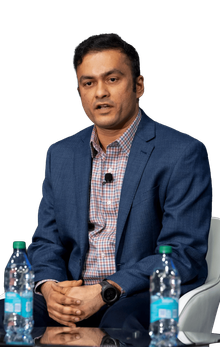
Bhavik Pathak
Director and Head of Supplier Quality - Americas Region

Sheri R. Hinish
Supply Chain Queen, Founder
Thomas Cummins
Vice President - Global Procurement