Top 10: Procurement Platforms for Manufacturing
Manufacturers face a distinct procurement challenge. Beyond managing indirect spend, procurement teams must secure critical raw materials, collaborate closely with suppliers and maintain continuity across increasingly complex global supply chains.
As geopolitical uncertainty, inflationary pressures and ongoing supply disruptions continue to impact industrial sectors, digital procurement platforms have become essential for improving visibility, managing supplier risk and supporting production continuity.
The leading platforms combine sourcing, supplier management and spend analytics with deeper integration into manufacturing operations. From enterprise-wide procurement suites to specialist manufacturing solutions, Procurement Magazine examines the 10 platforms helping manufacturers build more resilient and efficient procurement functions.
10. Syspro
CEO: Leanne Taylor
Founded: 1978
Syspro is a focused ERP solution aimed at small and mid-sized manufacturers seeking straightforward procurement and production management tools. It offers strong inventory control, supply chain visibility and cost management features without the complexity of larger enterprise systems.
Syspro is particularly valued for its ease of implementation and affordability. While it lacks the global scalability of Tier 1 platforms, it remains a reliable option for manufacturers prioritising operational efficiency and simplicity.
9. QAD
CEO: Sanjay Brahmawar
Founded: 1979
QAD specialises in manufacturing ERP solutions with strong capabilities in automotive, life sciences and regulated industries.
Its procurement functionality is designed to support compliance-heavy supply chains and complex production requirements.
QAD offers strong supplier collaboration, quality management and traceability features, making it a trusted platform in highly controlled environments. While smaller than major ERP vendors, its depth in specific manufacturing sectors ensures continued relevance for niche, high-regulation industries.
8. Epicor Kinetic Procurement
CEO: Steve Murphy
Founded: 1972
Epicor's manufacturing heritage continues to make it a strong choice for small and mid-sized manufacturers. Embedded within the wider Kinetic ERP platform, procurement capabilities are closely linked to production, inventory and supplier management functions.
Recent enhancements have focused on improving supply chain visibility and collaboration, helping manufacturers respond more effectively to disruption and changing demand patterns. The platform's industry-specific design provides practical benefits for manufacturers seeking procurement functionality without implementing a separate enterprise procurement suite. Its position is strengthened by deep expertise across industrial manufacturing, distribution and product-centric industries.
7. Oracle NetSuite
NetSuite Founder & EVP: Evan Goldberg
Founded: 1998

Oracle NetSuite is a widely adopted cloud ERP platform designed for mid-market manufacturers requiring scalability without enterprise-level complexity.
It provides integrated procurement, finance, and inventory management capabilities within a single system. Its strength lies in rapid deployment and ease of use compared to larger ERP suites.
While less specialised for highly complex manufacturing operations, it offers a strong balance of functionality and flexibility for growing organisations expanding their operational footprint.
6. Coupa
CEO: Leagh Turner
Founded: 2006

Coupa combines sourcing, procurement, supplier management, invoicing and spend analytics within a highly integrated environment.
For manufacturers, visibility remains a key advantage. Coupa's analytics capabilities help procurement teams identify savings opportunities, monitor supplier performance and improve decision-making across complex supply chains. The platform's extensive ecosystem and benchmarking capabilities have also helped manufacturers compare performance against industry peers.
5. Infor
CEO: Kevin Samuelson
Founded: 2002
Infor has built its reputation on industry-specific cloud applications, with manufacturing remaining one of its strongest sectors. Its procurement capabilities are closely aligned with the operational realities of discrete and process manufacturing environments.
The company's recent collaboration with Kinaxis demonstrates a continued focus on helping manufacturers improve planning, visibility and responsiveness across their supply chains. Infor's industry expertise allows procurement teams to connect sourcing decisions more directly with production requirements. This focus on manufacturing-specific functionality continues to differentiate the platform from broader enterprise procurement providers.
4. IFS
CEO: Mark Moffat
Founded: 1983
IFS is a specialist ERP platform tailored to asset-intensive and complex manufacturing industries such as aerospace, defence, and energy.
It combines procurement with maintenance, operations, and service lifecycle management in a unified system.
This makes it particularly strong where asset uptime and supply chain coordination are critical. Its modern cloud architecture and industry-specific design differentiate it from broader ERP suites. IFS is increasingly favoured by manufacturers seeking depth over generalisation.
3. Microsoft Dynamics 365 Supply Chain Management
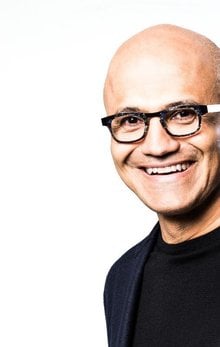
CEO: Satya Nadella
Founded: 1975

Microsoft continues to strengthen Dynamics 365 as a procurement and supply chain platform for manufacturers. Integration with the wider Microsoft ecosystem remains a significant advantage, enabling procurement teams to connect purchasing data with operational and financial processes.
The platform provides supplier collaboration, procurement automation and inventory management capabilities alongside advanced analytics. Manufacturers increasingly value its ability to combine operational data with AI-driven insights through Microsoft's broader technology stack. For organisations already invested in Microsoft technologies, Dynamics 365 offers a coherent approach to procurement and supply chain management without requiring extensive platform consolidation.
2. Oracle Fusion Cloud Procurement
Co-CEOs: Clay Magouyrk and Mike Sicilia
Founded: 1977

Oracle Fusion Cloud Procurement combines sourcing, supplier qualification, contract management and purchasing within a broader enterprise applications ecosystem. The platform remains particularly attractive for manufacturers operating large global procurement organisations.
Its strength lies in connecting procurement data with finance, supply chain and operational systems. Oracle has continued to invest heavily in automation and AI-driven capabilities designed to streamline sourcing and supplier management processes. Its integration with Oracle Supply Chain Management Cloud also allows manufacturers to connect procurement activities more directly with production schedules, inventory planning and supplier performance management.
For multinational manufacturers seeking consistency across procurement operations, Oracle's integrated approach provides both scale and governance while supporting increasingly data-driven decision-making.
1. SAP Ariba
CEO: Christian Klein
Founded: 1972
SAP Ariba retains its position as the leading procurement platform for manufacturing due to its scale, supplier network and integration with manufacturing operations. The platform enables organisations to manage sourcing, supplier relationships, contracts and purchasing through a single digital ecosystem.
Its greatest strength remains connectivity. Through SAP's extensive supplier network, manufacturers gain access to a broad range of suppliers while improving visibility and collaboration across procurement processes. Recent deployments continue to demonstrate the platform's ability to support large and complex procurement environments, particularly where organisations operate extensive supplier networks and global manufacturing footprints.
For manufacturers already operating within SAP environments, Ariba provides a seamless link between procurement, finance, production and supply chain functions. Combined with ongoing investment in automation, analytics and supplier collaboration, it remains the benchmark against which competing procurement platforms are measured.







Executives
Christian Klein
CEO & Member of the Executive Board

Clay Magouyrk
CEO

Evan Goldberg
Founder and EVP of Oracle NetSuite
Kevin Samuelson
Chief Executive Officer
Leagh Turner
CEO
Leanne Taylor
Chief Executive Officer

Mike Sicilia
Chief Executive Officer
Sanjay Brahmawar
Chief Executive Officer
Satya Nadella
Chairman and CEO
Steve Murphy
CEO