Top 10: ERP Vendors

In 2026, procurement is no longer just about filling POs; it’s about navigating a landscape of Agentic AI and autonomous supply chains. For many organisations, the traditional giants are no longer the default choice. Instead, the focus has shifted toward platforms that offer deep industry specialisation, real-time risk mitigation and seamless ecosystem flexibility.
Procurement Magazine looks at the top 10 ERP vendors leading the procurement revolution. From AI-driven sourcing to hyper-local resilience, these platforms are redefining how businesses buy, manage and scale in an increasingly complex global market.
10. QAD (Adaptive ERP)
Employees: 1,950+
CEO: Sanjay Brahmawar
Founded: 1979

QAD’s Adaptive ERP is a specialised solution purpose-built for the manufacturing sector, unifying finance, supply chain, production and procurement within a single ecosystem. The platform leverages real-time analytics and configurable workflows to drive operational efficiency and ensure strict regulatory compliance.
Designed for global agility, it features robust localisation and mobile accessibility, allowing manufacturers to standardise processes across multiple regions. By centralising data and enhancing organisational visibility, QAD empowers leadership to optimise resource allocation and make informed, data-driven decisions.
9. Acumatica (Cloud ERP)
Employees: 1,000+
CEO: John Case
Founded: 2008
Acumatica Cloud ERP is a comprehensive business management platform that unifies financials, project accounting, CRM and supply chain operations. Designed for global scalability, it offers robust multi-entity, multi-currency and multi-language support, allowing organisations to manage distributed operations with ease.
By leveraging real-time visibility and automated workflows, the software eliminates departmental silos and empowers leadership with the mobile-accessible data needed for faster, more accurate decision-making.
8. Certinia
Employees: 1,000+
CEO: DJ Paoni
Founded: 2009
Certinia, formerly known as FinancialForce, provides a comprehensive ERP suite built natively on the Salesforce platform. It unifies accounting, billing and professional services automation (PSA) into a single, customer-centric ecosystem.
Founded in 2009 and rebranded in 2023, the company was recently acquired by Haveli Investments for nearly US$1bn. By connecting front- and back-office operations, Certinia enables organisations to streamline workflows and gain real-time financial visibility, helping businesses scale efficiently while leveraging their existing CRM infrastructure.
7. Sage (Intacct / X3)
Employees: 11,074
CEO: Steve Hare
Founded: 1981
Sage X3 is an agile ERP solution built for medium-to-large enterprises seeking to unify finance, supply chain and production management. The platform accelerates business processes by automating transactions and providing real-time data visibility across all departments.
Designed for international scalability, Sage X3 supports multi-country operations and customisable workflows, ensuring that complex organisations can maintain regulatory compliance while driving operational efficiency and productivity.
6. IFS (IFS Cloud)
Employees: 7,000+
CEO: Mark Moffat
Founded: 1983

IFS Cloud is a unified enterprise platform designed to synchronise operations across ERP, Asset Management (EAM) and Service Management. By integrating key business functions, from finance and HR to manufacturing and field service, the software automates workflows and provides real-time data insights.
It centralises end-to-end processes to help organisations drive operational efficiency, manage asset lifecycles and maintain strict regulatory compliance.
5. Epicor (Kinetic)
Employees: 4,600
CEO: Steve Murphy
Founded: 1972
Epicor Kinetic is a specialised ERP platform built to empower manufacturers and distributors through integrated financial, supply chain and production management. By centralising inventory control and CRM into a single ecosystem, the software leverages real-time analytics and automated workflows to sharpen operational efficiency.
It serves as a unified digital foundation, helping organisations synchronise departments, optimise resources and maintain industry-specific compliance in a shifting market.
4. Infor (CloudSuite)
Employees: 17,000
CEO: Kevin Samuelson
Founded: 2002
Infor M3 is a specialised ERP solution designed to navigate the complexities of manufacturing, distribution and equipment service industries. It integrates supply chain, production and financial management into a unified platform capable of supporting multi-site, multi-country and multi-company structures.
By combining localised compliance tools with real-time analytics and workflow automation, Infor M3 provides the visibility needed to drive operational efficiency. Flexible deployment options, including cloud and on-premises, ensure the scalability and agility required for modern global operations.
3. Workday
Employees: 20,400
CEO: Aneel Bhusri
Founded: 2005
Workday is a next-generation ERP redefining enterprise operations for the AI era. By embedding AI and agents directly into its core, it unifies finance, HR, IT and procurement on a single, secure platform.
This intelligent foundation automates manual tasks and provides real-time insights, allowing organisations to adapt quickly to market shifts. Consistently recognised as a Gartner leader, Workday empowers teams to drive performance, optimise scalability and deliver meaningful business outcomes with total clarity and confidence in the modern digital world.
2. Microsoft (Dynamics 365 Supply Chain Management)
Employees: 228,000
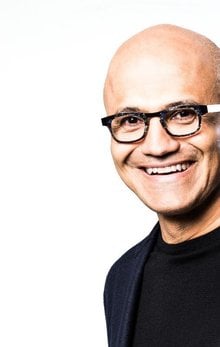
CEO: Satya Nadella
Founded: 1975
Microsoft Dynamics 365 Business Central is a unified business management solution designed to streamline financials, sales, service and supply chain operations. Recognised as Forbes Advisor’s best ERP of 2024, it leverages "agentic" resource planning through Microsoft Copilot and specialised AI agents. These agents automate end-to-end workflows, from sales order processing to vendor payables, drastically reducing manual work and improving accuracy.
Built on the Microsoft Cloud, the platform integrates seamlessly with Teams and Microsoft 365, providing a centralised hub for real-time data insights and decision-making. Business Central supports global scalability across 242 countries, offering mobile accessibility and built-in sustainability tracking. By combining automated workflows with role-based dashboards, it enables organisations to optimise resource usage and drive productivity. With a reported ROI of over 200%, Business Central provides a flexible, AI-powered foundation that helps businesses adapt faster and perform better in an evolving global market.
1. Oracle (Fusion Cloud Procurement)
Employees: c. 149,935
CEO: Clay Magouyrk and Mike Sicilia
Founded: 1977
Oracle Fusion Cloud ERP is a comprehensive, AI-driven suite designed to automate core business processes, including financial management, procurement, project management and risk compliance. By leveraging "agentic" AI, the platform transforms manual tasks into touchless operations, significantly boosting efficiency while reducing operational costs.
The suite provides a unified view of organisational health through real-time analytics, forecasting and reporting tools. Key features, such as the Accounting Hub, revenue management and expense tracking, ensure precise financial control and regulatory adherence across global industries. Designed for continuous innovation, Oracle Fusion Cloud ERP delivers automatic updates that allow businesses to stay current and adapt to market shifts instantly. By centralising data and providing actionable insights, the platform empowers leadership to make informed decisions, optimise resource allocation and maintain a competitive advantage in an ever-evolving digital landscape.








Executives
Aneel Bhusri
CEO and Co-Founder

Clay Magouyrk
CEO

DJ Paoni
CEO

John Case
Chief Executive Officer
Kevin Samuelson
Chief Executive Officer
Mark Moffat
Chief Executive Officer

Mike Sicilia
Chief Executive Officer
Sanjay Brahmawar
Chief Executive Officer
Satya Nadella
Chairman and CEO
Steve Hare
Chief Executive Officer
Steve Murphy
CEO