Nestlé & World Farmers' Organisation: Embedding Regeneration
Nestlé and the World Farmers' Organisation (WFO) have joined forces in a new, first-of-its-kind partnership. The duo will team up to provide support to food systems – helping to make them more resilient to climate change.

Putting farmers at the centre of climate solutions
Nestlé alongside the WFO will provide their voices in support of initiatives such as fairer policies and particular solutions – such as regenerative agriculture which give farmers the power in adapting to climate change.
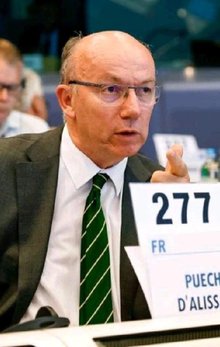
Arnold Puech d'Alissac, President at the World Farmers' Organisation, says: "Farmers are facing the challenges of climate change every day, but they are also driving the solutions. Real change demands holistic approaches and collaboration across the value chain.
"This partnership with Nestlé aims to lead by example, showing how farmers and industry can work together, with trust and respect, to build food systems that are fair, resilient, and sustainable for people and the planet."
The partnership will see both companies work alongside each other to obtain more knowledge into the challenges which farmers are facing, whilst raising the profile of regenerative agriculture, strengthening farmers' capacities and to co-develop viable farming models which can also be the inspiration to entice the next generation of farmers.
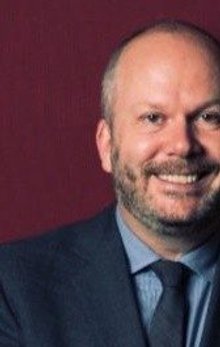
"Nestlé relies on 600,000 farmers globally to ensure a sustainable supply of its raw materials," adds Chris Hogg, Global Head of Public Affairs at Nestlé.
"Farmers, who are deeply aware of today's crop production challenges, are highly proficient at adapting and finding ways to work with the planet's natural resources to produce food.
By partnering with the WFO, we want to put farmers at the centre and share their insights and concerns to help inform food policies."
Making climate finance work for family farmers
The World Farmers' Organisation (WFO) represents over one billion farmers globally from national organisations and agricultural cooperatives in more than 50 countries.
Like Nestlé, the WFO prioritises enabling action on climate change from the ground up, advancing regenerative, climate-resilient agriculture and strengthening farming communities and rural economies.
President of the World Farmers' Organisation (WFO), Arnold contributed to the Farmers' Forum Roundtable on "Fuelling Growth: Youth, Accessing Finance and Unlocking Climate Funds" at the Africa Food Systems Forum (AFSF) 2025.
In his remarks, the WFO President underlined that climate finance can only be effective if it is designed with farmers, through mechanisms that are simple, fair and directly accessible.
He cautioned that too much funding is currently lost in bureaucratic complexity, preventing it from reaching the cooperatives and family farmers who need it most.
Farmers' organisations, he stressed, must be empowered as conveners and enablers of this transition, supporting their members by navigating complex regulations, offering training and extension services and amplifying their collective voice in dialogue with policymakers and financial institutions.

Nescafé surpasses regenerative agriculture targets
Meanwhile, Nescafé, Nestlé's largest coffee brand, sourced 32% of its coffee from farmers implementing regenerative agriculture practices in 2024.
This achievement surpasses Nescafé's 2025 goal of 20%, reflecting the strong traction that regenerative agriculture is gaining within coffee farmers, according to the latest Nescafé Plan 2030 Progress Report.
Nescafé is supporting coffee farmers' transition to practices like optimised fertilisation, soil cover, mulching and composting, with the aim of improving productivity and lowering their costs.
The adoption of these practices is also helping reduce greenhouse gas emissions (GHG) in coffee. In 2024, participants of the Nescafé Plan achieved a reduction ranging from 20% to 40% of GHG emissions per kilogram of green coffee.
Company portals


Executives
Arnold Puech d'Alissac
Président de l'Organisation Mondiale des Agriculteurs WFO
Chris Hogg
Vice President, Global Head of Public Affairs