How PepsiCo is Mapping the Future of Food Procurement
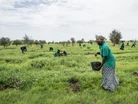
The National Geographic Society and PepsiCo have announced five new research grants designed to accelerate practical progress in regenerative agriculture.
These range from rewilding farmlands to using AI to translate complex genomics into actionable farming insights. These projects are part of the Food for Tomorrow programme.
This initiative represents an intersection of science and storytelling focused on the long-term health of global food systems.
Launched in 2025, the collaboration between the National Geographic Society and PepsiCo supports research, visual reporting and educational outreach centred on regenerative agriculture.
For procurement leaders, this partnership highlights the growing importance of securing upstream supply chains against climate volatility.
“The global food system is under increasing pressure from climate change and extreme weather, and meeting this moment requires supporting the people at the heart of it - the farmers,” says Jim Andrew, Chief Sustainability Officer at PepsiCo.
“Farmers get one chance each season to make a crop succeed. That’s why strong, science-backed practices matter.
“By continuing to demonstrate what works, we can give farmers the confidence that regenerative agriculture not only helps build a more resilient food system but also strengthen their livelihoods.”
Advancing global agricultural research
Selected from more than 140 research proposals across the globe, the five scientists join a wider community of National Geographic Explorers.
The projects will run until 2027, advancing regenerative farming methods for climate-stressed crops such as wheat, maize, soy, potato and coffee.
These commodities are critical components of the global food supply chain. The research will take place in diverse environments from the US Midwest to Indonesia’s tropical fields.
In southwestern Wisconsin, researcher Omar de Kok-Mercado is restoring native prairie ecosystems across maize, soy and wheat farms through a connected “wild grid” of biodiverse corridors.
His work merges ecological science with artistic storytelling to show how rewilding marginal farmland could rebuild soil health, biodiversity and resilience.
Also in Wisconsin, Jamie Spychalla is testing the impact of integrating nitrogen-fixing alfalfa as a rotational, harvestable cover crop.
Her research explores how this practice could mitigate climate pressure, improve soil structure and boost yields while engaging local farming communities.
Innovation in crop resilience
In drought-prone Spain, Ahan Dalal is partnering with wheat and maize growers to trial locally adapted practices like biochar application, cover cropping and beneficial microbial treatments.
His goal is to develop a science-backed framework for Mediterranean farmers adapting to intensifying climate variability.
Meanwhile, in Ethiopia’s highlands, Hewan Degu is studying how intercropping coffee with potatoes may enhance soil microbiomes and protect coffee’s future under shifting weather patterns.
Her work involves smallholder farmers and turns research into locally grounded guidance for farming.
On Indonesia’s depleted maize lands, Al Greeny S. Dewayanti is introducing sacha inchi, an omega-3-rich vine, as an intercrop to regenerate soil.
Her project blends traditional agricultural knowledge with modern technologies such as DNA metabarcoding and an emerging AI-driven farmer advisory app.

Promoting supply chain sustainability
These five scientists join another group of Food for Tomorrow Explorers focused on documenting real-world transitions to regenerative farming in over a dozen countries.
Their work is set to culminate later in 2026 in interactive exhibitions and reports highlighting agricultural transformation.
Together, these efforts reflect a shift in how science and corporate sustainability can unite to drive food system resilience.
PepsiCo aims to promote regenerative practices across 10 million acres (approximately 4 million hectares) worldwide by 2030. The company continues to see collaboration as key to delivering lasting environmental and community impact.
“For over a century, the Society has been funding innovative science to better understand our world. Regenerative agriculture is an exciting new area of focus for us,” says Ian Miller, Chief Science and Innovation Officer at the National Geographic Society.
“This work is deeply interconnected with many longstanding issues that we tackle: safeguarding freshwater and coastal ecosystems; restoring landscapes to support biodiversity, reduce our carbon footprint, and secure irrecoverable carbon reserves and more.”
Company portals


Executives
Jim Andrew
Chief Sustainability Officer, EVP and Executive Committee member