'Victory Day': UK & US Agree New Trade Deal
The United States and United Kingdom have announced a deal to reduce tariffs between both countries, with the UK Government agreeing to concessions on American food and agriculture in return for easing tariffs on British car exports.
Car export tariffs will reduce from 27.5% to 10% - saving hundreds of millions a year for Jaguar Land Rover alone. This will apply to a quota of 100,000 UK cars, almost the total the UK exported last year.
UK Prime Minister Keir Starmer visited Jaguar Land Rover last month announcing greater freedom for car manufacturers to back British industry in the face of global headwinds. During this visit he told workers he would accelerate trade deals to protect their jobs, their livelihoods and to champion British business worldwide.
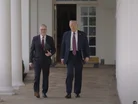
The announcement of the deal was made from the Oval Office, in which President Trump, joined by the Prime Minister on the phone, spoke on the details of the deal – with what he called "most cherished allies."
The President said that the deal will include billions of dollars worth of exports from the states, including American beef, ethanol and other agricultural products, as well as reduce non-tariff barriers, fast track US goods through UK customs – which President Trump said will remove "red tape."
"Furthermore, in a historic step, the deal includes plans that will bring the United Kingdom into the economic security alignment with the United States," President Trump said.
"That's the first of its kind. So we have a big economic security blanket, and that's very important. And we feel very, very comfortable with that because it's been a great ally, truly one of our great allies."
Adrian Mardell, Chief Executive Officer, JLR, added: “The car industry is vital to the UK’s economic prosperity, sustaining 250,000 jobs. We warmly welcome this deal which secures greater certainty for our sector and the communities it supports. We would like to thank the UK and US Governments for agreeing this deal at pace and look forward to continued engagement over the coming months.”
'Fantastic, historic day'
After President Trump finished speaking, the PM said: "This is a really fantastic, historic day in which we can announce this deal between our two great countries. And I think it's a real tribute to the history that we have of working so closely together," Starmer said, speaking by phone - adding "The US and UK have always had a fair, reciprocal agreement."
The US Commerce Secretary, Howard Lutnick, announced that tariffs on UK cars being exported to America will be cut from 25% to 10% as part of the trade deal.
"We've opened up new market access, ethanol, beef machinery, all the agricultural products. They've agreed to open their markets. And that will add US$5bn dollars of opportunity to American exporters.
"We still have our 10% tariff on which will produce US$6bn of revenue for the United States," he added.
He added that it's been agreed that the UK will be able to send 100,000 cars into the US on the original 10% baseline tariff.
Rolls-Royce engines and parts for aeroplanes can be exported from the UK to the US tariff free.
Following the announcement, the Prime Minister added: “The new global era demands a government that steps up, not stands aside. This historic deal delivers for British business and British workers protecting thousands of British jobs in key sectors including car manufacturing and steel.
“My government has put Britain at the front of the queue because we want to work constructively with allies for mutual benefit rather than turning our back on the world. As VE Day reminds us, the UK has no greater ally than the United States, so I am delighted that eight decades on, under President Trump the special relationship remains a force for economic and national security.
“This is jobs saved, jobs won but not job done and our teams will continue to work to build on this agreement. My Government is determined to go further and faster to strengthen the UK’s economy, putting more money in working people’s pockets as part of our Plan for Change.”
Bank of England welcomes certainty
Governor of the Bank of England, Andrew Bailey, welcomed the news, saying in a press conference earlier in the day: "It will help to reduce uncertainty. The UK is, though, a very open economy and is affected by the tariffs affecting other economies. I say that because I hope the UK agreement, if it is the case this afternoon, is the first of many.
"It is excellent that the UK is leading the way and I do congratulate all those involved."
Before today, the UK currently faced a blanket 10% tariff on all goods to the US and has been hit with 25% tariffs on steel, aluminium and car exports to the US.
A breakthrough has been made which will come as a huge relief for UK and US procurement and supply chain leaders who were worrying about the impact of recent global trade restrictions. US President Donald Trump has announced a deal.
This agreement follows intensive negotiations after President Donald Trump implemented widespread tariffs globally last month, creating significant procurement challenges for international businesses. The UK government has been actively pursuing tariff reductions to protect domestic supply chains and manufacturing capabilities.
Business and Trade Secretary Jonathan Reynolds said: “I am delighted our calm approach and proactive engagement with the US has resulted in this deal which cuts tariffs for UK industry and cuts costs for businesses.
“Businesses across the country will be glad to see our approach working, but this is only the beginning. We look forward to strengthening our trading relationship with the US through a wider economic deal, which will help us to deliver on our Plan for Change to provide economic stability and make this country fit for the future.”
Procurement context
The 2 April tariff announcement by the Trump administration created immediate disruption in global procurement networks, though implementation was paused for 90 days. Procurement departments worldwide have been operating under significant uncertainty while governments negotiate exceptions.
Similar procurement-focused negotiations are reportedly advancing between the US and several nations including India, Israel, Japan, South Korea and Vietnam, as the Trump administration aims to fundamentally restructure international procurement relationships and supply chain structures.
In parallel developments critical for procurement professionals, the US and China have scheduled high-level trade discussions in Switzerland (9-12 May) between Chinese Vice Premier He Lifeng and US representatives Treasury Secretary Scott Bessent and Trade Representative Jamieson Greer.
This follows retaliatory tariffs reaching 145% from the US and 125% from China, severely impacting global supply chains and procurement strategies.

Procurement specialists note that the recently finalised UK-India trade agreement provides a potential template, as it removes significant barriers for UK exports while reducing taxes on specific Indian goods - creating new strategic sourcing opportunities for both nations.
This deal also highlights how differently the US is treating the UK and the European Union, which earlier today announced countermeasures it will take if its own efforts to reach a deal fail.
Explore the latest edition of Procurement Magazine and be part of the conversation at our global conference series, Procurement & Supply Chain LIVE.
Discover all our upcoming events and secure your tickets today.
Procurement Magazine is a BizClik brand.