280 UK-listed Companies Issue Warning Over Tariff Risks
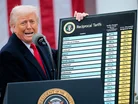
The global supply chain landscape was knocked on its axis in April 2025, as US President Donald Trump announced sweeping tariffs in his 'Liberation Day' speech.
It saw a 10% baseline for all countries, with 60 countries hit with additional 'reciprocal' tariff rates. The S&P 500 and Nasdaq lost 10% and 11% respectively over the next two days, the fastest downturn since the financial crisis where the S&P fell more than 20%.
Though implementation was paused for 90 days – businesses worldwide have been operating under significant uncertainty while governments negotiate exceptions.
UK business leaders sound the alarm

While there is now an expectation that a deal has been reached between the UK and the US related to tariffs, set to be formally announced on April 8, 280 UK-listed companies (as of May 6) have issued warnings over tariff-related risks since Donald Trump's announcement on April 2, says Bowmore Wealth Group.
These companies face potential issues, not just a hit to their US sales, but also with supply chain issues caused by retaliatory tariffs or trade restrictions.
UK businesses that have so far reported that they are at risk from US tariff increases include HSBC, Rolls Royce, Aston Martin and Halfords.
HSBC have increased their expected losses on loans due to geopolitical tensions and higher trade tariffs. Despite neither importing from nor exporting to the US, Halfords have said they are concerned by the knock-on impact on their supply chain.
"A real blow to American exceptionalism"
Jonathan Webster-Smith, Chief Investment Officer at Bowmore, says: "Many of the UK's largest companies have been forced to alert their investors that profits could be at risk. But clearly the scale of the hit to profits is up in the air.
"The markets are now hopeful that the US is reversing the worst of its tariffs but the whole affair has been a real blow to the concept of American exceptionalism and that US equities will always outperform."
FTSE shows resilience amidst global uncertainty
Jonathan points out that UK indices have weathered the initial impact of Trump's tariff announcements better than their US counterparts. The FTSE 100 has risen 1% since Trump's inauguration, while the S&P 500 has dropped 5.77% and the Nasdaq 9.1% over the same period (From January 20 to May 6).
Several FTSE-100 companies have seen their shares sharply outperform since April 2 (From April 2 to May 6) including easyJet whose shares have risen 13%, Babcock 16% and Berkley Group 19%. This highlights that not all UK-listed companies have had their share price tied to the turbulence coming from the US.
Jonathan also highlights that UK companies started the year showing better relative value than US equities as they had not experienced the same rally in price prior to Trump's inauguration. He adds: "UK equities are less exposed to a US-China trade war than US companies.
"Many UK businesses don't export to the US at all – or rely on imports from there. Supply chain disruption is the worst impact tariffs could have on these firms. US companies however – even those that don't import or export – will have to reckon with likely very aggressive inflationary pressures."
Explore the latest edition of Procurement Magazine and be part of the conversation at our global conference series, Procurement & Supply Chain LIVE.
Discover all our upcoming events and secure your tickets today.
Procurement Magazine is a BizClik brand.