
Why British Steel's Survival Could Jeopardise UK-China Trade
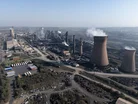
The UK government has urgently taken the helm of British Steel's operations in Scunthorpe as a direct response to Chinese owner Jingye's refusal to maintain production funding. This strategic intervention aims to preserve two vital blast furnaces, safeguarding thousands of jobs.
The Chinese government, however, cautions against intertwining trade and security as Chinese foreign ministry spokesperson Lin Jian advises Britain to "avoid politicising trade cooperation."
The pressing issue for procurement officials and British Steel's workforce concerns the supply of raw materials.
The risk of the blast furnaces cooling beyond the point of restart due to a lack of coking coal and iron ore is critical. Exchequer Secretary James Murray assures that these essential materials are "in the UK" and "nearby," with civil servants working diligently to ensure their delivery and ongoing furnace operations.
Securing UK steel production capability

Over the weekend, Parliament expedited emergency measures allowing government control over the plant, a status not yet equating formal nationalisation.
Secretary of State for Business and Trade, Jonathan Reynolds indicates that offers, including proposals to purchase raw materials, were turned down by Jingye: “It became clear to me and to the government, no financial offer of any generosity would have been accepted,” he explains.
In the meantime, the Department for Business and Trade is actively engaging with several companies, including Tata and Rainham Steel, to procure and supply the necessary materials to keep the furnaces operational.
This urgency stems from the technical complexities of blast furnaces, wherein once deactivated, are costly and challenging to reactivate without sustaining permanent damage.
Implications for procurement and supply chain
The unfolding situation at the Scunthorpe plant led some union leaders to accuse Jingye of deliberately undermining the facility.
General Secretary of the Community Union, Roy Rickhuss, stated to the BBC: “The Chinese owners Jingye unfortunately were seen to be working against the business... they weren’t ordering raw materials… they were actually turning away raw materials and trying to transfer them elsewhere.”
It is suggested that Jingye's potential strategy involves shifting production to China and transforming British Steel into a re-rolling operation.
Scunthorpe is pivotal for UK infrastructure, producing 95% of the steel used for Britain’s railways and remains the sole facility in the UK that manufactures "virgin steel," a non-recycled form crucial for numerous industries.
Long-term sustainability and strategic planning
The Scunthorpe plant's fate influences national security, with ministers arguing that its loss would position the UK uniquely among G7 nations without indigenous steelmaking capability.
This would jeopardize both economic stability and broader security interests. Luke de Pulford from the Inter-Parliamentary Alliance on China remarks: “It is an explicit strategy of the Chinese Communist Party to undermine the industrial base of foreign countries.”
Network Rail, responsible for a major portion of the country’s rail infrastructure, has anticipated such a scenario, accruing a rail stockpile which could sustain operations for up to 12 months.
Nonetheless, with US-imposed tariffs and high UK energy costs cited by Jingye, the cost-to-operate scenario continues to be challenging, with Jingye reportedly absorbing losses of US$700,000 daily.
Efforts to upgrade the blast furnaces to electric arc variants, aimed at reducing carbon footprint and utilizing recycled materials, have stalled since Jingye declined government incentives.
Such enhancements are critical but will take substantial time, with Scunthorpe’s output being essential for projects including Hinkley Point C.
While full nationalisation remains a possibility, government hopes of securing private investment persist, considering the modernisation costs that could reach billions.
Explore the latest edition of Procurement Magazine and be part of the conversation at our global conference series, Procurement & Supply Chain LIVE.
Discover all our upcoming events and secure your tickets today.
Procurement Magazine is a BizClik brand.