
Trump's US$12bn Deep-Sea Mining Move: A New Sourcing Era?
The Trump administration has launched a US$12bn initiative to reshape critical mineral supply chains through deep-sea mining, a move that could fundamentally alter procurement strategies for manufacturers reliant on cobalt, nickel and rare earths.
The policy shift, announced through a series of measures in late January and early February 2026, seeks to reduce dependence on Chinese-controlled supply routes that have long constrained Western sourcing options.
For procurement professionals navigating volatile commodity markets, the initiative presents both opportunity and uncertainty. By combining substantial funding with expedited permitting processes, the administration is attempting to create an alternative source for materials that underpin electric vehicle batteries, electronics manufacturing and defence systems.
Project Vault, announced on 2 February 2026, forms the cornerstone of this strategy.
US President Donald Trump framed the initiative as a civilian equivalent to the Strategic Petroleum Reserve, designed to insulate companies such as General Motors and Google from what he characterised as Chinese "price manipulation and supply shocks."
In a 2025 speech, President Trump positioned deep-sea mining as critical to national security and economic competitiveness: "For too long, we have let China hold our industries hostage. They think they can turn off the lights on our auto plants and our defence systems whenever they want. Not on my watch. We're going to 'Mine, Baby, Mine' – from the mountains to the deepest parts of the ocean floor."
"We are creating a strategic vault that will make our country richer and more secure than ever before. If the UN wants to hold meetings in Jamaica to discuss 'codes' while we secure our future, let them. We're moving forward."
Adam Muellerweiss, President of the Responsible Battery Coalition, adds: "Project Vault is exactly the kind of serious, industrial-strength action America needs right now. Even two years ago, this idea would have been unthinkable."
Expedited permitting raises supply questions
To feed Project Vault's reserves, the National Oceanic and Atmospheric Administration (NOAA) finalised new regulations on 21 January enabling faster permit approvals for deep-sea mining operations. The 113-page rule revises the Deep Seabed Hard Mineral Resources Act of 1980, allowing companies to submit exploration and commercial recovery permit applications simultaneously rather than sequentially—potentially shortening timelines by several years.
"This consolidation modernises the law and supports the America First agenda," says NOAA Administrator Neil Jacobs.
However, the decision to issue permits in international waters using domestic legislation, bypassing the United Nations (UN) International Seabed Authority, has created regulatory uncertainty. The ISA, which has spent years developing a global mining code, described the unilateral action as "surprising" in a statement and cautioned it "sets a dangerous precedent that could destabilise the entire system of global ocean governance."
The US has not ratified the UN Convention on the Law of the Sea.
Environmental risks threaten timeline
For sourcing teams considering deep-sea minerals as a supply diversification strategy, environmental concerns could introduce delays. Marine scientists have raised questions about the ecological impact of commercial seafloor mining, an activity without precedent at industrial scale.
Sabine Gollner, a marine biologist at the Royal Netherlands Institute for Sea Research, warns that once polymetallic nodules are removed, "all biodiversity and functions directly dependent on the minerals will be lost for millions of years."
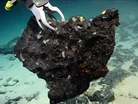
Recent discoveries, including "dark oxygen" generated by seafloor nodules without sunlight, have intensified scrutiny. Environmental advocates argue that mining operations could eliminate this process entirely, potentially triggering legal challenges that could affect project timelines.

Pacific opposition adds complexity
The administration's "Blue Frontier" initiative faces resistance from US Pacific territories. Representatives from American Samoa, Guam and the Northern Mariana Islands have expressed unified opposition across party lines.
As the Bureau of Ocean Energy Management prepares to lease Pacific waters, local leaders have raised concerns about indigenous communities being excluded from decisions.
From Washington's policy chambers to the Mariana Trench, the administration appears committed to repositioning the deep sea as a strategic supply source. For procurement professionals, the question remains whether these seabed resources can reach commercial viability before geopolitical, environmental or diplomatic factors introduce new constraints into already complex supply chains.
Company portals


Executives

Adam Muellerweiss
President