
How US-Venezuela Oil Reboot is Reshaping Sourcing Strategies
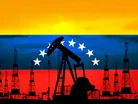
An announcement from US President Donald Trump signals a major change in global energy dynamics, with plans for American companies to lead the reconstruction of Venezuela's oil sector.
For procurement and sourcing leaders, this development could introduce a new player to the global energy supply chain, presenting opportunities for diversification alongside considerable geopolitical risks. The initiative follows a US-led military operation and the capture of former leader Nicolás Maduro, potentially opening up the nation's substantial crude reserves to international markets after years of decline.
In remarks at his Mar-a-Lago estate, Trump outlines the plan for US involvement.
"We're going to have our very large United States oil companies go in, spend billions of dollars, fix the badly broken infrastructure and start making money for the country. They will be reimbursed," says Trump.
The directive aims to leverage US energy expertise to restore Venezuela’s output, a move that could influence global oil prices and trade routes. However, the plan also requires companies to operate in a nation facing economic collapse and institutional fractures.
Evaluating a new sourcing market
Venezuela holds the world’s largest estimated crude reserves at 303 billion barrels, yet its current output is less than 1% of the global supply. This is a result of prolonged underinvestment and the loss of skilled labour under previous administrations.
A revival of this production capacity could offer global buyers a major new source for heavy crude, potentially rebalancing supply chains and reducing reliance on traditional markets in the Middle East.
Chevron, which maintains a presence in the country through a US sanctions waiver, is positioned to play a key role in any expansion. Other firms like Exxon Mobil and ConocoPhillips, which departed Venezuela following expropriation, show more caution about re-entering the market.
Rebuilding a collapsed supply chain
The task of revitalising the Venezuelan oil sector represents a substantial procurement and logistics undertaking. The state oil company, Petróleos de Venezuela, S.A. (PDVSA), requires a complete overhaul of its export terminals and logistics networks.
According to Bob McNally, President of Rapidan Energy Group: "Just stabilising existing production will require low single-digit billions of dollars for workovers, power, water handling and export infrastructure repairs."
This points to large-scale opportunities for engineering contractors, equipment manufacturers and maritime and port operators. A modernised transport corridor in the Caribbean could create new efficiencies and options for fuel sourcing across the Atlantic.
Analysing geopolitical and supplier risk
The primary challenge for any company looking to source from or invest in Venezuela is the level of political uncertainty.
The question of stable governance remains a hurdle. Trump states the US will work with Acting Venezuelan President Delcy Rodríguez to facilitate a transition to a democratic government, but the process is expected to face internal friction.
Without clear constitutional frameworks or guarantees on property rights, long-term capital commitments carry a high degree of risk. The situation is further complicated by Trump's warnings of potential "military action" against Colombia and Mexico over the narcotics trade, adding a layer of regional instability.

While the long-term prospect of a stabilised Venezuela re-emerging as a top oil exporter and logistics hub could be transformative for global supply chains, the immediate market reaction is cautious.
The timeline for a full recovery of production remains uncertain, and procurement professionals will need to weigh the potential for sourcing diversification against the evident political and operational risks.
Company portals

Executives

Bob McNally
President