
Countries Purchasing Oil from Venezuela Hit by Trump Tariffs
In a bold move that signals a new chapter in international trade policy, the US government has decided to impose a 25% tariff on all countries that engage in oil or gas transactions with Venezuela.
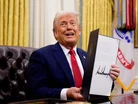
This decision, set to be implemented on so-called Liberation Day (April 2), follows an executive order signed by US President Donald Trump.
Citing concerns over national security and regional stability, this policy does not directly affect US imports from Venezuela but targets any nation that conducts energy deals with Venezuela and has commercial ties with the US.
The implications of this decision reverberate far beyond its immediate economic impact, pointing to potential shifts in how countries might engage not only with the US and Venezuela but possibly re-align their broader international trade strategies.
Economists at odds over tariff implications
As news of the tariff spreads, it stirs a mixed bag of reactions among economists and trade experts.
White House trade advisor Peter Navarro champions tariffs as crucial foreign policy instruments.
"Tariffs are a foreign policy tool," said Navarro during a discussion on Fox Business, adding that strong measures like tariffs are justified when national security is perceived to be at risk.
Contrastingly, Dani Rodrik, a Professor at Harvard University's Kennedy School, voiced apprehensions about the growing fondness for unilateral trade actions, which he believes could undermine the very fabric of international trade laws and institutions.
"Unilateral measures with extraterritorial impact compromise the legitimacy of global institutions and erode the predictability needed in international trade," he wrote in a recent article.
Such sentiments highlight deep divisions on the tariff's potential impacts on global economic stability and legal integrity.
Institutional actions to mitigate impact
With trade policies becoming increasingly complex and unpredictable, regional and global trade institutions stress the urgent need for detailed, technically adept responses.
Marcelo de Castro Ferreira, who heads up Institutional Marketing at ASAPRA—an association comprising professional customs agents across various continents—stresses the importance of maintaining rigorous customs operations amidst these changes.
"This is not about judging sovereign decisions," Marcelo asserts. "It is about recognising that the pace of change in global trade requires customs operators to be continuously informed, agile and technically prepared.
“The global landscape has shifted. Customs processes must be able to absorb regulatory changes quickly and apply new rules with technical rigor and operational consistency.”
Marcelo noted rising demand for digital customs platforms like Publican World, developed by ASAPRA with input from customs experts and technical support from Ultra. Utilising AI, it aims to enhance the integrity and efficiency of customs operations, aligning them with international standards—even as regulatory landscapes evolve.

Widespread concern over trade disruptions
The newly-imposed tariff, while focused on curbing energy trades with Venezuela, could inadvertently affect other sectors, leading to a cascade of adjustments in contracts, logistics and legal challenges.
The importance of cohesive and swift institutional responses is underscored further by the fact these trading modifications occur against a backdrop of intense geopolitical tensions.
Ultimately, the decision magnifies the complexity of international trade dynamics, accelerating the need for robust, transparent and coordinated regulatory mechanisms within customs and trade institutions. As countries navigate these turbulent waters, the role of institutions like ASAPRA becomes even more crucial in guiding customs operations to stay compliant, effective and ahead of the curve.
ASAPRA's position is clear: "Our goal is to ensure that customs actors across all member countries are technically equipped to navigate and respond to changes in global trade swiftly and confidently."
Explore the latest edition of Procurement Magazine and be part of the conversation at our global conference series, Procurement & Supply Chain LIVE.
Discover all our upcoming events and secure your tickets today.
Procurement Magazine is a BizClik brand