What the UK-China Partnership Means for Procurement
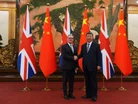
The UK Prime Minister, Sir Keir Starmer, is looking to build on its country's relationship with China after a visit to the world's second-largest economy.
On 29 January 2026, the Prime Minister met with China's leader, President Xi. Both leaders reaffirmed their dedication to establishing a stable, enduring strategic partnership for their nations' mutual benefit, with agreements designed to boost trade and investment between the UK and China.
They committed to deepening cooperation in areas of common interest whilst maintaining candid discussions on points of divergence.
The Prime Minister voiced specific concerns important to the United Kingdom.

Historic business delegation signals major economic push
Travelling with a substantial delegation of nearly 60 leading British businesses and cultural institutions, the Prime Minister expressed hope that the visit would foster new collaborations and create fresh opportunities for them in China.
He emphasised that domestic growth and prosperity are fundamentally connected to Britain's engagement with major global powers.
The meeting came with a number of agreements which have direct implications for UK procurement professionals managing categories like pharmaceuticals, energy, beverages and clean technology.
Agreements on reduced tariffs for Scotch whisky – halving duties and potentially generating £250m (US$344m) in economic value over five years – will lower landed costs and improve competitiveness for buyers sourcing premium spirits, enabling better margins and higher contract volumes from Scottish distilleries now better positioned in China's fast-growing market.
Pharmaceutical and energy sectors set for transformation
In pharmaceuticals, AstraZeneca's landmark US$15bn (£11bn) investment over four years to expand R&D and manufacturing in China highlights deepening supply chain integration, prompting procurement teams to reassess dual-sourcing strategies, supplier risk profiles and compliance frameworks for APIs and finished medicines amid greater reliance on Chinese production capacity.
The energy sector sees Octopus Energy partnering with Chinese-based PCG Power to launch a digital electricity trading platform, highlighting opportunities to leverage China's scale in solar, wind and batteries for cost reductions in UK power procurement whilst introducing models for flexibility markets and renewable energy sourcing.
Trump "very dangerous" warning to UK
There is, however, the looming geopolitical risk from such a deal – posed by President Donald Trump.
President Trump has been very vocal over Canada striking a potential deal with China, threatening to impose tariffs on Canada if it proceeded with economic agreements made with China during Prime Minister, Mark Carney's recent visit to Beijing.
When speaking on the red carpet for his wife Melania's film, he was asked by one reporter: "What do you think about the UK going into business with China?".
As reported by the BBC, the President said it was "very dangerous" for the UK to conduct business with China.
The BBC further reported that President Trump did not say much else on the UK, deciding to turn his attention back to Canada, adding it was "even more dangerous, I think, for Canada".
"Canada is not doing well. They're doing very poorly, and you can't look at China as the answer."
The BBC also reported that the UK business minister Sir Chris Bryant said Trump was "wrong" and it would be "bonkers frankly for the UK to ignore the presence of China on the world stage".
"Of course, we enter into our relationship with China with our eyes wide open," he added.
In response to Trump's remarks, Downing Street stated that Washington had been notified of the trip and its goals beforehand.
So whilst there are agreements between the UK and China which could have significant upturn for businesses and the UK economy, there is the risk of destabilising the relationship with the White House. With Trump proving he is very happy to install tariffs, there could be direct consequences for the UK if it were to work more closely with China.