Siemens: Using AI & Robotics to Streamline Rail Procurement
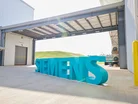
Construction of Siemens Mobility's train manufacturing and rail services facility in Lexington, North Carolina, has reached completion, with production now underway at the US$220m site. The facility represents the company's newest manufacturing location in the United States, with the first locally built passenger coaches expected for delivery in Summer 2026.
The development comes as numerous manufacturers, including Apple, Amazon and Hyundai, relocate production to the US in response to tariffs imposed by President Donald Trump's administration. The timing could signal a broader shift in procurement strategies as companies reassess their supply chain positioning.
The 200-acre site will offer both coach and locomotive overhauls once fully operational. Currently, 25 coaches are in various stages of production, marking the early phase of what could become a significant manufacturing operation.
Investment creates 500 new jobs
Tobias Bauer, CEO of Siemens Mobility North America, says: "Our US$220m investment in Lexington reflects our long-term commitment to American manufacturing and to the communities that help power our industry.
"By creating more than 500 skilled jobs and expanding our US production and service footprint, we are bringing advanced rail manufacturing closer to our East Coast customers while strengthening support for partners across the country.
"With a truly end-to-end rail portfolio built in America, we are well positioned to help shape the next chapter of American rail."
The company currently employs 375 staff at the site and has committed to creating 500 new jobs by 2028. The development received support through a Job Development Investment Grant from the State of North Carolina.
North Carolina Governor, Josh Stein, adds: "North Carolina is a hub for innovation and a leader in advanced manufacturing and the clean tech economy. Siemens Mobility's new facility will create more than 500 good-paying jobs in Davidson County and strengthen our state's economy by nearly US$1.6bn over the next decade.
"This investment is a win for the entire State of North Carolina, and it strengthens our leadership in shaping the future of passenger rail in America."
Strategic rail connectivity established
The facility was designed with a rail bridge connecting directly to the mainline, enabling finished trains to be shipped efficiently to customers across the East Coast.
According to projections, the facility could contribute US$1.6bn to North Carolina's economy over 12 years.
Siemens Mobility indicates the site will leverage advanced digital technologies, including artificial intelligence, robotics, real-time analytics and augmented reality.
Additional technologies such as robotic welding, 3D printing and advanced software tools will be deployed throughout operations.
The company suggests these technologies could streamline operations and enhance decision-making in the manufacturing process, potentially setting a benchmark for automated manufacturing in the rail sector.
Sustainability, procurement and supply chain leaders won’t want to miss Procurement & Supply Chain LIVE, taking place at Navy Pier, Chicago, on April 21–22.
Co-located with Sustainability LIVE: The US Summit, the event unites senior decision-makers at a time when supply chains, sustainability and business performance are more interdependent than ever.
Secure your place now for The US Summit – group booking discounts available.
Tariff pressures affect operations
Both Siemens Energy and Siemens Mobility trace their roots to German parent company Siemens AG. Christian Bruch, CEO of Siemens Energy, has previously called on President Trump's administration to deliver more policy stability in an interview with The Financial Times.
Christian tells The Financial Times the US was an "excellent market" because of the AI wave, which benefited the maker of gas turbines and power grid equipment. However, he said some of President Trump's policies had been "painful" for the company and customers.
These comments came as Siemens Energy announced a US$1bn investment in the US.
According to the US Federal Reserve, industrial production increased 0.2% in February 2026 after moving up 0.7% in January.
The February 2026 increase could be considered marginal, with the combined impact of the US and Israel's war on Iran and tariffs affecting US manufacturers.
Company portals

Executives
Christian Bruch
President and CEO
Tobias Bauer
CEO Siemens Mobility North America