RGreen Invests in Geothermal Vendor to Shift Energy Buying

RGreen Invest manages approximately US$3.3bn in assets across sustainable infrastructure and climate mitigation projects. The firm operates as a sustainable investment specialist in the European market, focusing on energy sovereignty as a core investment principle.
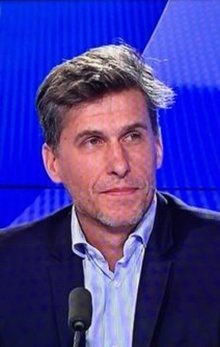
RGreen has committed €52.4m (US$59m) to Arverne through GEOGREEN, the holding company controlled by Pierre Brossolet, Founder and CEO of Arverne. The transaction represents one of the larger single investments in the French geothermal sector.
Vendor capabilities and service history
Arverne was established in Pau in 2018 as a provider of geothermal energy solutions. The company positions itself as France's leading geothermal solutions provider.
Arverne Drilling Services functions as the group's drilling subsidiary. The business was originally founded in 1958 and operated in oil, gas and mining sectors before Pierre redirected operations towards geothermal applications.
The company now operates three divisions. Arverne Drilling Services handles boring and well engineering, 2gré supplies geothermal heat to customers and Lithium de France works on lithium extraction from geothermal brine.
Deep geothermal drilling uses comparable processes to hydrocarbon extraction. The company applies existing drilling expertise to heat extraction rather than fossil fuel recovery. This technical crossover means procurement teams can evaluate vendors based on established drilling performance metrics.

Procurement professionals assessing geothermal vendors should examine operational track records in comparable geological conditions. Vendor qualification criteria typically include drilling success rates, well completion timelines, health and safety records and technical capacity to manage subsurface risks.
Contract structures and concession models
Arverne completed two geothermal wells at Paris-Charles de Gaulle airport in late 2024. The installation now provides Terminal 1 with up to 80GWh of energy annually. According to Pierre, "We firmly believe that underground resources, particularly geothermal energy, are key solutions for the energy transition."
Arverne secured a 30-year concession alongside Dalkia to build and operate geothermal district heating infrastructure for Clichy-sous-Bois and Livry-Gargan. The contract value approaches €90m (US$102.6m).
Long-term concession agreements structure risk differently than conventional energy supply contracts. The 30-year timeframe transfers operational risk to the vendor whilst providing price stability. Procurement teams evaluating similar arrangements need to assess vendor financial stability over multi-decade periods.
The company formed Francilienne de Géothermie in May 2024 as a joint venture with Banque des Territoires, the local investment division of Caisse des Dépôts, a French state bank.
The joint venture targets geothermal projects across the Île-de-France region. The area sits above the Dogger aquifer, a porous limestone layer that has supported geothermal heating operations in the Paris basin for decades.
Joint venture structures distribute capital requirements and technical risks between partners. For procurement departments, this model means vendor assessment must extend beyond the primary contractor to include financial backers and technical partners. Due diligence processes should examine governance arrangements, decision-making authority and liability allocation.
Lithium de France began drilling its first geothermal doublet at Schwabwiller in mid-2025. The project aims to extract both heat and lithium from the same well infrastructure.
Supply chain and procurement barriers
According to the International Energy Agency, geothermal resources at depths of eight kilometres could provide 600TW of power. Current global energy demand stands at 20TW.
Geothermal contributes a smaller proportion to Europe's energy mix compared to wind and solar installations. According to EGEC, geothermal district heating output across Europe grew 4.6% between 2023 and 2024.
France aims to quadruple geothermal production by 2035 to reach 28TWh. EU member states endorsed geothermal energy for the first time in December 2024.
The European Commission faces pressure from nearly 70 businesses and investors to publish a dedicated geothermal strategy. The coalition argues the technology could replace up to 42% of Europe's remaining coal and gas generation with sufficient investment and time. This could show procurement departments in energy-intensive sectors may need to evaluate geothermal providers as alternative vendors.
Supply chain constraints for geothermal development differ from conventional energy infrastructure. Specialised drilling equipment, high-temperature pumps and corrosion-resistant materials represent procurement categories with limited supplier bases. Lead times for critical components can extend project timelines and affect contract delivery schedules.
The lithium extraction component introduces additional supply chain considerations. Battery manufacturers currently source lithium carbonate primarily from Australia, Chile and China. European production from geothermal sources could diversify supply chains and reduce geographical concentration risk.
Procurement teams in the automotive and battery sectors may need to evaluate quality specifications for geothermally extracted lithium against established benchmarks. Vendor qualification processes should include chemical purity testing, production consistency verification and environmental compliance documentation.
Investment rationale and risk factors
Upfront capital risk represents the primary procurement barrier for geothermal projects. Exploration drilling can cost tens of millions before performance data confirms well viability.
According to Rystad Energy, failure rates for exploratory wells range from under 10% in Hungary and Germany to approximately 30% in the Netherlands. Well performance varies by geology and location.
Risk assessment frameworks for procurement teams should account for geological uncertainty in vendor evaluation. Vendors with access to detailed subsurface data or proven track records in specific geological formations present lower procurement risk.
Permitting requirements differ between EU member states. Developers face varied regulatory frameworks when procuring services or establishing operations across borders.

Seismic activity associated with deep drilling affects public perception and project approval timelines. Incidents in Basel, Switzerland and Staufen, Germany resulted in building damage and shaped attitudes towards geothermal procurement in some regions.
Reports noted seismic risk assessments for these projects were inadequate. This means procurement teams evaluating geothermal vendors need to assess risk management capabilities and insurance arrangements.
Insurance procurement for geothermal projects typically requires specialist underwriters familiar with subsurface risks. Coverage should address exploration risk, operational performance guarantees and third-party liability for induced seismicity. Procurement professionals should verify that vendors maintain adequate insurance levels and understand policy exclusions.
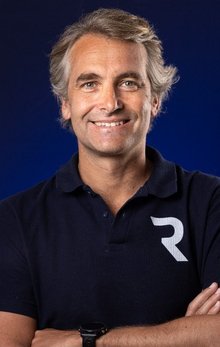
Nicolas Rochon, Founder and CEO of RGreen Invest, positioned the investment as an energy security transaction. "We are delighted to partner with Arverne, a national champion that has demonstrated its ability to unlock the exceptional potential of France's geothermal resources to deliver strategic infrastructure that strengthens both French and European energy security," he says.
Pierre outlined production targets for the company. "By 2031–2033, Arverne aims to produce around 4TWh of deep geothermal energy annually in France, representing more than half of the targets set out in the national energy roadmap and avoiding close to one million tons of CO₂ compared with natural gas," he says.
The lithium extraction component could affect battery supply chains. "Annual production of 27,000 tons of lithium carbonate in Alsace will provide enough material to supply batteries for around 800,000 electric vehicles," Pierre explains.
This output volume could influence procurement strategies for battery manufacturers and automotive companies sourcing European lithium. The dual output model combines energy supply contracts with raw material sourcing from a single vendor operation.
Long-term energy procurement strategies increasingly factor in supply security alongside price considerations. Geothermal providers offer baseload capacity without fuel supply chains, distinguishing them from gas-fired alternatives. For procurement teams managing energy portfolios, this reduces exposure to commodity price volatility and geopolitical supply disruptions.
Contract structures for geothermal energy typically feature higher capital expenditure but lower operational costs compared to fossil fuel alternatives. Procurement evaluation methodologies should use total cost of ownership calculations across contract lifespans rather than simple price-per-unit comparisons.
Company portals

Executives
Nicolas Rochon
Founder and CEO
Pierre Brossollet
Founder and CEO