How Procurement can Lead on Sourcing Wind Power
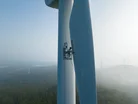
While the world added a record 117GW of new wind capacity in 2024, taking the global total past 1,136GW according to the Global Wind Energy Council, its growth has not been enough to meet rising energy demand.
Analysis from the International Energy Agency (IEA) found that total energy-related CO₂ emissions increased by 0.8% in 2024 hitting an all-time high of 37.8Gt CO₂.
The IEA notes that this increase was primarily fuelled by growing coal consumption in emerging economies.
For businesses looking to decarbonise their operations, wind power presents a major opportunity but not without its own set of complex procurement and integration challenges.
Navigating wind energy integration challenges
A primary hurdle for integrating wind power is grid connectivity.
Connecting wind farms can be difficult, particularly when they are located offshore - sometimes more than 100 kilometres from land. This requires long transition lines and bottlenecks can form in permitting and grid capacity that delay these vital connections.
The variable nature of wind means energy supply can be unpredictable. This intermittency increases the portion of power demand that must be met by other more stable sources. To mitigate this, combining wind power with other sources, such as solar, could help to smooth out overall energy production and ensure a more reliable supply for corporate offtakers.
One project tackling this is Hollandse Kust Noord in the Netherlands, where Shell and Eneco are piloting several technologies together.
The project, which began operations in December 2023, combines wind power with floating offshore solar battery storage and offshore hydrogen electrolysis.
A floating solar array is scheduled to be assembled in June 2025 ans is to be placed alongside the wind turbines, helping to provide more consistent energy. The addition of batteries and an on-site hydrogen plant will be used to store energy during periods of high generation and low demand, providing a more stable and valuable energy product.

Tackling turbine supply chain and lifecycle
While wind turbines produce no emissions during operation, their physical lifecycle presents sustainability and supply chain considerations.
The sheer scale of the components - with turbines reaching 250 metres in height and blades up to 150 metres long - makes both manufacturing, and transportation, a major logistical exercise.
The blades themselves are often made from a complex mixture of materials including fibreglass, resin, iron and copper, which can make them difficult to recycle at their end-of-life, creating a waste problem procurement leaders must consider.
Innovation in the supply chain is addressing this directly. At RWE’s Kaskasi offshore wind farm in Germany the first commercial turbines using Siemens Gamesa’s RecyclableBlade technology were installed.
This technology enables the recovery of blade materials at end-of-life. Marc Becker CEO of the Siemens Gamesa Offshore Business Unit says: “We are proving that as the leaders in offshore wind power, we are committed to making disruptive technology innovation commercially viable with the pace that the climate emergency demands.
"This milestone marks a major contribution to Siemens Gamesa’s target of having fully recyclable turbines by 2040. With RecyclableBlade available for our customers, we can create a virtuous circular economy.”
Corporate procurement and clean energy goals
Motivated by Environmental, Social and Governance (ESG) targets, corporate procurement of clean power is accelerating.
According to BloombergNEF, businesses signed a record 46GW of wind and solar power purchase agreements (PPAs) in 2023 with large technology companies among the leading buyers.
Google, for example, aims to run its operations on carbon-free energy on a 24/7 basis by 2030. To achieve this, Google has signed more than 170 agreements to purchase over 22GW of clean energy globally.
A key partnership between AES and Google is designed to supply Google’s Virginia data centre campus with a first-of-its-kind 24/7 carbon-free energy solution.
AES developed grid virtualisation technologies to create a modern green grid that improves efficiency and reliability for Google, helping to predict weather events and optimise the grid for renewables.
Michael Terrell Senior Director for Energy and Climate at Google says: “Not only is this partnership with AES an important step towards achieving Google’s 24/7 carbon-free energy goal, it also lays a blueprint for other companies.”
This approach could provide a model for how corporations can procure clean energy to meet ambitious decarbonisation targets.







Executives
Marc Becker
CEO Offshore Business Unit
Michael Terrell
Head of Advanced Energy