
Merck's Powerful Commitment to Renewable Energy Purchasing
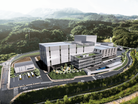
Merck, a prominent German life sciences and electronics organisation, has secured a 20-year power purchase agreement (PPA) with SK Innovation E&S.
The agreement will supply 16 megawatts of renewable electricity capacity to its life science manufacturing sites in Daejeon and Songdo, South Korea.
This PPA represents Merck's most extensive renewable energy commitment in the Asia-Pacific region and is due to be operational from December 2027.
The deal represents a major step in Merck’s strategic energy procurement. Once active, the PPA will generate approximately 21,000 megawatt-hours of electricity each year. According to Merck, this will cover around 75% of the electricity demand for its life science operations in South Korea.
This agreement forms part of Merck's growing global renewable energy portfolio, which also includes virtual PPAs across Europe and North America alongside various onsite installations.
"This agreement reflects our long-term commitment to manufacturing sustainability," explains Tim Jaeger, Chief Strategy and Transformation Officer for Merck's Life Science business.
"By adding renewable electricity to the grid for our operations in South Korea, we are taking further measures to reduce our environmental impact and enabling our customers to do the same."
- A power purchase agreement (or PPA) is a long-term contract between an electricity generator and a buyer for the purchase of electricity. These agreements are often used to finance renewable energy projects, allowing businesses to buy power at a fixed price for a set period (often between 10 and 25 years) without having to build or operate their own power plants.
Strategic procurement for sustainability targets
Merck's long-term energy procurement strategy directly supports ambitious 2030 sustainability goals.
The company is looking to source 80% of its purchased electricity from renewable sources, a target it now anticipates reaching well ahead of schedule. Merck established its group-wide sustainability strategy in 2020, aligning commitments with the United Nations' Sustainable Development Goals.
The strategy is built on three core pillars: advancing human progress through sustainable science; integrating sustainability into all value chains; and achieving climate neutrality while reducing resource consumption by 2040.
Merck's commitment to climate neutrality covers Scope 1, 2 and 3 emissions. It has set interim targets for 2030, which include a 50% reduction in Scope 1 and 2 emissions and a 30% reduction in Scope 3 emissions compared to a 2020 baseline.

Addressing value chain emissions
While progress on direct emissions has been substantial, the data highlights a common challenge for procurement leaders.
According to Merck's 2024 data, its combined Scope 1 and 2 emissions stood at 182 metric kilotons of CO₂ equivalent, a 43% reduction from its 2020 levels. However, progress on indirect emissions is slower. Scope 3 emissions were 1,538 metric kilotons of CO₂ equivalent in 2024, marking only a 2% reduction from the 2020 baseline.
This disparity demonstrates the difficulties companies face when reducing indirect emissions across their value chains, especially compared to direct operational emissions, which are within their immediate control.
To address this, Merck’s broader sustainability framework includes commitments to sustainable product innovation. Merck aims for 10% of its portfolio to be made up of 'Greener Alternative Products' by 2030.
It uses its SHAPE design for sustainability framework and DOZN, a green chemistry evaluator tool, to assess and enhance the sustainability profile of its products.
Sustainable supply chains and additionality
Beyond emissions reduction, Merck’s sustainability strategy also includes supply chain transparency and packaging improvements.
By 2030, Merck is targeting a 10% reduction in packaging weight per unit sales. It also intends for all new packaging to be designed following circularity principles and for all fibre-based packaging to be sourced from deforestation-free materials.
The South Korea PPA is notable for its procurement model. It adds new renewable capacity directly to the grid.
This approach differs from purely financial virtual PPAs by creating new clean energy infrastructure. This method aligns with a growing corporate focus on "additionality", where procurement agreements are prioritised if they result in new renewable generation capacity rather than simply purchasing certificates from existing projects.
This demonstrates a more impactful approach to sustainable energy procurement.
Company portals


Executives

Tim M. Jaeger MD PhD MBA
Chief Strategy and Transformation Officer