
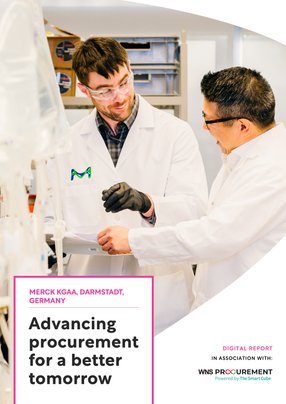
Merck’s legacy stretches back over 350 years to a pharmacy in Darmstadt, founded by the Merck family. That heritage still informs its mission today: improving lives through science and technology. The business operates across three specialised divisions - healthcare, life science and electronics - each with its own priorities but a shared focus on innovation and longevity.
The company’s CPO, Sebastien Bals, didn’t originally set out to lead procurement at a science and technology company. With a background in marketing and an early aim to work in product management, his career direction shifted thanks to a pivotal moment during a trainee scheme at travel firm Thomas Cook. A mentor suggested trying procurement, a moment which would change everything.
From that unexpected turn, Sebastien built a career that spans global sectors including tourism, fast-moving consumer goods (FMCG) and life sciences. Before joining Merck KGaA, he held senior roles at Anheuser-Busch InBev and UCB. Now with more than 20 years in procurement, Sebastien brings a multi-industry mindset to one of Germany’s oldest privately held companies.
The changing face of procurement
Sebastien is candid about how the procurement function has evolved since Merck’s inception. The biggest challenge, he says, lies in accepting that you never truly reach a point where everything is known or fixed.
“I think the first thing that challenges you is the realisation that you’ve never seen it all, despite how long you have been in procurement,” he explains. “Everyday there’s something new that pops up that requires you to tap into your toolbox and come up with different solutions than you would have in the past.”
He also reflects on how procurement teams can stay relevant in a shifting corporate landscape. It isn’t about fixing what’s broken, but preparing for what lies ahead.
“Procurement now versus procurement in five or 10 years will be fundamentally different, so I think where I find myself in my job is how I ensure that I set my team up for that future,” Sebastien says.
His approach draws on his ability to bring clarity to complexity and communicate the bigger picture: “I believe I have a strong ability to connect complex topics and connect the dots.
“I have a good ability to tackle abstract topics by finding linearity in things which might not be linear or which might not seem linear at first. I also think as a person I’m quite a good storyteller, which is important when you talk about transformational revolution.”
Unlocking value from procurement’s blind spot
One area where Sebastien sees clear room for improvement is tail spend, perhaps the most overlooked function which typically receives the least attention due to limited resources and inconsistent buying patterns.
This is where many companies miss out, Sebastien asserts, because they focus on what’s easiest to manage and control. “What happens by nature is you don't focus on the least valuable stuff, but you look at the most valuable stuff,” he explains. “If you just apply the 80/20 rule, you will go straight away to the 20% of the top spend and ignore the 80% downstream.”
What gets lost in this process is value; the diversity and unpredictability of tail spend, along with the number of stakeholders involved, make it difficult to tackle. Most procurement teams, Sebastien argues, simply don’t have the capacity to deal with it effectively, so they divert their resources to more strategic areas.
“I think most procurement professionals don't have the right resources to properly tackle it because they want to involve the resources they have on the more strategic activities. It's not a quick win,” he says.
Still, he believes the opportunity is too large to ignore: “We need to acknowledge that there's a huge amount of value that can be unlocked if we tap into it.”
“There's also an amount of risk that we can better manage if we control the process better,” he adds. “I think those are the lessons that we should all learn. It's about recognising the opportunity and the risk.”
Shaping procurement with a long-term outlook
Sebastien’s way of working fits neatly into Merck’s broader philosophy. Publicly listed but deeply rooted in family ownership, the company aims for generational thinking. It’s an environment that matches Sebastien’s values.
“I like working for organisations that have a long term vision,” he says. “We always say we don't just think in quarters, we think in generations.”
That long-range thinking also runs deeply into Merck’s procurement strategy, especially when it comes to sustainability. Sebastien talks about the company's guiding principle with clarity: “Our North Star for procurement is advancing procurement for a better tomorrow and a thriving Merck.”
He explains the importance of this mantra rests on three ideas; first that procurement must evolve to stay relevant and secondly that Merck’s success depends on managing risk and delivering both top and bottom line performance. It's the third key pillar – “a better tomorrow” that Sebastien sees as central to sustainability.
He views this holistically, explaining that Merck must create an environment where teams can thrive both internally and externally, while also recognising its responsibility to the wider world.
“If we want to contribute to a better tomorrow, tackling sustainability is a big topic,” he says. Merck’s biggest carbon impact lies in its Scope 3 emissions—those generated across the supply chain. This means helping suppliers transition to greener practices – whether through materials, renewable energy or smarter partnerships -- is key.
“Ultimately, sustainability is also what will enable a sustainable company, meaning a company that can continue to perform over extended periods of time.” In order to sustain most companies, the reliable procurement of raw materials is key - but Sebastien warns that circularity and resource scarcity are real threats.
“Not all the materials that we have are synthetic. They have their basis somewhere — raw materials which come from our planet... if we do not take care of these, then ultimately, we're gonna end up in resource scarcity.”
Sustainability, in his view, is not just about ethics or image. It’s what makes Merck viable for the long term.
Shifting business perception
Sebastien sees procurement in a very different light to how it was once viewed. The old days of measuring success purely in savings are gone. Today, he believes procurement plays a broader role in managing risk, enabling innovation, supporting sustainability and aligning long-term business goals.
"I always say value beyond savings, because that's ultimately what's expected," Sebastien explains. It’s not just about doing things cheaper, but smarter.
However, for all the progress made, he says there's still a perception problem — one that often comes from within procurement itself. "I don't think C-suites need to be convinced of the importance of procurement, I think we need to become convinced about the actual value we bring," he argues.
His point is that procurement often underplays its role. The language used in the sector shows it: “We talk about our internal customers, but they're not our customers. They're our colleagues,” he says. “There's this inferiority complex that we need to overcome.”
The pandemic, he points out, showed procurement’s value. “During COVID we managed to get a seat at the table… we were top of the agenda.” The trick to sustaining that level of visibility, he says, requires boldness and innovation. “If you don't have raw materials, there's nothing that you can produce. If you cannot produce anything, there's nothing that you can sell. So you could argue that procurement is one of the key first steps into your entire value chain.”
Procurement, in his view, must become comfortable with constant movement. “We need to disrupt ourselves…We need to fail, test, reiterate, adjust and really come into a state of continuous evolution.”
Technology is central to this shift. The pace of change is rapid and procurement has to keep up. “What is today might not be tomorrow,” Sebastien warns.
Partnerships: The future of procurement
Procurement solutions have come a long way in recent years and start-ups are playing a significant role in that transformation. The aim of these solutions isn’t to replace procurement teams, but rather to help it shift focus to value-added activities.
One of Merck’s partnerships is with WNS, aimed squarely at managing tail spend. Tail spend refers to the long tail of small, often unmanaged purchases that don’t typically receive strategic attention. It's complex, resource-intensive, but full of untapped potential.
“I would describe us as still on the journey together,” Sebastien says. “We all recognised a couple of years back the importance of managing tail spend… but also the complexity that it had to tackle.”
“WNS has been instrumental in starting to tap into these areas and starting to unlock the value of an area which before was very hard and complex to manage for us internally.”
Merck began working with WNS in targeted regions to see how its expertise could unlock value from these overlooked areas. It provides comprehensive procurement solutions through a blend of managed services and digital transformation tools, focusing on strategic impact and modernisation.
The partnership helps Merck manage tail spend while freeing up internal resources to focus on strategic priorities. “Now, the question is ‘how do we expand it further?’” Sebastien asks.
Strategic partnerships, he says, are now essential — not just for tail spend but across procurement. “Our suppliers and our partners are key to the success as an organisation, but I would argue the same applies to procurement,” he says.
Whether it’s WNS for tail spend or Beroe for market intelligence, external experts offer reach and specialisation that Merck couldn’t replicate internally. This shift is changing the shape of procurement entirely. “They augment procurement, or enrich procurement or complement procurement… they are going to be crucial now and tomorrow,” Sebastien says.
Procurement’s role in Merck’s next chapter
Looking ahead, Sebastien is clear about the priorities for Merck’s procurement function. “We need to continue to deliver on our foundation and on our basics whilst advancing our ability to be more strategic advisors to the organisation.”
That means letting go of manual, standardised tasks and allowing technology and partners to take over.
The future of procurement at Merck, he believes, will rely on automation, strategic partnering and a mindset of constant reinvention – whilst maintaining the core goal of ‘advancing procurement for a better tomorrow and a thriving Merck.’
To read the full article in the magazine, click HERE.
Explore the latest edition of Procurement Magazine and be part of the conversation at our global conference series, Procurement & Supply Chain LIVE.
Discover all our upcoming events and secure your tickets today.
Procurement Magazine is a BizClik brand
Company portals

Executives
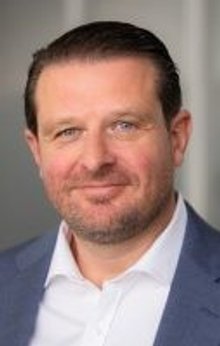
Sebastien Bals
Chief Procurement Officer