Vestas: Sustainable Turbines Through Supply Chain Innovation

Vestas is a leading manufacturer in the wind energy sector, a position it is using to advance the sustainability of the energy transition itself.
Vestas is pursuing circularity and material innovation to reduce the environmental impact of its wind turbines, with a significant focus on decarbonising its extensive supply chain.
Vestas has set a goal to become carbon neutral in its own operations by 2030 without using carbon offsets and aims to manufacture zero-waste turbines by 2040.
This latter goal signifies a commitment to circular economy principles, ensuring no part of its turbines ends up in landfill or is incinerated across the entire value chain.
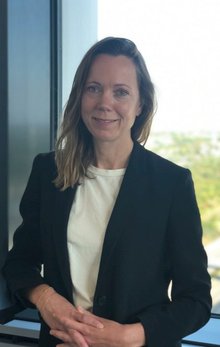
Lisa Ekstrand, Vice President and Head of Sustainability at Vestas, says: “Integrating sustainability into everything we do is a part of our vision to become the global leader in sustainable energy solutions.” This vision is supported by powering its operations with 100% renewable electricity and improving material efficiency.
Supply chain decarbonisation through procurement
A critical area of focus for Vestas is its supply chain, which accounts for more than 80% of a turbine's total environmental footprint.
Vestas has established a supplier sustainability programme and is aiming for a 45% reduction in supply chain emissions intensity per MWh by 2030, based on a 2019 baseline.
This involves engaging strategic suppliers to measure their emissions and set their own science-based targets.
One key partnership is with steel producer ArcelorMittal. Vestas is working with ArcelorMittal to incorporate lower carbon steel into its turbine towers.
This steel is produced using 100% scrap melted in an electric arc furnace that is powered entirely by wind energy. According to ArcelorMittal, this process can reduce the CO₂ footprint of an entire onshore tower by at least 52%.
Dieter Dehoorne, Head of Global Procurement at Vestas, explains: “Finding ways to decarbonise the emissions produced during the raw material extraction and refinement of steel is vital for us and the industry in general."

Material innovation and end-of-life challenges
While steel and iron make up 80-90% of a wind turbine's material mass, the composite materials used in blades present a greater challenge for recycling.
Vestas reports that its turbines are currently 85% recyclable, but achieving full circularity requires a solution for the blades which are primarily made from epoxy resin and glass fibre.
To address this, Vestas is part of the CETEC project, a research initiative alongside Olin, the Danish Technological Institute and Aarhus University. The project’s goal is to create a viable circularity pathway for thermoset composites.
Vestas and its industrial partners are now focused on scaling the CETEC solution which would enable blade recycling without needing to change the existing material composition or design.
The procurement role in enabling a sustainable transition
The move towards sustainable materials and circularity highlights the central role of procurement in the energy transition.
Strategic sourcing and supplier collaboration are the primary levers for reducing the embodied carbon in wind energy infrastructure.
“Vestas sees the partnership with ArcelorMittal and the adoption of low-emission steel as a key lever in reducing CO₂ emissions within the wind industry,” Dieter says.
This transition is not led by manufacturers alone. The commitment of customers to invest in and specify these lower-carbon solutions is essential for creating market demand.
"Commitment from our customers is vital to enable the transition so we are very happy that we can provide value to our customers with this solution,” Dieter adds.
This demonstrates that procurement decisions across the industry could be crucial for enabling the adoption of sustainable innovations.
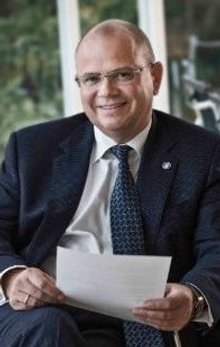
"At Vestas, sustainability is the business we are in, it's one of the key purposes that our more than 29,000 employees come to work every day - to make the world a more sustainable place,” says Henrik Andersen, President and CEO at Vestas.
Company portals
Executives
Henrik Andersen
President & CEO
Lisa Malmquist Ekstrand
Vice President Sustainability