
Top 10: Scope 3 Strategies

The procurement function is not only expected to agree cost-saving deals, but also address companies’ sustainability progress, with a particular focus on Scope 3.
Scope 3 emissions refer to all indirect greenhouse gas emissions that occur in a company's value chain, both upstream and downstream. These include emissions from the production of purchased goods and services.
These emissions make up the lion's share of a company's carbon footprint. The role of procurement in reducing these indirect emissions has never been more critical than it is now.
Here, Procurement Magazine takes a look at the top 10 strategies being implemented to tackle Scope 3 emissions effectively.
10. Integration of sustainability in contracts
- Company: Microsoft
- Founded: 1975
- Employees: 228,000
- CEO: Satya Nadella
- Revenue: US$211.92bn

When striking new deals with suppliers, the implementation of sustainability clauses is becoming more common.
These clauses create legally binding commitments, such as emission reduction goals, aligning supplier actions with company sustainability objectives.
Regular reviews and compliance checks ensure clarity across the supply chain.
Microsoft, for example, mandates suppliers reduce emissions by 55% (Scope 1, 2 and 3) from a 2019 baseline to meet its carbon reduction targets, reinforcing sustainability throughout its supply chain.
9. Incorporate circular economy principles
- Company: IKEA
- Founded: 1943
- Employees: 155,000
- CEO: Jesper Brodin
- Revenue: US$51.5bn

Applying circular economy principles can reduce Scope 3 emissions by promoting recyclable materials, decreasing reliance on raw materials and minimising waste from extraction, processing and disposal.
This not only reduces emissions but also creates cost savings and new business opportunities.
IKEA, for example, aims to use only renewable or recycled materials by 2030, partnering with suppliers on circular design and recycling innovations.
8. Implement incentive programmes
- Company: Walmart
- Founded: 1962
- Employees: 2.1 million
- CEO: Doug McMillon
- Revenue: US$648bn

Encouraging participation often requires incentives.
The better the incentive, the more likely businesses are to get on board. This approach benefits all parties, reducing Scope 3 emissions and promoting a circular economy.
Walmart’s Project Gigaton rewards suppliers for lowering emissions, offering preferential treatment and new opportunities. Launched in 2017, the programme aims to cut one billion metric tonnes of greenhouse gases from its global supply chain by 2030, aligning with Paris Agreement goals.
7. Supply chain transparency
- Company: Unilever
- Founded: 1929
- Employees: 128,000
- CEO: Hein Schumacher
- Revenue: US$64.5bn

Improving supply chain transparency is essential for tackling emissions.
Technologies like advanced tracking systems, blockchain and AI-powered analytics help organisations identify emission hotspots, track progress and make data-driven decisions.
Accurate reporting and disclosure build stakeholder trust and ensure regulatory compliance. Unilever uses advanced tracking and AI tools to enhance transparency, enabling data-driven strategies to reduce Scope 3 emissions.
Its digital approach includes virtual simulations to optimise product design and efficiency, allowing for rapid testing of formulations tailored to regional preferences.
6. Supplier carbon management programmes
- Company: Apple
- Founded: 1976
- Employees: 161,000
- CEO: Tim Cook
- Revenue: US$383bn

A robust supplier carbon management programme is crucial for reducing Scope 3 emissions.
Such programmes help suppliers measure, report and lower their greenhouse gas emissions by providing tools, training and one-on-one support. Apple exemplifies this approach by offering suppliers access to emissions calculation software and best practice workshops.
In partnership with the US-China Green Fund, Apple invests US$100m in energy efficiency projects, with more than 70 suppliers committing to 100% renewable energy, potentially avoiding 14.3 million metric tons of CO2e annually.
5. Sustainable procurement policies
- Company: Patagonia
- Founded: 1973
- Employees: 3,000
- CEO: Ryan Gellert
- Revenue: US$209.1m

Implementing sustainable procurement policies can dramatically lower Scope 3 emissions.
By prioritising suppliers with strong environmental credentials and integrating sustainability criteria into vendor selection, companies can shift their supply chains toward greener practices.
Regular reviews of these policies ensure alignment with evolving sustainability standards, driving continuous improvement.
Patagonia prioritises responsible purchasing practices, engaging in open dialogues about social and environmental responsibilities and involving leadership in evaluating suppliers. By making sustainability the norm, it inspires others in the apparel industry to follow suit.
4. Set clear targets
- Company: Nestlé
- Founded: 1866
- Employees: 270,000
- CEO: Laurent Freixe
- Revenue: US$107.4bn

Setting clear Scope 3 reduction targets early is crucial for achieving meaningful changes in supply chain emissions.
These targets should align with global climate goals while being tailored to the organisation’s capabilities.
By communicating these targets early to suppliers, companies foster a sense of urgency and shared purpose.
Nestlé has established validated Scope 3 reduction targets with the Science Based Targets initiative (SBTi) for net-zero emissions by 2050. It aims to source 20% of raw materials from regenerative agriculture by 2025.
3. Supplier engagement and collaboration
- Company: Danone
- Founded: 1919
- Employees: 100,000
- CEO: Antoine de Saint-Affrique
- Revenue: US$29.9bn

Working closely with suppliers can lead to joint sustainability targets, shared best practices and co-created innovative solutions.
Danone’s "Partner for Growth" initiative, which focuses on emerging science, technology and sustainability, strengthens existing relationships and forges new ones with startups, corporates and academic institutions.
By organising regular supplier forums and joint innovation projects, Danone leverages the expertise of its supply chain to tackle emission challenges. This collaborative approach enhances resilience and drives progress in areas like packaging recycling and methane reduction.
2. Mandate net-zero commitments
- Company: Google
- Founded: 1998
- Employees: 182,500
- CEO: Sundar Pichai
- Revenue: US$305.6bn

A powerful strategy for achieving significant reductions in Scope 3 emissions is mandating net-zero commitments. By leveraging its purchasing power, an organisation can create a ripple effect that encourages sustainability throughout its supply chain. This means companies can inspire their suppliers to prioritise emissions reduction and adopt more sustainable practices.
Implementing this strategy involves clearly communicating the requirement for net-zero commitments, explaining the rationale and benefits behind them. Providing a timeline for suppliers to develop their plans and offering necessary support is crucial, as each supplier has different capacities. Integrating these commitments into supplier contracts formalises them within the business relationship.
Google has embraced this approach by mandating net-zero commitments from its key suppliers. Through the Google Renewable Energy Addendum, the company has asked its largest hardware manufacturers to achieve a 100% renewable energy match by 2029.
1. Prioritise suppliers based on climate performance
- Company: L'Oréal
- Founded: 1909
- Employees: 88,000
- CEO: Nicolas Hieronimus
- Revenue: US$44.5bn
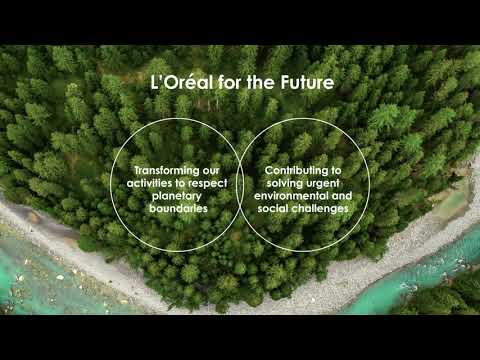
By favouring suppliers with strong climate performance, organisations can significantly reduce their indirect emissions while also supporting the broader adoption of sustainable practices throughout supply chains.
Regular evaluations, potentially through third-party audits or standardised reporting mechanisms, are essential for tracking suppliers' climate performance. By integrating climate performance scores into the supplier selection process, organisations can create a tiered system that rewards top performers with increased business opportunities and preferential terms.
L'Oréal exemplifies this strategy through its comprehensive supplier assessment framework, which includes climate metrics and sustainability-linked financing initiatives. Since launching its strategic supplier assessment programme in 2014, L’Oréal has utilised EcoVadis to evaluate suppliers on human rights, ethics and environmental stewardship.
In 2023, 965 suppliers were assessed, with 301 strategic suppliers achieving an average score of 63/100, highlighting the company's commitment to continuous improvement in sustainability practices.
Make sure you check out the latest edition of Procurement Magazine and also sign up to our global conference series - Procurement & Supply Chain 2025.
Procurement Magazine is a BizClik brand.