Who is Partnering with Nestlé for Regenerative Agriculture?
According to Earth.Org, regenerative agriculture in the US could help draw down 250 million tonnes of CO₂e greenhouse gas annually.
As procurement teams face mounting pressure to decarbonise supply chains, this statistic underscores the potential of sourcing strategies that prioritise regenerative practices.
At the World Economic Forum's meeting in Davos, Nestlé announced its collaboration with multiple companies to maximise regenerative agriculture, signalling a shift in how major buyers are approaching supplier engagement and agricultural sourcing.
For procurement professionals, these partnerships represent a blueprint for leveraging supplier relationships to drive sustainability outcomes whilst building resilience into agricultural supply chains.

Strategic supplier collaboration
At Davos, Nestlé announced its launch of two partnerships, building on the already present partnership with the World Farmers' Organisation (WFO).
Nestlé is partnering with The Nature Conservancy (TNC), one of the most effective and wide-reaching environmental non-profits globally.
The second partnership is with Goodwall, a gamified mobile platform for young people to help them develop career skills and connect with opportunities.
"We partner to better understand so we can learn, adapt and implement," says Stephanie Hart, Executive Vice President and Chief Operations Officer at Nestlé, at Davos.
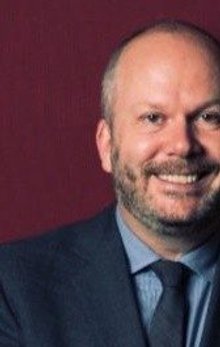
Chris Hogg, Global Head of Public Affairs at Nestlé, writes on LinkedIn that these partners can: “Help us spot solutions we might miss, help us give farmers the confidence and backing to take what can feel like a big leap into regenerative practices and help show that regenerative agriculture practices can be good for nature AND good business for farmers, communities and for companies like ours.”
TNC brings critical environmental expertise to sourcing decisions, essential for sustainable procurement.
TNC is a global environmental non-profit operating across 83 countries and territories, supported by more than a million members, more than 1,000 scientists and a global network of partners.
Its mission focuses on tackling the interconnected crises of climate change and biodiversity loss through science-led conservation, policy influence and market-based solutions.
“Sustainability is productivity,” says Jennifer Morris, CEO of The Nature Conservancy, at Davos.
“It may look like philanthropy, but it’s not.”
Jennifer's statement could resonate with procurement teams evaluating the business case for regenerative sourcing, suggesting these practices deliver tangible operational benefits beyond environmental credentials.
As part of this work, TNC is leading a collaborative effort with Nestlé, the United Nations Economic Commission of Latin America and the Caribbean and the Helmholtz Environmental Research Centre to promote regenerative ranching and agriculture.
The initiative will transform three million hectares of agricultural land into regenerative landscapes, cut greenhouse gas emissions by 25% and positively impact 22,000 people.
Farmer-centric procurement models
The WFO is a member-driven international body bringing together national farmers' organisations and agricultural cooperatives from all continents, representing more than 1 billion farmers worldwide.
It gives farmers a direct voice in international policy processes, ensuring global decisions on agriculture reflect farmers' lived realities and expertise.
October 2025 saw the formation of a first-of-its-kind partnership with Nestlé to advance climate-resilient food systems through regenerative agriculture and viable farming models, particularly in dairy supply chains.
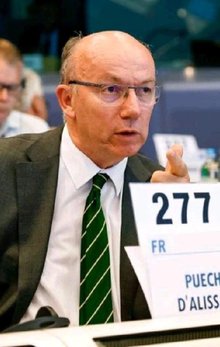
“Regenerative agriculture is a way to create common added value,” says Arnold Puech d’Alissac, President of WFO, at Davos.
“WFO and Nestlé are creating mutual respect to support this.”
Demonstrating how procurement can move beyond transactional relationships to create shared value with agricultural suppliers.
The collaboration focuses on empowering farmers with the tools and knowledge needed to transition to regenerative practices whilst maintaining economic viability.
By placing farmers at the centre of procurement strategy, this model ensures that sustainability initiatives are practical, scalable and aligned with the realities of agricultural production.
Building future supply capabilities
Goodwall is a mission-driven social enterprise and global digital community supporting students and young adults to navigate education, careers and skills development.
With more than two million members across more than 150 countries, its mobile-first platform connects young people to jobs, scholarships and challenge-based learning opportunities.
As part of its focus on future-ready skills, Goodwall has partnered with Nestlé to equip the next generation with practical regenerative farming capabilities, using peer-to-peer learning to position agriculture as an attractive, sustainable career pathway.
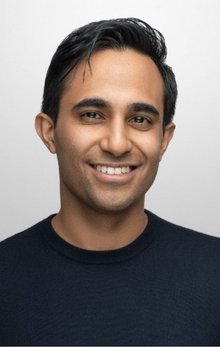
“Talent moves the world,” says Taha Bawa, Co-Founder and CEO of Goodwall, at Davos.
“We need top talent to build resilient supply chains.”
For procurement teams, this partnership addresses a critical supply chain risk: ensuring the next generation of farmers possesses the skills needed to meet evolving sourcing requirements.
By investing in the development of young farmers, companies can secure long-term supply chain resilience whilst contributing to rural economic development.

All sustainability, net zero and sustainable procurement leaders should attend:
- Procurement & Supply Chain LIVE: The Net Zero Summit - QEII Centre, London, March 4-5
- Procurement & Supply Chain LIVE: The US Summit - Navy Pier, Chicago, April 21-22
Co-located with Sustainability LIVE, these events brings together CPOs, CSCO, CSOs, ESG leaders and senior decision-makers at a moment when sustainability, supply chains and commercial performance are increasingly interconnected.
Tickets can be booked online today for The Net Zero Summit and The US Summit. Group discounts available.




Executives
Arnold Puech d'Alissac
Président de l'Organisation Mondiale des Agriculteurs WFO
Chris Hogg
Vice President, Global Head of Public Affairs

Jennifer Morris
CEO
Taha Bawa
Co-Founder and CEO