Rolls-Royce Powers Clean Energy Procurement Success Story
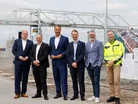
The Duisburg Gateway Terminal, noted for its status as the largest inland container terminal in Europe, processing over four million 20-foot equivalent units (TEU) annually, is marking a new era with the implementation of a CO₂ neutral and self-sustaining energy system.
This undertaking highlights a strategic pivot towards sustainable energy solutions in procurement practices at large-scale infrastructures.
Rolls-Royce, in collaboration with duisport, has pioneered this breakthrough by setting up a system featuring two MTU combined heat and power units that are engineered for 100% hydrogen utilisation.
Dr. Jörg Stratmann, CEO of Rolls-Royce Power Systems, says: “The launch of this carbon-neutral energy system at the Duisburg Gateway Terminal is a big step toward a more climate-friendly, resilient energy supply.”
He further emphasised the transformative potential of Rolls-Royce's scalable technologies in supporting critical infrastructure and advancing the energy transition.
Integrating sustainable practices in procurement
The initiative, termed the Enerport II project, is financially backed by the German Federal Ministry for Economic Affairs and Energy, along with several partners, including Westenergie Netzservice, Netze Duisburg, Stadtwerke Duisburg and Stadtwerke Duisburg Energiehandel.
Markus Bangen, CEO of Duisburger Hafen, remarks on the company's strategy: “Sustainability is an integral part of our corporate strategy that compels us to act responsibly and with a view to the future. With this self-sufficient and CO₂ neutral energy system, we also have a clear competitive advantage.”
Hydrogen applications in energy procurement
Hydrogen's attractiveness in energy procurement is underscored through its capacity for storage, transfer and delivery of energy derived from renewable resources.
As the most abundant element in the universe yet uncommon on Earth in its gaseous state, hydrogen is commonly produced through steam methane reforming or water electrolysis powered by renewable energy, resulting in green hydrogen.

When utilised in fuel cells, hydrogen's byproduct is merely water, highlighting its potential for clean energy procurement.
In combustion engines, hydrogen does not emit carbon dioxide, although it may produce other emissions like nitrogen oxides.
Thus, the procurement of hydrogen-related technologies could significantly reshape energy sourcing in operations requiring sustainable alternatives.
The energy system at Duisburg Gateway Terminal
The Duisburg Gateway Terminal's energy system includes a comprehensive approach to power management, incorporating a 1.3 MWp photovoltaic system, whose excess power is stored in the MTU EnergyPack for later use.
When sunlight is scarce, hydrogene-powered MTU fuel cell systems and combined heat and power plants provide necessary electricity and heat, maintaining the system's CO₂ neutrality.
These components are intricately connected through an intelligent energy management system that efficiently allocates resources to terminal operations.
Furthermore, there is contemplation on extending the system's energy supply to surrounding neighborhoods, a potential milestone for regional sustainable development.
Alexander Garbar, Head of Corporate Development at duisport, remarks, “Our microgrid is running reliably and shows that it is possible to supply such a large port terminal completely independently with green energy.”
Innovations in Rolls-Royce’s energy solutions
For Rolls-Royce, the deployment of 12-cylinder MTU Series 4000 gas engines, operable on 100% hydrogen, marks a first in their energy solutions.
Each engine contributes an output of 1 MW, with future development aimed at achieving outputs comparable to natural gas CHP units, targeting up to 2.5 MW.
Michael Stipa, Vice President Business Development and Product Management for Stationary Energy Solutions at Rolls-Royce, explains, “As soon as sufficient green hydrogen is available, MTU gas engines, such as those in Duisburg, can also make a significant contribution to reducing CO₂ emissions by running on 100% hydrogen or a hydrogen blend.”
For procurement executives, the Duisburg Gateway Terminal initiative serves as an exemplar of harnessing innovation in sustainable energy procurement, showcasing both environmental responsibility and strategic advantage.