BASF & Siemens Lead Sustainable Procurement with Green H₂
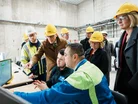
BASF and Siemens Energy are redefining industrial sourcing and operations with the launch of a 54MW water electrolyser, now Germany’s largest of its kind, at BASF’s Ludwigshafen site.
This world-first integration of hydrogen production within an active chemical manufacturing environment marks a significant advancement in sustainable industrial logistics and procurement strategy.
The PEM electrolyser, developed over two years in partnership with Siemens Energy, can produce up to one tonne of CO₂-free hydrogen per hour, equating to 8,000 tonnes annually.
Crucially, it has been embedded directly into BASF’s existing infrastructure, ensuring minimal disruption to ongoing operations and efficient use of existing supply chain systems.
“This water electrolysis plant is not only the largest of its kind in Germany, but it also ranks among the top 10 worldwide,” says Stephan Kothrade, Member of the Board of Executive Directors and CTO of BASF SE.
“We can produce up to 8,000 tons per year, and this is achieved without fossil feedstocks, using only water and electricity from renewable sources.”
From a procurement perspective, the electrolyser represents a strategic shift away from traditional, carbon-intensive inputs.
By sourcing hydrogen through renewable energy and water rather than natural gas, BASF is not only improving the environmental profile of its sourcing activities but also enhancing supply chain resilience amid rising carbon costs and shifting regulations.
Funded for transformation
The Hy4CHem project has also benefited from strong public-private funding collaboration.
Under the Important Projects of Common European Interest (IPCEI) Hydrogen initiative, the German government contributed up to US$134.6m in support. This includes US$40.4m from the Rhineland-Palatinate state government, alongside BASF’s investment of US$27.1m.

"I am delighted that the federal government's efforts to support the hydrogen economy in Germany are bearing fruit," says Udo Philipp, State Secretary at the Federal Ministry for Economic Affairs and Climate Action.
"A flagship project for the integration of hydrogen into a chemical production site has become a reality at the Ludwigshafen site.
“It is the largest project of its kind in Germany to date, making it an important pioneer as we strive to achieve our climate targets."
Such backing highlights the strategic importance of aligning sourcing innovation with government-supported climate objectives. This also facilitates long-term procurement planning and risk reduction in future hydrogen and energy sourcing.
Reducing operational emissions
From an operations standpoint, the electrolyser is expected to cut emissions at Ludwigshafen by up to 72,000 tonnes of CO₂ each year by replacing grey hydrogen – traditionally produced through natural gas – with its green counterpart.
This shift supports low-carbon manufacturing of products such as ammonia, methanol and vitamins, where hydrogen is a key raw material.
“All this in a chemical industry that is currently the third-largest source of industrial CO₂ emissions worldwide,” says Anne-Laure de Chammard, Member of the Executive Board at Siemens Energy.
“That is why projects like this mark a real turning point.”
The operational logistics of the facility have also been carefully planned.
Hydrogen will be fed into the site's internal network and distributed across production units. By maintaining control of the hydrogen supply chain on-site, BASF is optimising operational efficiency and reducing reliance on external transport-based logistics.
"The commissioning of the electrolyser makes it possible for us to support our customers in achieving their climate targets by offering them products with a lower carbon footprint," adds Katja Scharpwinkel, member of BASF SE's Board of Executive Directors and Site Director Ludwigshafen.
Regional sourcing and distribution
Looking beyond its internal operations, BASF plans to supply green hydrogen to mobility applications across the Rhine-Neckar Metropolitan Region.
This aligns with a broader procurement strategy to diversify hydrogen applications and contribute to the regional hydrogen economy.
"The commissioning of the electrolyser at BASF for the production of green hydrogen is a milestone for the ramp-up of the hydrogen economy in Rhineland-Palatinate, Germany and Europe,” says Alexander Schweitzer, Minister-President of Rhineland-Palatinate.
The project is a clear case study in how procurement, operations and logistics teams can enhance climate action through strategic investments in next-generation energy sourcing.
With hydrogen serving as a critical input across multiple value chains, embedding sustainability into sourcing decisions will be essential for long-term competitiveness.
“This is another important step towards CO₂-free hydrogen production and allows us to fulfil our promise of enabling the green transformation for our customers,” concludes Stephan.
Explore the latest edition of Procurement Magazine and be part of the conversation at our global conference series, Procurement & Supply Chain LIVE.
Discover all our upcoming events and secure your tickets today.
Procurement Magazine is a BizClik brand.