The Supply Chain Processes Behind Amazon's Prime Day
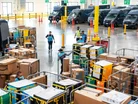
Prime Day is Amazon’s annual deal event, where consumers can save big on a wide range of products.
The 2025 iteration was a four-day event, outperforming every previous Prime Day and saving customers billions of dollars.
The execution of such large-scale retail events relies profoundly on meticulous procurement and supply chain preparation.
The logistics span several months involving strategic workforce scaling and operational readiness to maintain safety and efficiency standards.

Event logistics
In anticipation of Prime Day, Amazon strategically conducts planning and extensive training months prior, crucially focusing on staffing and resource alignment. Fulfilment centres and delivery stations are evaluated to ensure optimal staffing levels and the availability of delivery drivers.
Amazon’s agility in workforce management is highlighted by its pre-emptive recruitment, onboarding new staff well ahead of the event. This practice ensures thorough training, enabling staff to handle the surge in order volumes effectively.
The coordination within logistical hubs—such as fulfilment centres, where orders are picked, packed and shipped, and delivery stations, where parcels are sorted, routed and delivered—demands precision to ensure efficiency.
Jae Garcia, Senior Operations Manager, describes this transformational effort: “We’re seeing close to 500 to 600 people—drivers, employees, leadership and support teams such as our janitorial team—coming into the building at different times throughout the day.”
Furthermore, Amazon supplements its logistics with third-party delivery companies, diversifying its supply chain to meet the increased demand. This approach involves partnerships with Delivery Service Partners (DSP) to secure enough drivers for effective distribution throughout the event period.
Avoiding risk
Within Amazon's operational architecture, new employee training emphasises safety protocols to handle products correctly, preventing injuries and ensuring seamless navigation within complex facilities.
"We prepare a playbook for the team, which is essentially a one-stop shop for all the information an employee might need," Jae elaborates, detailing how the playbook "describes every single part of our operation from front to back".
Amazon runs refresher courses and regular team training to simulate and strategise solutions for potential scenarios such as equipment faults or transportation delays.
This strategic training is an integral part of Amazon's framework to fortify its supply chain against possible disruptions.
Regular meetings among delivery station managers before significant events ensure that issues are proactively addressed, fostering a culture of transparency and collaborative planning.
Facility adjustments, such as implementing heat safety measures for warmer weather, showcase Amazon’s commitment to maintaining operational continuity despite environmental challenges.
Giving back to staff
Prime Day events are typified by bustling activity in Amazon’s centres and stations, where heightened demand pushes logistic capabilities to their limits.
In recognition of their workforce's dedication, Amazon offers benefits and engagements, including entertainment activities such as barbecues and ping-pong tournaments to boost morale.
“Our employees are the heart and soul of our operation and we want to show extra appreciation for their hard work during busy shopping events like Prime Day,” adds Beryl Tomay, Vice President of Transportation.
These efforts to enhance employee satisfaction and wellbeing underscore Amazon's underlying strategy to build a resilient and responsive supply chain capable of adapting to the dynamic demands intrinsic to large-scale retail operations.
By prioritising both logistical efficiency and workforce welfare, Amazon demonstrates its commitment to robust supply chain management during peak periods.