DPW Amsterdam Day 2: Plotting Procurement's Future

Day 2 of DPW Amsterdam kicked off early on 9 October, with guests, speakers and hosts building on the pace and energy of a busy first day.
The event – one of the most important tech and innovation shows for global procurement and supply chain professionals – offers a future-facing look at the potential, opportunities and transformative power of AI in procurement.
When it comes to deploying the technology successfully, one question dominates: how do you balance the benefits of a game-changing tool with the people and teams that work across organisations and global supply chains?
This was the subject of the day’s first session, led by William McNeill, VP Market Intelligence at apexanalytic. William revealed the findings of the company’s 2025 AI Readiness & Impact Survey, discussing key trends across adoption, barriers and opportunities in supply chain and procurement.
People are central to each of these areas, he told guests, explaining that while AI, automation and predictive analytics have transformative potential, true resilience is built on empowering people.
To do this, leading organisations use AI to strengthen collaboration, build trust and enhance human judgement. The goal is to make processes more intuitive and strategic.
Award-winning innovation
DPW Amsterdam brings together startups and early-stage innovators with the large enterprises that need their solutions.
And while people may be central to an AI-powered future, they are nothing without the right tools. Some of the best were recognised at the DPW Awards Winners ceremony, where Deloitte’s Michiel Junge took to the stage.
The awards recognise early stage and growth stage startups setting the benchmark for disruption, value creation and tomorrow’s procurement and supply chains.
Among the winners were:
- Early Stage Winner: True ValueHub
- Growth Stage Winner: askLio
Innovation was very much the theme of SAP’s keynote, hosted by Baber Farooq, who set out the global leader’s bold vision for the future of procurement.
At SAP Connect, followed by DPW Amsterdam just a day later, Baber Farooq, Senior Vice President of Product Marketing for SAP Ariba & SAP Fieldglass, presented the next generation of SAP Ariba to audiences at both events.
He stressed the importance of AI-driven engagement over conventional e-commerce-style interfaces, underscoring procurement's transformation from a back-office function into a critical driver of business resilience during times of global uncertainty.
The reimagined platform integrates AI seamlessly throughout, enabling systems that can sense, reason and act autonomously across applications.
Core advantages include cross-application intelligent agents, automated workflows and unified user experiences spanning the entire suite.
Speaking on stage, Baber said: "AI is not important for the sake of itself. It's only important in service of what matters: the outcomes it can deliver, such as mitigating risk, improving productivity, strengthening supply chains, amplifying value and freeing up people to do more important work."
Resilience, opportunity and supply chains
Technology may be critical, but geopolitical disruption, market uncertainty and the ongoing need to build resilience are challenges that persist regardless of innovation. The conversation shifted later in the day to touch on these themes.
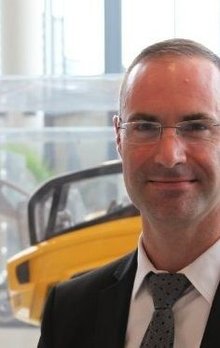
Volvo Construction Equipment’s Yann Teste gave a practical overview of how the business is strengthening resilience through a unique approach to collaboration and relationships within its supplier ecosystem.
He explained how it does so by bringing together trust-based supplier partnerships, digital transformation and AI, noting how this model helps build supply chains that are both flexible and future-ready.
“A good ecosystem is a protection against risk,” he said, highlighting key risks including a growing global population, changing societal expectations, rapid urbanisation, sustainability and new technologies.
These risks will persist, Yann said, explaining the need to focus on continuous evolution. People are core this, he told guests, saying leaders should focus on “unleashing human capabilities” to make a difference.
He finished with three key objectives: “expect complexity ahead and go for it, utilise the power of relationships for resilience and be the conductor of your ecosystem.”
Economist Impact Group’s John Ferguson and Gordon Donovan, Global VP Research Procurement at SAP shared a session, ‘Creating Resilient Supply Chains: Findings from Economist Impact 2025 C-suite Procurement Study’.
They discussed how businesses face the challenge of leveraging innovative technology while mitigating risk, based on findings from the Economist Impact procurement study.
The study found that, while AI is helping procurement supply chain teams to move at unprecedented speed, they must focus on fundamentals like strengthening supplier collaboration and driving cost efficiencies.

The day closed with a firm eye on the future and a clear message: forget the old-school image of procurement as paperwork and price tags and start thinking about where the big impact happens.
Hosts Isabel Verhoeven of bppostgroup, Reckitt’s Lu Jin and Mikhail Sidorin from ARAG put key future opportunities in the frontline including sustainable supply chains, driving digital innovation and thinking about brand perception.
In doing so, they unpacked why next-generation procurement is a power seat at the executive table.
At his final remarks to close the show, DPW Amsterdam CEO, Herman Knevel, said: “Thank you for the two days being with us.
“I hope it was exciting for you, I hope you made connections, I hope it was informative, I hope you meet your peers. I hope you will be back, but I truly appreciate the energy you brought into DPW, into the two days, because it was electrifying.”
Company portals



Executives

Baber Farooq
Senior Vice President, Product Marketing SAP Ariba & SAP Fieldglass
Gordon Donovan
Vice President Research - Procurement & External Workforce
Michiel Junge
Partner | Deloitte Consulting | Sourcing & Procurement
Yann Teste
Vice President Purchasing New Technologies & all Global Categories at Volvo Construction Equipment