How DP World is Accelerating Carbon Reductions With Trucks
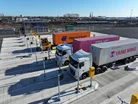
DP World, in a strategic move to enhance sustainable procurement solutions, is launching its Low Carbon Truck Programme (LCTP).
This initiative aims to provide truck operators with access to a lower-carbon fuel option, significantly impacting procurement processes at the managerial level.
In a unique approach within the UK industry, truck operators now have the prospect of selecting low-carbon fuel options at DP World's London Gateway and Southampton hubs.
This supports procurement executives in integrating more sustainable practices within their operational frameworks.

Low carbon opportunities for procurement
Each day, more than 4,000 trucks bring their emissions to DP World's UK ports. Addressing this challenge, DP World has introduced the LCTP as part of a broader strategy to diminish these emissions, creating more environmentally friendly supply chains that procurement professionals can leverage.
DP World's objectives include reducing Scope 1 emissions by 42% and Scope 3 emissions by 28% by 2030, with an ambitious aim of achieving net-zero emissions by 2050.
To facilitate this shift towards sustainability, procurement executives and fleet operators can now utilise Hydrotreated Vegetable Oil (HVO), a renewable cleaner alternative to diesel.
This option, offered without added costs, reduces carbon intensity by up to 85% and sets a benchmark for procurement leaders aiming to meet sustainability targets.
Efficient fuel switching for fleet operators
Helping facilitate the shift to sustainable fuels, DP World has partnered with Certas Energy and New Era Fuels.
The programme stipulates that trucks visiting the ports with loaded containers over 90 times in three months can qualify, offering procurement teams a clear path to sustainable transition.
Fleet owners can claim up to 5,000 litres of HVO for each vehicle, with a cap intended to ensure broad participation.
For efficiency, the fuel can either be delivered in bulk to operator yards or accessed at UK refuelling stations via a fuel card, a logistical improvement that procurement departments can capitalise on to streamline operations.
John Trenchard, Vice President for Sustainable International Supply Chains at DP World, says: “Cargo owners and freight forwarders can significantly reduce their supply chain Scope 3 emissions if they use trucking companies that participate in the programme.
"This is an innovative first for the container sector and we estimate that more than 30,000 tonnes of carbon dioxide could be reduced each year if all our trucking partners register. Our hope is to encourage early adoption as a transitional step towards the eventual goal of electrification.
“With the forthcoming launch of the new driver welfare facility at Southampton, we’re delighted to be doing more for road hauliers and we’re confident that the trial will mirror the success of our industry leading Modal Shift and Carbon Inset Programmes.”

Sustainability training for procurement
DP World also introduces Carbon Literacy Training to enhance the understanding of truck operators and procurement suppliers about emissions, reporting and tailored decarbonisation strategies.
Richard Smith, Managing Director at the Road Haulage Association, adds: “Hauliers want to reduce their emissions and our recent Net Zero Survey highlighted how operators see low carbon fuels achieving this as an interim step to Net Zero."
"Appropriately sourced HVO offers a way for them to do this and we welcome DP World’s Low Carbon Truck Programme, together with the accompanying carbon literacy training to support hauliers on this journey.”
The initiative stands as a key opportunity for procurement leaders to integrate lower-carbon fuels and achieve notable emissions reductions across Scopes 1, 2 and 3.
By setting this precedent, DP World aims to inspire further industry-wide adoption of similar sustainable practices.