Why is Amazon Closing all its UK Fresh Stores?
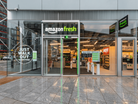
Earlier this year, Amazon announced a commitment to invest £40bn (US$53.7bn) in the UK over the next three years.
This strategic investment is aimed at bolstering online operations, particularly by expanding its grocery selection and delivery efficiency for UK customers.
Amazon's decision to shut all UK Amazon Fresh stores forms part of this broader strategy, paving the way for Whole Foods’ enhanced presence.

Retail evolution influencing procurement
The procurement sector must take note of the evolving consumer behaviours driving Amazon's decision-making.
With predictions from PwC estimating that over 25% of UK food spending will occur online by 2030, traditional supply chains face an inevitable transformation.
Amazon's bid to amplify its online grocery offerings by integrating various platforms is a testament to these shifting dynamics.
Amazon UK’s grocery segment is witnessing a growth trajectory of nearly 20% annually, and a significant chunk of sales on Amazon.co.uk comprises essentials, including groceries and household items. The shift is evidence of an increasing preference for online over brick-and-mortar shopping, necessitating procurement strategies to align with such trends.
Amazon Fresh UK: A procurement case study
The UK rollout of Amazon Fresh stores in 2021, while innovative, offered a glimpse into the challenges of integrating physical retail with cutting-edge technology.
The stores allowed a seamless, checkout-free shopping experience through app-based transactions. However, with the closure of all 19 stores located across various UK cities, the question arises: what does this mean for procurement?
"Since 2008, we've worked hard to innovate to help our customers save time and money when shopping for groceries and household essentials," says John Boumphrey, Country Manager at Amazon UK.
"We continue to invent and invest to bring more choice and convenience to UK customers, enabling them to shop for a wide range of everyday essentials and groceries at low prices and with fast delivery through Amazon.co.uk, Amazon Fresh and Whole Foods Market stores, alongside our third-party grocery partners, including Morrisons, Co-op, Iceland and Gopuff.”
The pivot to online, backed by robust supply chain management, underlines Amazon’s focus on procurement – sourcing and delivering efficiently to meet customer demand.
Transformative impacts on the high street and beyond
The procurement ramifications extend to the broader market.
The planned conversion of five Amazon Fresh locations into Whole Foods Markets further indicates Amazon's intent to cater to the growing demand for ethically-sourced and organic products.
With a target to launch 12 Whole Foods Market stores by the end of 2026, procurement strategies are likely to incorporate sustainable sourcing as a key component.
Amazon’s focus on environmentally-responsible and ethically-sourced products, alongside logistics innovations like e-cargo bikes and drones, provides a glimpse into the integration of sustainability into supply chain management. For procurement professionals, it represents a shift towards integrating supply chain resilience with market demand satisfaction.
Furthermore, the impact on employment within Amazon as well as its partners showcases yet another layer in the procurement ecosystem – the potential need for reshuffling and upskilling employees to cater to an increasingly digital retail landscape.
Should Amazon succeed in these endeavours, the UK consumer market and its supply chain will likely undergo a transformative shift, necessitating procurement professionals to innovate and adapt continually.