
How BASF is Advancing Responsible Sourcing
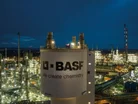
BASF’s Care Chemicals division has published its Responsible Sourcing Report 2025, which shows it is continuously advancing the responsible sourcing of renewable raw materials in its Care Chemicals division.
The Responsible Sourcing Report 2025 shows how BASF is strengthening environmental and social standards along global supply chains while supporting customers in their green transformation.
BASF’s oil sourcing methods
According to BASF’s 2025 Responsible Sourcing Report, the chemical organisation successfully traced 99% of its global palm kernel and palm oil footprint down to the oil mill level.
However, the target to achieve complete certification for palm intermediates has been extended to 2030, despite 79.2% of its palm oil currently originating from Roundtable on Sustainable Palm Oil (RSPO) certified sources.
Palm oil is typically used for home and personal use, but oil palm cultivation can contribute to deforestation, biodiversity loss and climate change through peatland drainage.
For coconut oil, BASF says it procured the plant-based product from the Rainforest Alliance and uses it to manufacture ingredients for products like cosmetic products, detergents and cleaning agents. BASF has production sites in Cassina Rizzardi, Italy and Zona Franca, Spain to produce the coconut oil.
Through Project Pragati, BASF has established successful sustainable practices for castor oil production.
This initiative focuses on boosting castor oil yields across India, which serves as the core of the global supply. Also, to prevent any prospective supply chain bottlenecks, the SUCCESS (Sustainable Castor Caring for Environment & Social Standards) code was introduced.
Farmers who produce castor beans are trained under the SUCCESS code and taught to build capacity, improve yields and reduce environmental impacts.

To foster responsible cultivation and collection, BASF actively champions sustainable sourcing across all its practices, even offering sustainable sourcing certification options for selected key renewable raw materials.
This initiative supports smallholders, enhances supply chain transparency for suppliers and helps mitigate environmental and social risks.
BASF’s manufacturing actions
Along with sustainable sourcing, BASF has also gained a foothold in manufacturing with its new partnership with Encina Development Group for a chemical facility.
Prior to a final investment decision, the agreement enables BASF to deliver advisory services during the project development phases. Additionally, the arrangement provides guidance on procurement strategy as well as project execution planning.
Thomas Ohlinger, Senior Vice President Traded Products at BASF, explains: "Advancing circular economy solutions requires strong collaboration across the value chain.”
“Through this additional agreement with Encina, BASF continues to support the development of innovative approaches that increase the availability of circular feedstocks for the chemical industry and expand the use of circular raw materials in our production processes and Cycled product portfolio.
“This demonstrates our strength as a partner with distinctive capabilities to support and shape early-stage projects beyond what pure off-takers can offer.”
In 2025, BASF sourced Siemens Energy to launch a 54MW water electrolyser at BASF’s Ludwigshafen site.
The PEM electrolyser is the result of a collaborative effort spanning two years with Siemens Energy. It yields a maximum of one tonne of emissions-free hydrogen hourly, which equates to an annual output of 8,000 tonnes.
To ensure operational continuity, this infrastructure is woven into BASF’s current ecosystem, leveraging established supply chains while maximiing efficiency.
Company portals
Executives

Thomas Ohlinger
Managing Director BASF Intertrade AG