Mitsubishi & Panasonic: Transforming Resource Recycling
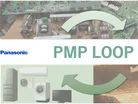
Mitsubishi Materials and Panasonic have jointly established and are operating a PMP (Product-Material-Product) loop, which reutilises gold, silver and copper recovered from waste printed circuit boards of discarded home appliances, primarily within the Panasonic Group.
This PMP loop is the industry's first scheme to achieve consistent resource recycling, through which urban mine resources have been reused, reaching cumulative totals of 1.1 tonnes of gold, 33 tonnes of silver and 8,100 tonnes of copper.
The demand for more efficiency

With global demand at an all-time high for more efficient use of metal resources and environmental protection, recycling-oriented manufacturing is critically needed, especially in Japan, where the self-sufficiency rate of natural resources is low.
As a way to reach sustainable economic growth, the Ministry of Economy, Trade and Industry has formulated the Growth-Oriented, Resource-Autonomous Circular Economy Strategy. This aims for both economic development and environmental protection through the efficient use of resources and the promotion of recycling.
The Ministry of the Environment has introduced the Fifth Fundamental Plan for Establishing a Sound Material-Cycle Society. This plan focuses on building a sustainable, recycling-oriented society by emphasizing waste reduction, resource recycling and minimizing environmental impact. Key initiatives include fostering collaboration with local communities, promoting education and awareness and encouraging the efficient use of resources to protect the environment.
This plan outlines a policy to double the processed amount of metal recycling raw materials by the fiscal year ending March 2031.
"Cannot be achieved through our efforts alone"
Quoted on Panasonic’s Sustainability Data Book, 2024, Yuki Kusumi, CEO of Panasonic, said: “The ideal society we envision cannot be achieved through our efforts alone. It can be achieved only through collaboration with our stakeholders, including customers, business partners, shareholders, employees and communities.
“We believe this is the only way to achieve growth and development and enhance our corporate value in a sustainable way. As a public entity of society, the Panasonic Group will continue to help all of its stakeholders to ‘live their best’ and we will walk alongside them toward the ideal society we pursue.”
Mitsubishi Materials and Panasonic have worked together to smelt waste printed circuit boards – collected from recycling centres and repair sites of household appliances across the nation – extracting the gold, silver and copper.
The recycling of non-ferrous metals is reused for manufacturing across the Panasonic Group, as well as for other purposes. Since its launch in 2011, the scheme has consistently managed the processes from collection to reuse of recycled raw materials, achieving consistent resource recycling.
For copper recovery under this scheme, instead of smelting copper ores, the cumulative amount of CO2 reduction has reached approximately 33,000 tonnes, proving these efforts also contribute to CO2 reduction. The copper recovered through this scheme is also used as a raw material for copper wires employed in the Panasonic Group Pavilion at Expo 2025 Osaka, Kansai, Japan, which aims to fully incorporate recycled resources.
The circular economy and the reduction of CO2 emissions
Mitsubishi Materials and Panasonic will continue their work to expand end-to-end resource recycling management – from collecting recycled materials to reuse in new products – by utilising the experience and know-how obtained through the establishment and operation of the PMP loop, in addition to efforts to raise broad awareness of non-ferrous metal recycling.
Panasonic will work with a variety of partners in its future to establish efforts to reach new target items, contributing to the evolution of the circular economy and the reduction of CO2 emissions.
Panasonic ET Solutions (PETS), a Panasonic subsidiary, has outsourced the processing of waste printed circuit boards collected from home appliance recycling plants and repair sites nationwide to partner companies.
PETS refines waste printed circuit boards by removing iron and aluminium resources unwanted for crushing and smelting and delivers them to Mitsubishi Materials. Mitsubishi Materials extracts gold, silver and copper from the refined waste printed circuit boards through smelting and returns respective metal materials to PETS.
The recovered gold, silver and copper are processed into gold plating solutions, copper wires and other materials to be reused for manufacturing within the Panasonic Group. The total amounts of materials recovered from waste printed circuit boards through the PMP loop to date reached 1.1 tonnes of gold, 33 tonnes of silver and 8,100 tonnes of copper.
The PMP loop is not only a resource-recycling initiative but contributes to reducing CO2 emissions, as it does not require the production of metal resources from ores. As an example, the 8,100 tonnes of copper recovered through the PMP loop to date, instead of smelting copper ores, have resulted in a cumulative reduction in CO2 emissions of approximately 33,000 tonnes.
Explore the latest edition of Procurement Magazine and be part of the conversation at our global conference series, Procurement & Supply Chain LIVE.
Discover all our upcoming events and secure your tickets today.
Procurement Magazine is a BizClik brand