
Aggreko: Are CEOs Balancing Net Zero Goals With Profit Needs
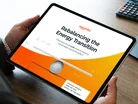
Aggreko, based in Glasgow and known for its energy solutions expertise, has released a fresh report detailing how CEOs are approaching their net zero targets amidst complex market conditions.
This report, built on a survey of 400 business leaders from across Europe, reveals shifting priorities and new challenges as executives face the energy transition.
Aggreko’s findings reveal a trend toward decentralised energy systems, with 87% of surveyed leaders now deploying energy solutions like on-site power generation or energy storage to align sustainability with financial stability.
Robert Wells, Aggreko’s Europe President, explains the report’s purpose: “With appetite for decentralisation and alternative power agreements on the rise, we have launched our report to help leaders understand the market and how it is evolving."
What exactly are decentralised energy solutions?
Decentralised energy solutions are systems that generate energy close to its point of use, as opposed to the traditional model of large, centralised power plants.
These setups often involve renewable resources, such as solar, wind, biomass, biofuels and small hydropower systems, along with combined heat and power (CHP) units.
For businesses, decentralised solutions reduce dependency on the grid and enhance stability, which is especially valuable when energy supply becomes unpredictable.
Business priorities are shifting
According to Aggreko’s research, more than 95% of CEOs across Europe have altered their energy transition timelines due to recent market pressures.
Over half of these executives are delaying their net zero deadlines, reflecting an increasingly pragmatic stance on balancing environmental ambitions with economic pressures.
The report includes insights from leaders in energy-intensive industries in the UK, Germany, France and Italy, shedding light on the ongoing struggle between ambitious environmental goals and financial imperatives.
This recalibration of priorities comes at a time when European businesses are facing stricter environmental requirements, such as the EU’s Deforestation Regulation and Corporate Sustainability Due Diligence Directive, which mandate that companies account for their environmental impact throughout their supply chains.
Yet, despite these pressures, only 12% of CEOs rank rapid decarbonisation as a primary goal, while cost reduction and maintaining a competitive edge remain top of mind.
Investment endures amid economic uncertainty
Despite the headwinds, companies are still making investments in green technologies, though with more caution.
Aggreko’s findings indicate that 80% of executives expect to continue increasing their energy transition investments through 2025, albeit with most expecting only marginal growth.
This restrained approach highlights the delicate balance business leaders are navigating between making sustainable changes and responding to a challenging economy.
Decentralised energy solutions feature prominently in these plans, with more than half of the surveyed businesses intending to expand their current systems.
Concerns over grid stability and a desire for greater energy autonomy appear to be significant motivators for this shift, as companies seek to shield themselves from external energy uncertainties.

Supply chains at the heart of energy strategy
Aggreko’s report also underscores the role of supply chains in shaping energy strategies. Nearly half of the CEOs surveyed consider their supply chains one of the primary risks to their net zero goals, with 21% identifying it as the top risk factor.
This points to the interconnected challenges businesses face in implementing sustainable practices, especially when addressing Scope 3 emissions – emissions generated by external suppliers and partners.
Commenting on this trend, Robert says: “It is not surprising that our research has uncovered leaders across Europe are looking for change when it comes to their energy supply chain. In a tough economic landscape, grid instability and connection delays, price uncertainty and looming ESG targets are impacting many businesses’ energy transitions."
The report also illustrates variations in challenges from one region to another.
For instance, German and French CEOs cite stakeholder buy-in as their main barrier to decentralisation, while Italian executives are more concerned with commercial feasibility. UK-based leaders, however, point to the intermittency of renewable energy as a key challenge in pursuing green energy options.
Traditional energy procurement still strong
Aggreko’s findings also reveal that many companies are hesitant to move away from traditional energy procurement models.
Around 46% still prefer conventional energy contracts over flexible options like power purchase agreements or energy-as-a-service, despite the growing availability of alternatives that could better meet both environmental and economic needs.
This conservative approach may reflect the pressure leaders face to secure short-term savings and maintain stable energy supply in the face of fluctuating energy costs.
Data is emerging as an increasingly influential factor in energy decision-making, with 16% of CEOs stating it is the most important element in their company’s energy strategy.
This shift toward data-driven energy management indicates a sophisticated approach, where data analytics and performance metrics are beginning to surpass the role of traditional sustainability directors or energy consultants in the energy transition.
Aggreko’s report shows this to be a critical juncture for European businesses balancing sustainable ambitions with financial realities. Robert, optimistic about the energy transition, views the report as a valuable tool for understanding the broader context of this balancing act.
"Particularly when capital is at a premium, supporting customers with controlling costs and energy supply will remain a key part of ensuring a smooth energy transition," Robert concludes.
Make sure you check out the latest edition of Procurement Magazine and also sign up to our global conference series - Procurement & Supply Chain 2025.
Procurement Magazine is a BizClik brand.