
How Can We Improve Europe’s Defence Procurement?
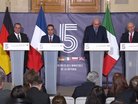
On 12 March 2025, Ministers of Defence of France, Germany, Poland, Italy and the United Kingdom met in Paris for the European Group of Five (E5) Defence Minister’s meeting.
Leaders were joined by NATO Deputy Secretary General, Radmila Shekerinska, Ukrainian Deputy Minister of Defence, Serhii Boiev, Deputy Secretary General, Charles Fries, of the European External Action Service and European Commissioner for Defence and Space, Andrius Kubilius.
The leaders discussed support for Ukraine, consolidating an approach to European defence and the importance of creating a joint approach to defence procurement.
A joint statement on 12 March, 2025, explained: “Europe’s security is at a turning point. The balance of our world is being redefined to an extent not seen for many decades. We, the Ministers of Defence of France, Germany, Italy, Poland and the United Kingdom gathered in Paris today, assert that peace in Ukraine and the defence of Europe are the most urgent necessities of our time. We recognise that our security is not separate, but shared, and that our ultimate strength relies on our unwavering commitment to one another.”

What defence procurement challenges does Europe face?
Europe battles with a lack of cooperation between nations in defence procurement due to a lack of standardisation.
Not only do bureaucratic procurement processes slow down decision-making and budget constraints delay projects but technological gaps means the region falls behind China and the US in cyber defence and AI.
Supply chain vulnerabilities also arise from the reliance on Chinese raw materials and US technology.
NATO vs EU defence priorities create further divisions, meaning there is a lack of consistency on defence commitments across the region.
Europe must strengthen cooperation between nations, streamline procurement and invest in domestic defence capabilities to overcome these challenges.
A call for unified procurement
The leaders agree that they can improve the defence industrial base of Europe by adapting European legal frameworks and sharing best practices to accelerate procurement processes.
Countries must create a more efficient, integrated and standardised approach to procurement to improve defence industrial cooperation, faster acquisition cycles and less duplication of efforts to help improve European security.
The leaders point to a shift to unified procurement in European defence by:
- Accelerating joint procurement
Leaders wish to streamline and reduce bureaucracy that previously slowed multinational defence acquisitions
- Overcome financial and regulatory barriers
Craft more flexible funding options to support joint defence procurement initiatives
- Standardisation
Make greater progress to the goal of ensuring European defence has less fragmentation in procurement
- Use EU defence tools to streamline procurement processes
This will help promote joint European defence projects and enhance cross-border defence acquisitions
- Create a common approach to defence spending
- Share best practices to accelerate procurement processes
German Defence Minister Boris Pistorius, stresses the need for a more unified European approach to military spending: "We want to procure more, we want to procure consistently and at the same time ... we want to deregulate, at a European level, but also in our nation states. We can procure more cheaply together."
How can procurement help European defence?
European countries can utilise procurement to improve resilience, defence and cost-efficiency.
By focusing on improving standardisation, supply chain resilience and joint defence procurement, companies can improve its defence capabilities and minimise reliance on external suppliers to maintain long-term resilience and security.
Not only does collective purchasing allow European countries to negotiate better deals with defence suppliers to reduce costs but streamlined procurement processes improve Europe’s ability to react to crises and security threats.
The European Group of Five Defence Ministers’ meeting in Paris highlights the need for Europe to accelerate, streamline and expand joint procurement to strengthen its security and defence capabilities.
Leaders must collaborate to enhance procurement processes, industrial cooperation and defence spending to improve European defence readiness.
Explore the latest edition of Procurement Magazine and be part of the conversation at our global conference series, Procurement & Supply Chain LIVE.
Discover all our upcoming events and secure your tickets today.
Procurement Magazine is a BizClik brand.