What Next for Supply Chain Transparency After CEOs' Letter?
Tensions over the future of sustainability regulation in the European Union escalated this week, as a letter signed by 46 CEOs from major French and German firms attracted criticism, confusion and political unease.
The document, sent to French President Emmanuel Macron and German Chancellor Friedrich Merz, calls for the weakening of key EU rules on corporate sustainability – specifically those governing supply chain transparency.

While originally pitched as a united front from European industry, several French companies now challenge the letter’s legitimacy, deny full agreement with its content and question how it came to represent them. In contrast, a number of German firms are continuing to support the document’s message.
Letter challenges EU sustainability approach
On 13 October, a joint letter signed by dozens of top CEOs from France and Germany called on the European Commission to ease sustainability-related regulations.
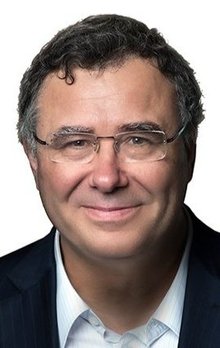
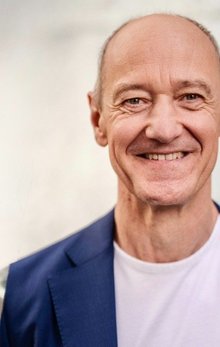
The letter, co-authored by TotalEnergies CEO Patrick Pouyanné and Siemens CEO Roland Busch, arriveed following a closed-door summit in Evian, France, where 46 executives meet with President Macron and Chancellor Merz.
The letter argued that existing EU legislation around sustainability creates obstacles for European companies trying to compete globally. Its most direct request is that leaders "scrap rules on supply chain transparency by the end of this year" and expand the scope of the European Commission's Competition Directorate.
This expansion, the letter states, should include consideration of strategic mergers in the context of global competition.
The document represented a rare and public rejection of the EU’s regulatory direction, but it wasn't long before controversy surfaced.
French firms retreat
Soon after the letter becomes public, a number of French companies begin distancing themselves from it, with some questioning whether they ever consented to its publication or contents.
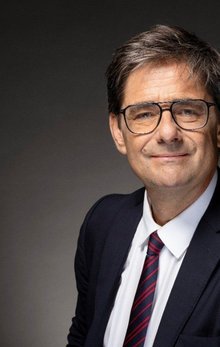
Bpifrance CEO Nicolas Dufourcq told POLITICO that, although he attended the Evian meeting, he did not see the letter beforehand and does not consider himself bound by it.
He said the letter was “not a big effort” and merely a “summary of the discussion held at Evian,” rather than a statement of intent.
Another anonymous French signatory described the document’s origins as “a little nebulous.” They confirmed that, although they do not outright disagree with its sentiment, “the wording is a little strong".
Even TotalEnergies, whose CEO co-authored the letter, offered clarification. A company spokesperson stated that Patrick and Roland served as co-chairmen of the Franco-German CEO meeting in Evian, and that the two “welcomed Chancellor Merz and President Macron during a special session". Both leaders reportedly “encouraged [the CEOs] to express their priorities” regarding Europe's competitiveness.
The spokesperson added that the letter “summarises the five top priorities and calls for actions in the short term which resulted from the debates between the CEOs".
Siemens declined to comment on these remarks.
German companies hold the line
While French firms attempted to soften or disown their involvement in the letter, German companies are showing no such hesitation.
A spokesperson for Deutsche Börse, whose CEO Stephan Leithner is among the signatories, confirmed the company's involvement and backed the letter’s demands.
“The letter emerged from the group discussion, so Stephan Leithner, who was among the participants, was involved, and we support the contents of the letter,” the spokesperson said.
Bosch, another German signatory, described the initiative as one “spearheaded by companies from Europe's two largest economies," emphasising that a primary goal is "securing and strengthening the competitiveness of European industry".
The sharp contrast in response between French and German firms has opened the door to speculation over the letter's purpose and authenticity.
According to POLITICO, some executives are suggesting national governments encouraged them to participate in the letter's drafting. If true, this adds a layer of political complexity to what initially appeared as a private sector-led initiative.
Andreas Rasche, Professor of Business in Society at Copenhagen Business School, comments: “That is quite remarkable, because with this the CEOs shift the blame for their demands onto Berlin and Paris. The lack of transparency surrounding this letter is astonishing, almost as astonishing as companies' lack of courage to stand by their own views."
EU’s legislative direction under scrutiny
Outside the Franco-German rift, the episode contributes to a wider debate about the burden of EU sustainability legislation.
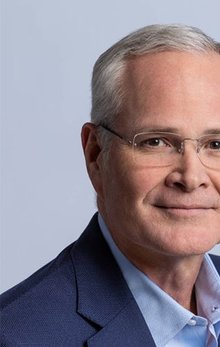
Darren Woods, CEO of ExxonMobil, is among those to have taken a strong stance against the Corporate Sustainability Due Diligence Directive (CSDDD), a flagship EU proposal aiming to hold companies accountable for environmental and human rights violations across their supply chains.
He has called it "the worst piece of legislation I’ve seen since I’ve been in this job," warning that penalties, including fines of at least 5% of global revenue for violations, are “bone-crushing". He goes further, claiming “Europe is slowly suffocating itself” with regulation.
Meanwhile, the European Parliament is preparing to vote on the Omnibus proposals, which include key elements of the CSDDD, by the end of the year. A final agreement is expected in late 2025 or early 2026.
Whether the bloc maintains its current direction or bows to increasing pressure from business leaders remains uncertain. The letter, and the furore it creates, makes one thing clear: sustainability regulation has gone from a policy debate to a point of contention at the heart of European industrial strategy.
Executives
Darren Woods
CEO
Nicolas Dufourcq
CEO - Bpifrance
Patrick Pouyanné
Chairman and CEO
Roland Busch
President and CEO of Siemens AG