US and China Reach Deal to Ease Tariff Strain
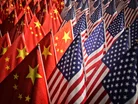
Many procurement and supply chain leaders will be feeling better this morning after hearing news of an agreement between the US and China to help ease the tariff strain on business.
Following meetings over the weekend of 10 & 11 May, the two nations announced Monday 12 May that they've reached an agreement to mutually reduce tariffs, marking a significant step toward resolving the trade conflict between the world's two largest economies that has destabilised global markets and economic forecasts.
90-day suspension brings relief

Following negotiations with Chinese officials in Geneva, US Treasury Secretary Scott Bessent informed reporters that both sides have committed to a 90-day suspension of new trade measures. Additionally, existing tariffs will be substantially reduced—decreasing by more than 100 percentage points to settle at 10%.
It will end what was essentially an embargo on trade between the two nations, as US tariffs on Chinese imports reached 145%, while Chinese tariffs on the USA had got to 125%. It will come as a particular relief for companies like Walmart and Target, which were last week reported to be calling on Chinese suppliers to start shipping again.
Speaking in Geneva, US Treasury Secretary, Scott Bessent, confirmed that the pair had agreed to a 90-day pause on "reciprocal" tariffs, meaning both sides will reduce their tariffs by 115%.
US trade representative Jamieson Greer explained that both nations had agreed to decrease tariffs on mutual imports to 10%, down from the 125% tariffs announced on China following Donald Trump's "liberation day", which had prompted Beijing to implement matching 125% tariffs.
He noted that the Trump administration's 20% tariffs related to fentanyl would remain in effect, resulting in the US effectively maintaining a 30% total tariff against China. Consequently, US exports to China will now face only 10% tariffs.
Reuters reports that the commerce minister from China had confirmed the suspension of "all tariff countermeasures" taken against the US since 2 April.
The deal comes just days after a new agreement was reached with the UK, to reduce tariffs between both countries, with the UK Government agreeing to concessions on American food and agriculture in return for easing tariffs on British car exports.
Car export tariffs will reduce from 27.5% to 10% - saving hundreds of millions a year for Jaguar Land Rover alone. This will apply to a quota of 100,000 UK cars, almost the total the UK exported last year.

Markets respond positively
A joint statement between The Government of the United States of America and the Government of the People's Republic of China, said the deal was: "Recognising the importance of their bilateral economic and trade relationship to both countries and the global economy; Recognising the importance of a sustainable, long-term, and mutually beneficial economic and trade relationship.
"Reflecting on their recent discussions and believing that continued discussions have the potential to address the concerns of each side in their economic and trade relationship; and Moving forward in the spirit of mutual opening, continued communication, cooperation, and mutual respect;"
The statement adds that the US will reduce China-targeted tariffs by suspending 24 percentage points for 90 days (maintaining only a 10% rate) from the 2 April 2025 Executive Order, and will completely remove additional tariffs imposed on April 8-9, 2025.
In reciprocal action, China will suspend 24 percentage points of its US-targeted tariffs for 90 days (also maintaining only a 10% rate), remove additional tariffs imposed in early April 2025, and suspend all non-tariff countermeasures enacted since April 2, 2025.
The statement concludes by adding: "After taking the aforementioned actions, the Parties will establish a mechanism to continue discussions about economic and trade relations. The representative from the Chinese side for these discussions will be He Lifeng, Vice Premier of the State Council, and the representatives from the US side will be Scott Bessent, Secretary of the Treasury, and Jamieson Greer, United States Trade Representative.
"These discussions may be conducted alternately in China and the United States, or a third country upon agreement of the Parties. As required, the two sides may conduct working-level consultations on relevant economic and trade issues."
Following news of this deal, stocks and oil prices were both rising – along with the dollar.
Explore the latest edition of Procurement Magazine and be part of the conversation at our global conference series, Procurement & Supply Chain LIVE.
Discover all our upcoming events and secure your tickets today.
Procurement Magazine is a BizClik brand