
UK Sets 87% Emissions Target to Unlock £90bn Green Boost

The UK Government has set a target to cut emissions by approximately 87% between 2038 and 2042 through its proposed Seventh Carbon Budget.
The plan links climate commitments with energy security, economic growth and household cost reduction whilst establishing a clear framework for long-term procurement planning across multiple sectors.
According to the UK Government, the framework could reduce exposure to global fossil fuel price volatility while creating conditions for long-term economic stability. The approach builds on the Climate Change Act 2008, which has attracted billions of pounds in private capital to clean energy industries.
Since July 2024, more than £90bn (US$121bn) of private investment has been announced in clean energy projects. The figure includes substantial carbon capture developments in Teesside and the Sizewell C nuclear project, which is expected to generate 3.2 gigawatts of low-carbon electricity and power 6 million homes for more than 60 years. These flagship projects are expected to generate significant procurement opportunities for engineering firms, construction companies and specialist equipment suppliers.

Energy Secretary, Ed Miliband, says the policy responds to fossil fuel price shocks that have affected household and business budgets. "As Britain faces the second fossil fuel shock of the decade, the only way to protect family and business finances is to drive for clean homegrown power that we control," he says.
"This carbon budget sets a clear pathway that gives businesses the certainty they need to invest and create jobs across the country."
Investment unlocks supplier opportunities
The transition framework could support procurement activity across multiple sectors. According to the government, the net zero economy supports more than one million jobs and is expected to contribute £105bn (US$141bn) in gross value added to the UK economy in 2025.
The carbon capture sector alone is projected to support thousands of jobs in engineering, construction and operations.
The Teesside project will require extensive procurement of specialised equipment including carbon dioxide capture units, compression systems and transport infrastructure. Supply chain opportunities extend to ongoing maintenance contracts and monitoring systems.
Rick Parfett, Head of Climate Policy at WWF, says the announcement should encourage business investment across the supply chain. "Today's announcement should give businesses confidence to invest in a fair transition, backed by independent advice and the Climate Change Act, but we need clear, credible and ambitious policies to make that happen," he says.
The National Wealth Fund and GB Energy could help households adopt clean energy technologies while creating supplier relationships across installation, maintenance and equipment provision.
March recorded the highest monthly solar deployment in more than a decade, alongside record EV sales, demonstrating growing market momentum.
The nuclear sector presents particularly significant procurement opportunities. Sizewell C is expected to require approximately 70,000 tonnes of steel, 1.6m cubic metres of concrete and thousands of specialist components. The project aims to maximise UK content in its supply chain.
Climate Minister, Katie White, says the framework establishes an investment environment that supports business planning. "That's why we're continuing to set a clear investment framework which will electrify Britain, maximising the benefits of clean power with cleaner air, warmer homes, energy security, investment into Britain and thousands of jobs in the industries of the future," she says.
£15bn programme targets home upgrades
The Warm Homes Plan commits £15bn (US$20bn) to deliver what the government describes as the largest home upgrade programme in British history. The initiative aims to reduce energy bills and fuel poverty whilst creating sustained demand for installation services, building materials and energy efficiency technologies.
The programme is expected to upgrade millions of homes with improved insulation, heat pumps, solar panels and other energy efficiency measures. This creates procurement opportunities for insulation manufacturers, heat pump suppliers, solar panel installers and smart home technology providers.
According to the government, families installing solar panels could save up to £500 (US$672) annually on energy bills. EV owners could save up to £1,400 (US$1,884) a year in running costs compared to petrol or diesel vehicles. These savings are expected to drive consumer demand and create stable markets for suppliers.
The proposed emissions target is based on consumer choice that encourages adoption of solar power, battery storage and electric vehicles. The approach could create procurement demand for equipment suppliers, installers and service providers whilst supporting the development of domestic manufacturing capabilities.
Chris Norbury, Chief Executive Officer of E.ON UK, says the transition offers system transformation opportunities. "Every step forward on the energy transition is welcome but the prize is bigger than emissions alone. It's the chance to transform a system built for a different century into one that works for customers where flexibility is rewarded, demand is dynamic and pounds end up back in people's pockets," he says.
Supply chain shifts target fossil fuel dependency
The government argues that reducing dependence on imported fossil fuels is an economic priority that will improve supply chain resilience. According to government analysis, half of the country's recessions since 1970 have been linked to fossil fuel shocks.
Renewable energy investments have secured enough clean power to supply the equivalent of 23m homes. Long-term projections suggest the UK could reduce fossil fuel reliance from around 75% of energy use today to approximately 15% by 2050, fundamentally reshaping energy procurement across all sectors.
The transition is expected to support more than 400,000 additional jobs by 2030, spanning construction, manufacturing, installation and professional services. Research cited by the government shows that net zero jobs are more productive than the UK average and generate higher wages for workers.

Offshore wind represents a particular area of supply chain development. The UK has the largest offshore wind capacity in the world, and continued expansion will require turbines, foundations, cables and installation vessels. The government is working with industry to increase domestic content in offshore wind supply chains.
Kevin Austin, Director of Policy and Advocacy at the RSPB, says reducing fossil fuel dependence is linked to nature restoration. "Moving away from our reliance on fossil fuels is critical to restoring nature in the UK. Our security, prosperity and wellbeing all rely on having a healthy natural world, and the good news is that nature can play a role in helping us to meet carbon targets," he says.
The clean energy transition could deliver environmental and public health benefits that affect procurement budgets across the public sector. According to the government, cleaner air from reduced fossil fuel use could prevent around 8,000 hospital admissions annually by 2050, reducing pressure on NHS procurement and service delivery.
Nature restoration efforts, including peatland recovery and woodland creation, are projected to generate around £50bn (US$67bn) in environmental benefits by mid-century. The government says these benefits include enhanced biodiversity, improved water quality and greater flood protection.
Nigel Topping CMG, Chair of the Climate Change Committee, says the government has accepted the advised level for the Seventh Carbon Budget, providing clarity for long-term planning. "The lower-cost, energy-secure future is electric, so we hope to see the government plan to accelerate electrification, in particular by making electricity cheaper," he says.
"The government must make its own pathway; but investors, businesses and trade unions can have confidence in the work that we have done to show this is a feasible yet ambitious approach to a more secure world. This creates the stable policy environment that enables businesses to invest in capacity, skills and innovation."
Company portals






Executives

Chris Norbury
Chief Executive Officer at E.ON UK
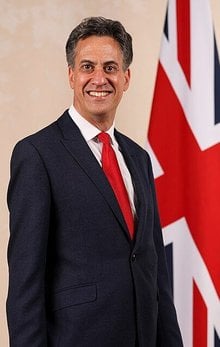
Ed Miliband
Energy Secretary

Katie White
Climate Minister

Nigel Topping
Chair

Rick Parfett
Head of Climate, UK