How P&G and WWF are Driving Sustainable Sourcing Progress
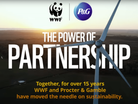
To create a lasting legacy for businesses, people and planet in as little as 15 years is nothing short of remarkable.
In the case of P&G and the World Wildlife Fund (WWF), collaboration over the past decade and a half has helped drive key sustainability initiatives across a broad scope of areas including forestry, the use of bio-based plastics and climate and energy-related solutions.
On Earth Day, the pair celebrated this partnership, acknowledging the impact that’s possible when a global company unites with an environmental conservation organisation.
For P&G, which prioritises the reduction of its environmental impact across its sourcing, supply chain and global operations, the collaboration has contributed to the development of critical tools and thought leadership.
These have helped advance ambitious sustainability strategies both within the business and beyond to its partners and customers.

Embedding sustainability within P&G
P&G’s partnership with WWF is underpinned by a shared vision to embed sustainability across the entire value chain, from the responsible sourcing of renewable materials to scaling industry-wide energy transformation.
The collaboration demonstrates how sustainable procurement should be a central pillar of long-term business success and shows the potential gains that come from shaping procurement strategies that are both environmentally and commercially resilient.
In a P&G blog post discussing the importance of collaboration in integrating business-wide sustainability, Chief Sustainability Officer Virginie Helias said: "A component of our strategy is environmental sustainability that delights consumers, customers, employees, society and shareholders.
"Sustainability comes to life best when it’s baked in versus bolted on. It should be integrated into the business strategy and value proposition; grounded in science and powered by consumer insights; and enabled by employees and other partners who are empowered to challenge the status quo and make a difference."
Leading sustainable sourcing progress
Responsible sourcing is a critical factor to several key milestones achieved by P&G.
In 2012, it joined WWF and other global companies to launch the Bioplastic Feedstock Alliance, which provides leadership on responsibly-sourced, plant-based plastics.
This platform has played a leading role in driving thought leadership on the responsible sourcing of bioplastics, as well as the role that bioplastics and other alternative materials play in circular systems and strategies.
P&G’s work with WWF has also reshaped how companies approach energy procurement.
The company was instrumental in establishing the Clean Energy Buyers Association and co-founding the Renewable Thermal Collaborative.
Both initiatives have helped lower the barriers for companies looking to access cleaner and more affordable energy sources, particularly in sectors where thermal energy plays a crucial role in manufacturing and production.
They have also helped P&G make progress towards its own clean energy ambitions. These include achieving net-zero greenhouse gas emissions across operations and supply chain by 2040, with interim targets for 2030.
Removing supply chain risks
P&G is committed to responsible sourcing across its entire supply chain.
The company defines responsible sourcing as the production and procurement of goods and services in a way that respects human rights, conserves resources and protects natural ecosystems.
To this end, it has several core responsible sourcing objectives including conflict-free sourcing, supplier relationships, climate action, packaging, sustainable forestry and water stewardship, and supply chain management and transparency.
As part of its collaboration, P&G uses WWF’s Supply Risk Analysis tool, which applies a data-driven approach to procurement decision making.
By evaluating sourcing risks for renewable materials including crops like coconut oil, corn, sugarcane and cotton, this tool helps procurement teams to identify potential challenges or vulnerabilities before they become liabilities.
It helps increase transparency and visibility for sourcing strategies, clearly sets out risks, impacts and opportunities and promotes more responsible procurement operations.
P&G’s efforts in responsible forestry demonstrated the effectiveness of this approach. In 2022, the company achieved its goal of sourcing 75% Forest Stewardship Council-certified wood pulp three years ahead of its initial schedule.

Helping consumers and scaling industries
As a responsible business, P&G looks to extend its sustainability-first approach to consumer and industry.
Through its partnership with WWF, the business has engaged with other industry leaders to help promote simple yet impactful changes that individuals can make and encourage customers to adopt more sustainable habits.
It has also progressed its water stewardship journey. This includes initiatives to reduce water in operations, restore water in water-stressed areas and address water challenges through greater innovation.
The two organisations have also collaborated on delivering broader value to the industry by sharing frameworks that help standardise sustainable practices.
A notable example is their joint methodology for assessing the sustainability of plant-based inputs, which considers environmental and social indicators across the lifecycle of feedstock cultivation.
In just 15 years, P&G’s collaboration with WWF has yielded significant results and helped drive meaningful change in how businesses embed sustainability at the heart of their procurement and supply chain operations.
Explore the latest edition of Procurement Magazine and be part of the conversation at our global conference series, Procurement & Supply Chain LIVE.
Discover all our upcoming events and secure your tickets today.
Procurement Magazine is a BizClik brand