The Supreme Court Overturns Trump’s Global Tariffs
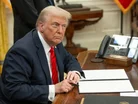
Global markets and supply chains are reacting to the US Supreme Court's decision to invalidate several of Donald Trump's expansive tariffs through a six-three ruling.
The court determined that the International Emergency Economic Powers Act (IEEPA) of 1977 did not provide the president with the authority to implement these duties.
While the legislation permits the president to "regulate" trade during a national emergency, the justices found this language insufficient to grant tariff-imposing powers.
This legal distinction provides crucial clarification for C-suite executives monitoring executive power over trade compliance.
Legal limits on tariff powers
Chief Justice John Roberts, writing for the majority, stated: "When Congress has delegated its tariff powers, it has done so in explicit terms and subject to strict limits.
"Had Congress intended to convey the distinct and extraordinary power to impose tariffs, it would have done so expressly, as it consistently has in other tariff statutes."
The decision specifically invalidates the "Liberation Day" tariffs introduced in April 2025.
These imposed a baseline levy of 10% or more on goods from almost every nation, alongside emergency duties aimed at China, Mexico and Canada.
Trump had defended these measures as responses to drug trafficking and trade imbalances.
However, the Chief Justice noted that "the vehicle is the imposition of taxes on Americans, and that has always been a core power of Congress."
Procurement leaders must note that this ruling does not impact tariffs imposed under alternative legal frameworks.
Section 232 duties on steel, aluminium, cars and semiconductors continue to apply, and Section 301 China-specific tariffs remain in effect.

Refunds and market implications
Financial markets responded quickly. The S&P 500 increased 0.3% and stock markets from South Korea to India rose.
The dollar index declined marginally whilst yields on benchmark 10-year US Treasuries climbed two basis points.
Rob Burdett, Head of Multi Manager at Nedgroup Investments in London, told Reuters: "This ruling has major implications for the limits of US presidential power and the division of power between the legislative branch and the executive branch, but also as a macro catalyst across equities, bonds, currencies and global trade flows."
For supply chain professionals, the decision is a watershed development. The most direct outcome is a substantial reduction in landed costs for importers managing IEEPA-based duties.
Retailers and manufacturers are likely to experience immediate margin improvements.
The ruling could also enable an estimated £105bn (US137bn)–£120bn(US137bn)–£120bn (US137bn)–£120bn(US157bn) in tariff refunds.
However, processing these claims may prove complex, with authorities needing to examine thousands of individual protests and refund applications.
The Reaction
The issue of "reshoring regret" could complicate long-term strategy. Since April 2025, numerous businesses invested millions relocating production to reduce exposure to the invalidated tariffs.
Now, original supply routes may become viable again, leaving firms committed to higher-cost contracts.
Alex Saric, Smart Procurement Expert at Ivalua, adds: "The damage is already done. Companies have restructured sourcing networks, absorbed margin pressure and invested heavily in diversification.
"A Supreme Court reversal does not undo past disruptions, or eliminate the risk of new tariffs under a different authority.
"Businesses that retreat back to single-region sourcing to chase short-term cost relief risk repeating the same vulnerability."
Alex continues: "Trade volatility isn't an occasional shock anymore; it's a permanent operating reality. Businesses should treat this moment not as relief, but as validation of the need for dynamic supply chain planning."
The decision fundamentally alters trade risk. Rather than a comprehensive global tariff environment, supply chain managers must navigate a fragmented landscape.
With the administration likely to investigate alternative mechanisms to reintroduce duties, monitoring specific legal triggers is essential.
The threat of sudden emergency tariffs had functioned as a tool in trade negotiations, often used to justify surcharges.
With that justification eliminated, shippers may find themselves with greater leverage in contract negotiations.
Justin Whitehouse, Managing Director at Alvarez & Marsal Tax, adds: “The immediate questions are how businesses secure the benefit of the ruling and how any refund mechanism will operate. It is unlikely to be straightforward, particularly where the economic burden has been shared across the supply chain, so there could be disputes at a contractual level.
“In addition, it doesn't seem likely the administration will just 'give up' on tariffs so whilst the decision rules some of the tariffs are illegal in the way they were implemented, it seems likely they will end up being replaced using other powers in due course.”
Simon Geale, EVP at Proxima, adds: “Make no mistake the Supreme Court's ruling is big, but it signals more uncertainty rather than a return to the old-world order or free(er) trade. The noise surrounding tariffs is now likely to shift to refunds and rebates on the billions paid by companies, and billions of committed investments into the US over the last 12 months. This is far from a given, but should it happen it’s going to represent a margin boost or adjustment rather than an easing of broader macroeconomic supply chain pressures.
“Critically for businesses the ruling isn’t challenging the need for tariffs or their effectiveness as an economic instrument, it's challenging the validity of the way that they were put in place. It’s a direct signal to the workings of the administration.
“There is still a lot to play out here. Economic nationalism is still on the rise. Routes like Section 301 and national security provisions remain available to the administration, while broader tariff powers could still be pursued through Congress. But the tug of war which will lead all the way up to the midterms is now in full swing. For business leaders this means that trade policy will likely stay volatile, which may mean a sustained trend of higher input costs, passed on to consumers. The rewiring of supply chains will continue.”