
Inverto: Tariff Uncertainty Shifts Procurement Strategies

UK businesses are seeing raw materials rise as supply chains continue to face fresh challenges, according to research from Inverto, part of Boston Consulting Group.
The supply chain management consultancy discovered that found that 81% of businesses currently source raw materials from regions at the centre of tariffs uncertainty – notably the US and China.
However, the research finds that only 45% of businesses have taken tangible steps to adapt their procurement strategies in response to these pressures.
The research highlights tariffs as a structural supply chain risk for numerous sectors. Many businesses are of the opinion that tariffs will only worsen over the next 12 months.
For 45% of businesses, raw materials account for at least 40% of their total procurement costs. According to Inverto's 2025 Raw Materials Study, 77% of companies expect raw materials prices to rise in 2025 – up 12% from 2024.
Price increases are seen as especially likely in categories like chemicals (21% of businesses experiencing price increases) and iron and steel (19%). This is followed by crude oil, aluminium and agricultural products (17% each). Rare earths (16%) and plastics (13%) also rank highly in both price and supply risk.
Sacheev Hanoomanjee, Managing Director at Inverto, says: "With commodity prices increasing and availability becoming more volatile, procurement is becoming key to business competitiveness.
"Our survey shows that businesses now see tariffs as the biggest external threat to business performance – far ahead of geopolitical instability and commodity prices."

Awareness versus action: The substitution gap
While many businesses acknowledge supply chain risks, they're slow to adopt the most impactful solutions.
One particularly promising approach is substitution – replacing vulnerable raw materials with viable alternatives to keep operations running and orders fulfilled.
Yet this tactic reveals a significant gap between awareness and action: 31% of respondents recognise substitution as valuable, but only 21% have actually put it into practice.
Although tariffs are cited as the single most impactful global trade barrier, they are triggering even more direct and indirect challenges:
- 39% of businesses report export-related tariff costs
- 38% cite broader trade disruptions
- 37% face increased supplier costs
- 36% report being impacted via subsidiaries operating in affected markets
Strategic readiness lags behind exposure
Most businesses are exposed to trade-related risk, but strategic readiness remains limited:
- Only 38% of businesses have established dedicated tariff monitoring teams
- 38% are diversifying their supplier base
- 35% are seeking exemptions or alternative trade routes
- 34% are stockpiling critical materials
Long-term structural changes are even slower to take hold. Only 32% of businesses plan to regionalise their supply chains and another 32% intend to restructure their global operations by 2030. A quarter of companies lack any clear strategy altogether.

Six key levers for supply chain protection
To deal with the cost and supply pressures on their raw materials needs, Inverto recommends that UK businesses make use of six priority levers:
- Implement dual or multi-sourcing strategies across critical material categories to reduce overreliance on a single supplier
- Regionalise critical supply chains to reduce global exposure to countries at high risk of further tariff increases
- Collaborate with R&D on material substitution early in product design to reduce dependence on large quantities of certain raw materials for manufacturing
- Align procurement with innovation processes to secure sourcing at the development stage
- Establish trade risk governance, supported by digital tools, to make informed long-term decisions on procurement and anticipate upcoming supply chain shocks
- Use pricing models that absorb volatility, such as index-linked contracts
Sacheev adds: "Procurement is now a business-critical function that goes beyond cost optimisation. Companies that turn risk awareness into structural resilience will be better positioned for sustained growth in the long term."
"UK manufacturers can't absorb sharp rises in costs without being forced to raise their prices to protect their margins."
Company portals

Executives
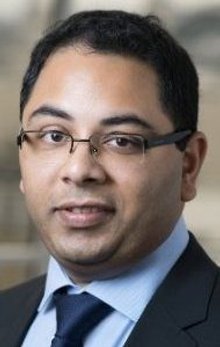
Sacheev Hanoomanjee
Managing Director