
SAP AI: Powering Sustainable Public Procurement in Antibes
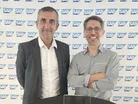
The city of Antibes in France is utilising artificial intelligence to improve its sustainable public procurement and budgeting operations.
By using SAP Business Technology Platform alongside SAP Business AI, the municipal government is able to produce a "green" budget through the use of automations. This innovative process provides efficiency, transparency and sustainability for the city.
According to SAP, the French city is a “pioneer of AI-driven solutions that has received international recognition, having been twice selected as one of the 50 smartest cities in the world”. Antibes is focused on merging a good quality of life and traditions with modern technology.

Previously, the city was using manual processes for its public procurement and budgeting, however, these were deemed to be time-consuming and inefficient. A recent French law requires municipalities with more than 3,500 inhabitants to “green” their budgets in line with 6 environmental objectives.
“By using SAP Business Technology Platform along with SAP Business AI, Antibes has transformed its public procurement and budgeting processes, achieving unprecedented transparency and efficiency,” says Patrick Duverger, Chief Information Officer and Chief Technology Officer, City of Antibes.
“These solutions help ensure sustainable governance and compliance with the ‘green’ budget decree, setting a new standard for smart city initiatives.”
Transforming procurement through automation
In order to tackle inefficiencies, Antibes has partnered with SAP for more than a decade to help deliver sustainable solutions.
The city carried out a 6-month project using SAP BTP and SAP HANA Cloud with SAP Business AI, specifically the SAP AI Core infrastructure and the Joule copilot.
Patrick says that the SAP stack allowed the city to use different sizes of large-language models (LLMs).
“We chose the tiny models that weigh hundreds of millions of parameters rather than large models with hundreds of billions of parameters because we’re interested in semantics and language processing rather than knowledge,” explains Patrick.
Key features of the city’s AI use include automated data extraction using natural language processing and machine learning to extract main elements from public procurement contracts.
The city has been able to allocate each of its 6,000 budgetary operations to the relevant sustainable development goal (SDG) and produce a green budget.
By mapping the budget with its organisational chart, the city can drill down to identify the different departments that are responsible for various budgetary operations.
This provides a granular level of oversight that was previously impossible under manual systems.
Digital tools for compliance
The city also leveraged SAP HANA Cloud for real-time data management, helping ensure swift and accurate analysis. Using the AI-driven automation capabilities in SAP solutions, Antibes is able to produce a green budget without any manual effort.
“By combining SAP Business Technology Platform with SAP Business AI, the city automated parts of its procurement and budgeting processes to deliver a fully compliant “green budget,” with greater transparency for both employees and citizens,” says Matthias Medert, Global Head of Sustainability at SAP.
This was debated in the city council and adopted unanimously. Thanks to the collaboration, the city, to date, has achieved 100% optimisation of each budget credit line allocated to one or more SDG targets.
“The ‘green’ budget is a perfect use case because it’s mandatory, time-consuming and requires an understanding of French and the business context,” adds Patrick.
He explains that general-purpose AI could produce poor results because it might not recognise budgetary codes or acronyms.
Driving transparency for citizens
This project, involving 138,000 automated decisions, helps to demonstrate how specialised AI could provide immediate, concrete capabilities that saved labour while promoting sustainable development.
The city now has better transparency of its budget for both its workforce and citizens.
“And through a sustainable development filter, they can see that what we do improves quality of life, education and the circular economy,” Patrick says.
“Transforming the budget into something comprehensible helps promote trust and accountability.”
Antibes’ philosophy is to offer both an attractive place to live and cutting-edge services. The city knows that it cannot develop the expertise alone, but working with technology leaders enables it to innovate faster and implement ideas on a real-world scale.
The city trained a specialised model using tiny LLMs to ensure that the specific nuances of municipal finance were captured. This approach ensures that the technology remains a tool for public good rather than a generic administrative layer.
Company portals

Executives

Matthias Medert
Global Head of Sustainability