
SAP NOW AI: Exploring the Transformation of Spend Management
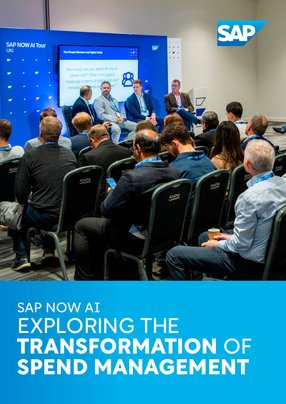
The highly-anticipated London instalment of the SAP NOW AI Tour served as a landmark gathering for business and technology leaders seeking to harness the transformative power of AI in enterprise settings.
Staged at Excel London, the event attracted professionals from across industries – all eager to explore how AI, data and applications can be strategically integrated to mitigate risk and accelerate growth.
Applying AI in finance and spend
The SAP NOW AI Tour sought to demonstrate the practical applications of business AI in driving operational efficiency and innovation.
From a procurement perspective, Theatre 6 played host to a series of fascinating sessions examining AI’s increasingly crucial role in finance and spend management.
Among the highlights was the day’s first session, featuring Karl Ace, Head of Procurement Digital Transformation at GSK, Anthony Breach, Director of Procurement CoE at Coca-Cola Europacific Partners and Joseph Harrison, Head of Procurement Operations & Third Party Risk at The AA.
The panellists discussed how AI is boosting efficiency, driving innovation and advancing sustainability across the procurement landscape.
Elsewhere, strategy talks focused on how SAP enables cost reduction by connecting apps, data and AI in an end-to-end strategic procurement process, as well as the importance of resilient services procurement amid radical change.
Business AI in practice
Beyond finance and spend management, the SAP NOW AI Tour catered for executives working across various different functions.
The London edition kicked off with opening remarks from Leila Romane, SAP's UK and Ireland Managing Director, before further keynotes from leaders including Stephan de Barse, President of Global Business Suite at SAP.
Throughout the day, the programme balanced customer spotlights, solution demonstrations and expert presentations, creating opportunities for attendees to engage directly with SAP specialists and partners.
Industry leaders representing Renewable Power Capital, Sainsbury’s and Vodafone Group Services shared their experiences of implementing SAP solutions within their organisations.
Procurement Magazine caught up with a host of leading executives during the SAP NOW AI Tour’s London stop. Read on for the full interviews
AI is Rewiring Procurement – and it’s Happening Faster than Anyone Expected
Mo Ahmad, Head of Market Strategy & Development – EMEA, Finance & Spend at SAP, delivers his take on the growing influence of AI in procurement
If there was one takeaway from the SAP NOW AI UKI event this year, it’s this: AI isn’t just influencing procurement – it’s fundamentally changing how the function works and what it’s capable of. And it’s happening faster than many organisations are prepared for.
Procurement leaders at the event shared the same experience: you’re being pushed to do more, respond faster and operate with far greater clarity than in the past. Yet the tools and processes that many teams still rely on weren’t built for the pace and complexity of today’s environment.
That’s why the 2025 Economist Impact report, produced with SAP Ariba, resonates so strongly. It highlights a shift that CPOs have been feeling for some time:
-
68% of executives say AI skills are now a top priority for procurement
-
78% say procurement is increasingly trusted to manage external risk – up more than 35 points in a year
-
Geopolitical disruption is now the number-one concern for 64% of procurement leaders.
These numbers tell a clear story: the expectations placed on procurement have scaled dramatically – and AI is the way the function keeps pace without burning out its people.
At SAP NOW AI UKI, the conversation wasn’t “what is AI?” or “should we explore it?”. We’re past that. The real discussion was about application:
- How do we remove noise from the intake process?
- How do we use predictive insight to prevent supplier issues before they hit?
- How do we get stakeholders out of email chains and into guided flows that help them?
This is where SAP and Next-Gen SAP Ariba are shifting the dial. We’re moving from process-heavy procurement to intelligence-driven procurement, with embedded AI co-pilots, Gen AI and agents making everything simpler, faster and more intuitive. Approvals, risk checks, supplier insights, category guidance are all becoming automated, integrated and insight-led – and managed through in-suite orchestration as well as complex process and landscape orchestration for the enterprise.
For CPOs, this represents more than a technology upgrade; it’s a strategic reset. The role is tilting away from firefighting and manual control toward shaping outcomes: resilience, speed, sustainability and commercial impact.
As you move through the insights from our incredible speakers, one theme stands out: AI isn’t replacing the fundamentals – it’s supercharging them. And it’s giving you a chance to redesign your function for what comes next, not just optimise what came before.
Stephan de Barse, President, Global Business Suite at SAP
What is SAP NOW AI all about? What's the purpose of the event?
Ultimately, what we want to do first and foremost is get our customers exposed to other customers to learn and understand how you can actually deliver business value from the solutions that we provide. There's a lot of questions around AI, SAP's AI strategy, but also how we as an organisation should think about AI. How can it not only drive productivity, but also impact the balance sheet and the P&L? We want to show and demonstrate our latest innovations, whether it's next-gen Ariba, new AI agents or how apps, data and AI should come together as a flywheel to deliver maximum value to our customers. It's about education, networking and sharing best practices.
What were your key takeaways from the London event?
What stands out to me is that companies truly understand that the value is not necessarily just in the app layer. It's about how you access the data, combine the data with other data sources and then make sure there is an AI layer on top. That should not be a disconnected layer somewhere; it has to be embedded back in the core application to drive value and adoption. Companies are also realising that it's not just about the technology, but how we move to industry best practices and thinking about user adoption. We had a lot of discussions around our tool chain with Signavio, LeanIX and WalkMe, and that is resonating. Finally, a lot of the innovation we’re introducing is not just on a PowerPoint slide. We have some early adopting customers saying, "this is real, let's go and make it happen." That is inspiring a lot of other customers as well.
How important is it for companies to have clear use cases in mind before implementing AI?
Having that in mind is extremely important. Ultimately, with any software implementation, it's about the business problem you're trying to solve. When you solve that business problem, how much value should that deliver to the business? I should see it in my P&L – either costs down, revenue up or working capital. What customers are realising is that core applications need to be in the cloud and need to be natively integrated. Then they start thinking about how they can connect different data sources and start building intelligent applications on top. Ultimately, in procurement – whether it’s contract intelligence, AI for negotiations, third-party risk factors, autonomous buying, issuing an RFP – what we’re seeing is a change from a procure-to-pay process that has 15 steps, to a complete rethink of how the procurement process is executed with AI. We’re not there yet, but a lot of our customers are on their journey. In the past, SAP was a vendor of technology; now, we’re a business partner and we are on this journey together.
How much do you enjoy seeing SAP and its partners and customers coming together in one place?
This is what's all about. The insights you get from face-to-face conversations and coffee chats are super important. What's the challenge you faced? How did you solve this data problem? How do you think about driving user adoption? We are doubling down on this and we will be back next year.
Rob Hall, Head of Finance and Spend Management – UKI, SAP
Tell us about your role at SAP and how it's evolved
I've been with SAP around 10 years, always in the procurement space looking after our applications like Ariba and Fieldglass. Now, I head up our newly-formed Finance and Spend Management business. That includes all those procurement applications, but also now our Office of the CFO and finance applications that integrate into procurement and also into S/4HANA, either public or private. I head up probably one of the biggest business units we have now within SAP UK, covering all of those different solutions. I've got a big sales team looking after new business and then also work a lot with our customer success management team that looks after existing customers.
What's the purpose of the SAP NOW AI Tour?
AI is everywhere and you're seeing all vendors and all companies talk about it. Admittedly, some of these smaller, niche companies can bring things to market a bit quicker than we can. The reason is that we have so many customers and manage so many different applications, so we want to make sure when we come to market with AI that we’ve done all the certifications, all the security checks and bring something that customers can be confident in that protects their data. This event shows our customers, ‘we are here, we are selling and we have AI available in all those different solutions across the business suite’.
What challenges are clients looking to overcome when it comes to AI in procurement and finance?
AI is great – it's the future, it's revolutionising and it's going to continue to be present. The challenges lots of organisations have is: what's real? What can we do now versus the future roadmap and future innovation? The reality is, if you have bad data, having AI trying to pull information from that data is not going to produce realistic, accurate, sensible results. If you use ChatGPT and it's getting the data from the wrong sources, it's not delivering what you want. Our big proposition is being able to have lots of different application layers across different business processes across a business suite, and being able to extract and hold onto that data in a single layer that's organised, structured and accurate. Then we have AI on top of that single layer of data that produces accurate insights into all those different applications and processes.
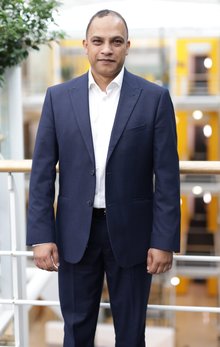
Mo Ahmad, Head of Procurement and Ecosystem GTM & Strategy – EMEA, SAP
What does your role at SAP entail?
I look after the go-to-market, the narrative and the messaging that we put into the market, and that means being much closer to procuretech. That's the best part of the job for me – really being connected to the market, helping to understand where it's going, where our customers need us and then ensuring that aligns with the SAP strategy.
What's the purpose of the SAP NOW AI tour?
Technology has moved so quickly and SAP is at the forefront of that. With all the announcements that we've given over the last 18 months, it's about trying to bring that to our customers. We were at another show recently and everything was about AI, but this is SAP alongside our partners really showcasing what AI means in terms of our platform, how that can help further our customers' journey and get more connected. It's turning a lot of talk into action.
What challenges are customers looking to overcome by harnessing AI in procurement?
We had a panel discussion on this and the reason I wanted that panel is because everybody's having a different journey and there's different levels of maturity and different levels of interest – there's excitement and there's fear. Everybody's got to look at it really strategically and look at what's best for their business because AI has so much opportunity to help procurement. There are some real scaremongers who are saying procurement's completely going to go away and I'm not a believer in that. But what opportunity does that actually bring us? It's really around efficiency, intelligence and cost reduction – doing more with the same. Procurement technology is going to help enable a lot of this, but it's got to be done in the right way and in the right places. Depending on who you are as a business, the size of your business, the size of your teams, you've got to have the right strategy to do that. That's why we are here. All of the sessions we’re running are focused on that – it's the people as well as the technology.
With risk being a major concern, particularly around tariffs, how can AI help solve procurement challenges?
The word that comes to mind is agility. We're talking about tariffs now, but before that there were other macroeconomic situations that were causing those problems. Supply chains had massive problems. And it's not just about AI – it’s also data. Without the data, AI is meaningless. So, it's about marrying applications and data, and then leveraging AI to allow you to be agile and make decisions quickly that affect your business.
How important is it to bring the SAP community together in one place?
I think it's important for everybody to get together on this. It reminds me of ESG, because it's not only about what you do yourself, but what everybody else is doing. It’s not about doing it in silos, but doing it together. AI is the same, multiplied by 100. How can we all learn from each other, from technology companies, from businesses in our sector or another sector, to really harness it? I'm an Arsenal fan and there was an interview with [Arsenal manager] Mikel Arteta recently where he said he works with other sports to learn and see how that can impact the way that he runs Arsenal. It's the same thing – it's about community, which means everyone working together.
Joseph Harrison, Head of Procurement Operations & Third Party Risk, AA
Tell us about your role with The AA
I head up third-party risk and procurement operations at the AA. For those that don't know, we go beyond breakdown and roadside recovery, with a number of financial products and insurance. We're financially regulated, so that factors in quite heavily when we're talking about risk. I come from a procurement transformation and finance background at big FMCG global companies, but I've spent the last two years working at The AA on their digital transformation journey and implementing a greenfield procurement operations and risk practice.
What do The AA's procurement activities look like?
It's all indirect. The biggest thing we focus on is across IT, marketing, corporate services – the contingent labour you'll have at most organisations. But then what's closer to the product is the purchase of our yellow vans and the garaging network of a few thousands suppliers. We've got a big focus as an organisation on moving to strategic partners, with a much bigger focus on supplier relationship management, rather than the traditional tendering activity.
What were the key topics discussed in your panel session on finance and spend?
One was around how people need to change their skillsets. Any big technology change always has a knock-on effect on the skills you need – I talk about AI literacy. You've got off-the-shelf solutions that you can buy in like a contract management solution that has agentic AI, where you drive adoption as part of your rollout. But then you've got solutions like ChatGPT and Copilot that impact every aspect of someone's day, and that's where you need continuous growth and the right mindset from individuals to adopt it. Those who don't will end up being less competitive in the short term.
How do you approach change management when introducing AI tools?
I'm a big fan of champions or super users – people embedded in the teams that are more digitally savvy that can help uplift the rest of the team. But it's also about the constant drumbeat, continually talking around AI, how it’s going to be used, how it will impact people's roles and the skills they need to have. That's how we try to get people ready for the change.
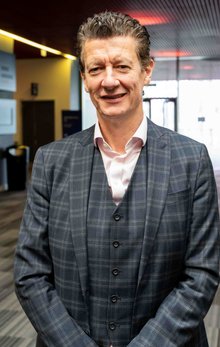
John McLaren, Director New Sales UK, Icertis
Can you tell us about Icertis and what the company does?
As an organisation, every single dollar you spend, bring in or commit to revenue is governed by a contract. Typically, what happens is you spend a lot of time negotiating these contracts, then these contracts are signed, sealed and sat in a SharePoint drive. Quite often they're not looked at again until three years' time, when they're due to be renewed. Research from Deloitte and WCC shows that, for most organisations, 5-9% of their revenue is unrealised because they're not actually executing and delivering the intent they negotiated in their contract. That's what Icertis does: contract intelligence that allows organisations to start to realise the true value that is unlocked and hidden in these contracts.
Can you explain Icertis’ relationship with SAP?
We've been a partner of SAP and recently became a SolEx partner, which means we are a solution extension to SAP. SAP now sells SAP Ariba Contract Intelligence powered by Icertis. SAP clients are able to procure our capabilities through their SAP relationship. The other benefit it has for an organisation is because we're a solution extension, whenever they're going through updates or upgrades, it's all pre-tested and is going to work.
How prominent is AI in what Icertis does?
There's a colossal amount of hype around AI and agentic AI, where you're getting towards the point that agents will be making decisions on behalf of your organisation. You're almost passing that decision-making process to some agents. One of the things we're consciously aware of is hallucinations within agents, so you have to be very careful to ensure your AI has guardrails around that decision-making process. This is where we see a very interesting area: part of those guardrails should actually be around your commercial relationships with your suppliers and your customers, which is contained within contracts. Another aspect of what we're able to bring is a digital twin of your commercial relationships, which is an underlying prerequisite for this new agent model.
To what extent is AI freeing up teams to focus on more value-add activities?
That's the intent. We use that expression of taking the robot out of the human and putting it into AI and some of the agentic capabilities. It's doing that boring, laborious work. So absolutely – it's much more value-added, focused work.
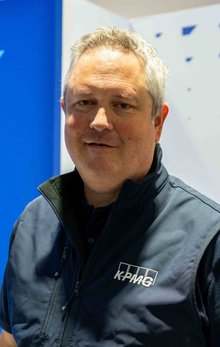
Andrew Smith, SAP and Digital Procurement Director at KPMG UK
Can you introduce yourself and tell us about your role?
I'm Andrew Daley, one of the founders of Edbury Daley. We're specialist recruiters in the world of digital procurement and supply chain, and I'm also the founder of a new business, Agentic Procurement, which is aimed at creating AI-ready procurement teams.
How big an issue is AI readiness as companies embark on large-scale AI implementation programmes?
We've launched an AI readiness survey on our new website, Agentic Procurement. From the early results, it's clear people are just getting started on this journey. There's a lot of hype around AI and it's difficult for the non-technical mind to understand how it can be deployed. There’s a big education piece there for the leaders. But for the people on the ground, the overwhelming concern is: is my job going to change or get replaced? What does my future look like? There's a huge opportunity for procurement professionals to evolve their capabilities and deliver more for their organisations.
Where does that responsibility lie – with the individual, employer or solution provider?
Throughout my career, you've seen big organisations attract great people with the promise of great training and development and investment in MBAs. But that feels like it's gone out of fashion in recent years. Quite a few AI startups are offering to train people on the use of the tool, but I don't think that addresses the problem, because AI is really useful and easy to interact with – we can just talk to it normally. It's the other skills that need greater emphasis. For example, you free up time in your day job through the use of AI – what do you do with that time? All that strategic activity, critical thinking, all these other skills – that's where the investment needs to come.
Is there genuine fear among procurement professionals that AI will replace their jobs?
It is something that concerns people. We're generally scared of things we don't understand – that's a human trait, and I definitely see some of that with AI. The elite functions that are forging ahead, I'd characterise their people as intellectually curious, creative, with a strong desire for personal development. In the less progressive functions, there's fear and paralysis. The ones with the most fear are most vulnerable because they're not actually embracing the opportunity.
David Santiago, Senior Channel Sales Director at Fairmarkit
For anyone less familiar with Fairmarkit, what's your specialism?
We're the automated sourcing platform, essentially for all the types of spend you want competitive sourcing on, but where you don't want your team to spend a lot of time on it.
How does AI play into what you do at Fairmarkit?
I think with AI and all new technology advancements, there comes new challenges in implementation and there’s a bit of a learning curve there. But I also think it's an opportunity to make those implementations a little bit easier and go a little bit faster. That’s something we try to do at Fairmarkit. Everyone has some battle scars from bad implementations or deliveries, so we try to do it in about a 12-week process and use AI to help get a quicker time to value.
Are you seeing real buzz around agentic AI on the ground?
Absolutely. I think every software provider out there is talking about agentic AI, as they should be, which is really exciting not only for people like me in the provider space, but also for customers as well. It opens up the door to a lot of new possibilities and functionalities that they'll be able to take advantage of.
How crucial is AI readiness before companies embark on AI implementation?
I think it's important, but I also think it's important not to have analysis paralysis as well – you have to start somewhere. What I've seen work successfully is starting small, identifying a use case, seeing what works and what doesn't work and then building off of that – versus 'we know we want AI, so let's have the whole thing solved before we jump in'. The key is finding something that works, seeing some results and expanding from there.
How valuable are events like SAP Now AI London?
I think it's fantastic. You have a lot of conversations that you normally wouldn't have in your day-to-day work. Hearing from different thought leaders, attending the breakout sessions and with the foot traffic at the booth, you can learn a lot even from a one-day event like this. You get a picture of the different challenges organisations are working through and the areas where Fairmarkit or SAP could possibly help.
Scott Bowler, VP Sales, New Business - North EMEA at Icertis
Tell us a bit about you and your role
I'm Scott Bowler, VP of New Business Sales at Icertis across Northern EMEA. My team essentially covers everywhere outside central Europe and we work heavily with SAP across those regions.
For anyone less familiar with Icertis, can you give us an overview of the company?
We're the market-leading contract lifecycle management vendor – we term it contract intelligence. We essentially founded this technology 16 years ago out of a piece of work with Microsoft. Microsoft was customer number one for us and we've grown to be the largest player in the market, with a real focus on enterprise customers. We help customers with global scale to drive value from their contracts across the business.
To what extent is AI playing into what you do at Icertis?
We're an AI-first business. Our deliverable to customers is helping them operationalise their data out of contracts. Everyone has a corpus of contracts – tonnes of PDF documents that traditionally people have manually read to extract information from.
Can you give us some success stories of AI implementation?
A large telecommunications company in the UK recently brought two businesses together and, as part of that consolidation, the target was to drive synergies. Leveraging our technology and the AI within it, they were able to find US$35m of contract value across suppliers that they could immediately strip out of the business – a significant saving against the synergies they were looking for from that acquisition. If I look at our German business, we have a large German automotive client managing something like half a million suppliers. Across that volume, we’ve been able to reduce their contract cycle times by 80%, essentially helping them not only write contracts faster, but drive cashflow more effectively.
Why are events like SAP Now AI London so important?
Our technology is enterprise-wide. If we look at procurement, typically technologies go very surface level on extracting data from contracts and giving people understanding. Events like these help us get closer to users of those procurement platforms and really show them the depth of capability that our platform and the AI that's inherent in it can deliver – helping them negotiate terms faster, drive cost savings out of their existing contracts and reduce the risk they have in their contractual positions.
Lance Younger, EVP EMEA GM and Global Alliances at ORO Labs
What does ORO Labs specialise in?
It's orchestration, automation and agents. We look at that end-to-end process, all the way from intake through to pay, and integrate multiple different solutions together into one platform. It's a core part of the procurement stack, taking advantage of where you have deep S2P solutions in place like Ariba or deep sourcing solutions in place like Fairmarkit, and adding an integration layer on top to make the most of it. What's happened over the last nine months is the introduction of agents, which augment the process all the way from sourcing through to PR to PO.
How much of a game changer have AI agents been?
It's fantastic because we talk about the generations procurement has gone through. We went through the ERP generation, we went through the S2P generation, we went through best-of-breed and now we're in the AI era. Each one of these eras is getting shorter and shorter and, over the last year, we’ve seen agents come into play. We've got them in production in three or four different places. Many of our clients are building their own agents as well as using our agents off the shelf. As we’ve heard, agents are forming part of the workforce for procurement.
Tell us about your relationship with SAP
We've had a long relationship with SAP. Our founders are ex-SAP and I worked at Ariba back in 2005-2007, running their implementations. So, we have a deep connection from a relationship perspective. Now, we work with many clients, such as GSK, that have Ariba as their backbone and they're using ORO as their integration layer, as well as for agentic processes and workflows.
How crucial are events like SAP Now AI in bringing together the procurement, finance and technology community?
I love the fact that these formats over the last five to 10 years have changed radically – and changed for different audiences. I think this is the first time SAP has held this type of event for a few years, so it’s a major investment from them. The procurement stream was particularly popular – sold out for a couple of different sessions – so we want more of that going forward.
Company portals

Executives
Andrew Smith
SAP and Digital Procurement Director

David Santiago
Senior Channel Sales Director
John McLaren
Director New Sales UK

Joseph Harrison
Head of Procurement Operations & Third Party Risk

Lance Younger
EVP, EMEA GM and Global Alliances l ORO Labs l AI-Powered Procurement Orchestration Platform
Mo Ahmad

Rob Hall
Head of Finance and Spend Management – UKI
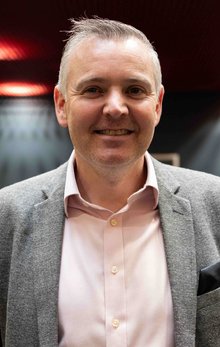
Scott Bowler
VP Sales, New Business - North EMEA

Stephan de Barse
President, Global Business Suite