Cultivating Resilience: Interloop’s Regenerative Future

In the heart of Punjab, a shift in cotton cultivation is taking hold. Interloop Limited, a global leader in hosiery and apparel manufacturing, is moving beyond traditional sustainability metrics to embrace regenerative sourcing.
Its Regen Kapas programme is a regenerative cotton initiative in Pakistan that restores soil health, boosts biodiversity and supports farmer livelihoods across over 6,000 acres in southern Punjab. Through this, the company is not merely seeking to mitigate environmental damage but is actively working to revive the agricultural landscape of Pakistan.
As global regulators raise expectations and consumers demand proof of ethical production, the ability to restore ecosystems while securing supply chains has become a competitive necessity.

Restoring soil health and biodiversity
Regenerative agriculture at Interloop is defined by a shift from input control to system restoration. In partnership with REEDS Pakistan (Rural Education and Economic Development Society), the Regen Kapas project has scaled rapidly. What began as a pilot now spans 25 villages across southern Punjab, engaging 1,000 partner farmers.
The methodology focuses on diverse cropping, crop rotation and reduced chemical inputs to promote natural ecosystem functions.
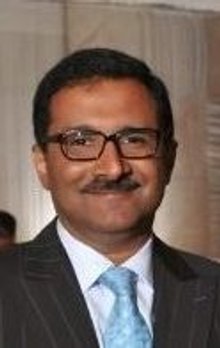
Speaking in Interloop’s latest Sustainability report, CEO, Navid Fazil, said: “ Interloop Regen Kapas is our flagship cotton farming programme to promote biodiversity and reduce emissions in our supply chain.
“We have reached an important milestone, achieving Regenagri certification, awarded by Control Union. This recognition celebrates the successful adoption of regenerative farming practices that revive soil health and strengthen biodiversity, advancing our aspiration to source fully sustainable cotton.”
Economic viability and farmer livelihoods
A critical pillar of the regenerative model is the economic resilience of the smallholder farmers involved. For many, the transition to regenerative or organic practices can initially present risks regarding yield and market access. Interloop has addressed this by providing a structured support system that includes premium payments to offset yield disparities during transition periods.
By cutting input costs and improving soil health, regenerative techniques are increasing net farm incomes and fostering more resilient farming systems. This approach extends to community well-being; the company launched its third mobile health clinic, specifically providing healthcare services to women, children and cotton growers within its Interloop Organic Kapas site.
This has 2,000 farmers covering an area of 10,138 acres in southern Punjab. The transition to organic farming, a sustainable way forward as cotton farming, is critical to the economic wellbeing of communities in Pakistan and worldwide.
Traceability from farm to fashion
Sustainability and traceability are no longer parallel conversations in procurement; they are inseparable. To meet this demand, Interloop has integrated its Looptrace technology throughout the supply chain. This platform provides complete visibility, allowing customers to track the journey of cotton from the initial seed to the finished garment.
The results of this integrated system are evidenced by the project’s recent Regenagri certification from Control Union. This season alone, the Regen Kapas programme produced more than 1,700 tonnes of fully traceable cotton lint. By combining verified regenerative standards with digital transparency, Interloop is providing the proof that modern brands and consumers now require.
Scaling wisdom for a sustainable future
The success of Regen Kapas and the IC-2 certification of Interloop Organic Kapas (ILOK) moved the company closer to its ambitious target of sourcing 70% sustainable materials and transitioning to 100% sustainable cotton across its entire supply chain.
With more than 58,000 registered farmers now part of the Looptrace network, Interloop is demonstrating that regenerative sourcing is not just an aspirational concept but a scalable, high-impact reality. By aligning environmental restoration with data-driven transparency, the company is positioning Pakistan as a global leader in the future of responsible cotton production.
Company portals

Executives
Navid Fazil
Chief Executive Officer