o9 Solutions Driving Transformation at Google & Silicon Labs
In a volatile, uncertain, complex and ambiguous (VUCA) world, traditional functional optimisation is no longer sufficient for global manufacturers. When operations are highly interconnected, improvements in a single department can frequently inadvertently create friction elsewhere.
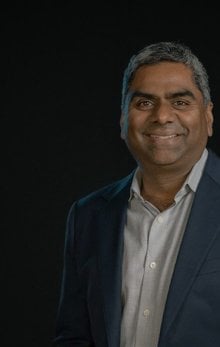
To combat this, o9 Solutions’ Executive Chairman, Co-Founder and CEO, Chakri Gottemukkala, has introduced the APEX operating model: a framework designed for agile, adaptive and autonomous planning and execution.
The rise of neuro-symbolic AI
The APEX model is powered by neuro-symbolic AI, a sophisticated hybrid that combines the creative potential of large language models (LLMs) with structured logical reasoning.
Supply chain leaders at giants such as Google, Hewlett Packard Enterprise (HPE), Apollo Tyres and Silicon Labs are currently using the o9 platform to address critical bottlenecks and drive continuous improvement.
Chakri says: “When LLMs emerged, we immediately saw their strengths and weaknesses in an enterprise decision-making context. Given our AI roots, we were laser-focused on connecting them to the Enterprise Knowledge Graph to solve the toughest challenges in driving operational value.”

Engineering agility at Google
Google Networking Operations has already realised significant ROI by codifying its decision logic within the o9 platform.
This shift has embedded agility across the supply chain supporting its global data centre infrastructure—a sector where uptime is non-negotiable.
Supriya Iyer, Director of Networking SC & Operations at Google, told o9: “We achieved double-digit improvements in order-to-delivery performance. Delivery in full, on time improved by double digits in the first year. It then improved by another 10% the following year.”
Previously, Google’s responsiveness relied on what Supriya described as “heroics”. To ensure sustainability, the team chose to engineer that agility directly into the operating model.
HPE’s Centre of Excellence
At HPE, a commitment to continuous improvement has saved millions of dollars in avoided external development costs. The company established a Centre of Excellence (CoE) to steer its planning transformation, ensuring the platform remains a business-owned capability.
Brian Louis, Senior Director of Digital Transformation and Analytics at HPE, told o9 that the goal was to create “an engine that could continuously improve the system, grow adoption, and keep proving value”.
The CoE helped the organisation pivot from expected value to realised value. By introducing monthly tracking of KPIs and verified benefits, Brian and his team have ensured that the impact of the digital shift is both measurable and sustained.
Silicon Labs’ self-service model
Silicon Labs, which designs chips and outsources manufacturing across a complex web of fabrication and testing partners, has moved to a self-service planning model.
Using o9, the firm now operates with automated supply plans, daily refreshes and scenario simulations.
This model has established a single source of truth, improving data quality at the source and increasing batch runtime by more than 15%. It also introduced structured prioritisation, where requests are evaluated based on business impact, urgency and resource availability.
Chakri adds: “With o9’s breakthrough Neuro-Symbolic AI technology to power the APEX Model, enterprises can now learn systematically from post-game analysis, improve faster across functions, deploy new capabilities at the pace of the market and continuously evolve their operations.
"Our clients see APEX as a strategic differentiator for their businesses in the coming years.”
Company portals




Executives
Brian Louis
Senior Director of Digital Transformation & Analytics
Chakri Gottemukkala
Official member

Supriya Iyer
Director of Supply Chain and Commercial Operations