
How NIO's Chip Insourcing Strategy Cuts Supplier Dependence
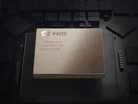
Chinese electric vehicle manufacturer NIO is pursuing a vertical integration strategy for critical components, developing custom artificial intelligence chips internally to decrease dependency on third-party suppliers such as Nvidia.
The move represents a significant shift in the company's procurement approach as it brings previously outsourced capabilities in-house.
The company is producing its chips for electric vehicles under subsidiary company Shenji, NIO CEO William Li said according to Reuters. Shenji received an additional US$330m in funding from Chinese investors earlier this year, signalling strong backing for the insourcing initiative.
NIO's custom chips are deployed in its electric vehicle models for technology like advanced vehicle assistance, with NIO's NX9031 chip set to launch in the Onvo L90. The strategic shift could have implications for how automotive manufacturers approach their supply chain strategies in an increasingly technology-driven sector.

Bringing production capabilities in-house
NIO has been investing in developing its in-house research and development capabilities of smart hardware, such as advanced chips, high-performance sensors, smart domain controllers and other core components. This represents a fundamental change to the company's procurement model, moving from a buyer-supplier relationship to direct manufacturing control.
Speaking to Reuters, William said that in-house chip development would sharpen the company's "technological edge" and improve profitability. He said NIO's nanometer-scale automotive-grade chips and whole-vehicle operating system would be central to its long-term global competitiveness.
William told Reuters that the rise of China's electric vehicle makers presents a "significant opportunity" to redefine the high-end and luxury car market, opening doors for NIO to become "a global premium marque".
Reducing spend with Nvidia
According to Gasgoo, NIO relied on Nvidia chips in previous years, hitting a peak spend of US$300m annually. Nvidia is the world's largest company with a market cap of US$5.09tn, giving it significant pricing power in supplier negotiations.
William told Reuters that Nvidia's automotive chips have "very high gross margin", and that by making its own chips NIO could eventually lift its overall profit, despite higher upfront research-and-development costs. This calculation reflects a strategic procurement decision to absorb short-term investment costs in exchange for long-term margin improvements and supply chain control.
There has been ongoing uncertainty around US restrictions on AI chip exports to China, with the Council on Foreign Relations describing the situation as "strategically incoherent" in January 2026. China is reportedly blocking imports of some Nvidia chips as it pushes for domestic production. These geopolitical factors could be driving procurement strategies that prioritise supply chain resilience and domestic sourcing.
Tailoring components to internal requirements
William told Reuters that NIO developed its own silicon so its chips could better match the company's algorithms and sensor layout, particularly for AI functions such as advanced driver-assistance. This customisation advantage represents a key benefit of the insourcing strategy that external suppliers may struggle to provide.
NIO has established a smart driving research and development system spanning platforms, architecture, engineering, algorithms and operations. NIO says on its website that Assisted & Intelligent Driving is available for battery swapping, parking, highways and urban roads.
Gasgoo reported in April 2026 that the Onvo L90, a subsidiary brand of NIO, would feature the NX9031 automotive-grade computing chip. NIO's smart features are used in its vehicles like the ET9, a luxury electric vehicle which features the NIO Cedar Smart System with an AI agent and advanced driver assistance.
The company is currently strengthening its global reach having expanded into Singapore, Uzbekistan and Costa Rica over 2025 and 2026 through partnerships with local distributors.


Executives
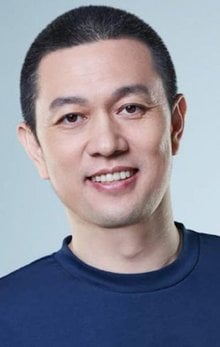
William Li
CEO